

KP-028 · Crop-Specific Guides
Sugarcane Cultivation on PQNK: A Perennial, Circular Production System
This companion knowledge paper turns the bamboo-principle reframe into an operating system: selective, year-round harvesting from overlapping generations of cane within the same clump, with rising density treated as a soil-health signal rather than a problem to be thinned.
Read or listen to the full paper ↓Abstract
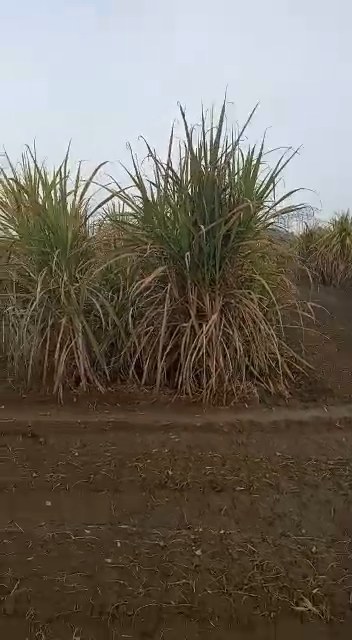
The paper reframes sugarcane as a perennial, rhizome-based, clump-forming crop biologically comparable to bamboo rather than to wheat or maize, arguing that misunderstanding sugarcane as an annual is the root cause of low yields and high costs across the region. Just as bamboo is planted once and harvested for decades, strengthening with each cut, sugarcane under PQNK strengthens with each harvest, increasing stalk thickness and sweetness while producing continuously without replanting.
Sugarcane cannot express this perennial nature until the soil is corrected first, so the paper repeats the four mandatory, non-negotiable ACI-to-PQNK conversion steps: one-time hardpan breaking for root penetration, oxygen, and drainage; a deep soil-detoxification irrigation to flush salts and chemical residues; permanent bed and traffic discipline so growing zones are never re-compacted; and roots retained with mulch maintained under a strict no-till regime, converting the field into a living, regenerative system.
The paper's core operational rule is selective harvesting, cutting only mature, fully developed canes while leaving young shoots, medium canes, and newly emerging basal tillers untouched, directly contrasted with the conventional instinct to harvest the entire field at once. A field-verified quote from a PQNK farmer anchors the paper's central claim: when 10-12 stalks are harvested, 10-15 new shoots are already emerging from the base with another generation following, confirming overlapping generations within a single clump and true circular production where growth and harvest happen simultaneously rather than in sequence.
This circularity supports a year-round harvesting model with no single fixed season, continuous income, reduced harvest-time labour shock, and better market timing, since farmers are not forced to sell during the low-price peak glut. The paper explains why cane improves after every harvest: light penetration, reduced internal competition, and activated root growth compound over time into thicker stalks, longer internodes, and higher juice concentration, improvements attributed to soil maturity rather than fertilizer. Rising clump density, often assumed to signal overcrowding, is instead reframed as a health indicator, stronger rhizome networks, better soil coverage, improved moisture retention, and greater climate resilience, with an explicit instruction not to thin aggressively since the system self-regulates when soil is alive.
Mulch and soil cover are treated as absolutely mandatory, echoing bamboo forestry practice: leaves, trash, and cut material stay on the ground, with no burning and no cleaning, since bare soil in a perennial system is described as destruction rather than hygiene. The economic case follows directly: one planting lasts 8-10-plus years, costs fall every year as chemical fertilizer, growth boosters, and frequent irrigation are eliminated (with reported water savings above 80%), and yield and income both rise annually rather than declining, shifting sugarcane from a seasonal, high-risk crop into a perennial livelihood system that the paper summarizes as multiplying yield not by force, but by understanding nature.
Revision R1 (2 October 2026): this paper has been aligned with the PQNK book, Chapter 37 (Sugarcane, The Bamboo Principle). PQNK field cases have kept productive cane for eight harvest cycles from one planting; there is no fixed lifespan in years or decades, and longevity is judged field by field. Cane does not necessarily improve after every harvest, and yield is recorded crop by crop rather than assumed to rise each year. Selective harvesting suits fresh-juice and on-farm gurr markets; cane supplied to a mill follows the mill's maturity, cutting and delivery requirements. On mature beds with 400 mm or more of annual rainfall, rain, dew, humidity and capillary rise carry the crop, and furrow water is supplementary, given only when the soil-ball test shows a need. The PDF opens with a revision note; the original text follows unchanged.
Full Paper
If you use “Listen”, the text of the page may be sent to your browser or operating system’s speech provider, such as Apple, Google or Microsoft, depending on the voice your device uses. Pedaver does not process, transmit or store any audio.
Knowledge Paper KP-028 - Revision R1, 2 October 2026
This paper has been aligned with the PQNK book, Chapter 37, Sugarcane, The Bamboo Principle (pedaver.com, 2 October 2026).
PQNK field cases have kept productive cane for eight harvest cycles from one planting. There is no fixed lifespan in years or decades; longevity is judged field by field. Where this paper says a planting lasts 8 to 10 years and more, or that cane improves after every harvest and yield rises every year, read it as field experience to be recorded crop by crop, not a guarantee.
Selective harvesting suits fresh-juice and on-farm gurr markets; cane supplied to a mill follows the mill's maturity, cutting and delivery requirements.
On mature beds with 400 mm or more of annual rainfall, rain, dew, humidity and capillary rise carry the crop; furrow water is supplementary, given only when the soil-ball test shows a need.
The original paper follows unchanged.
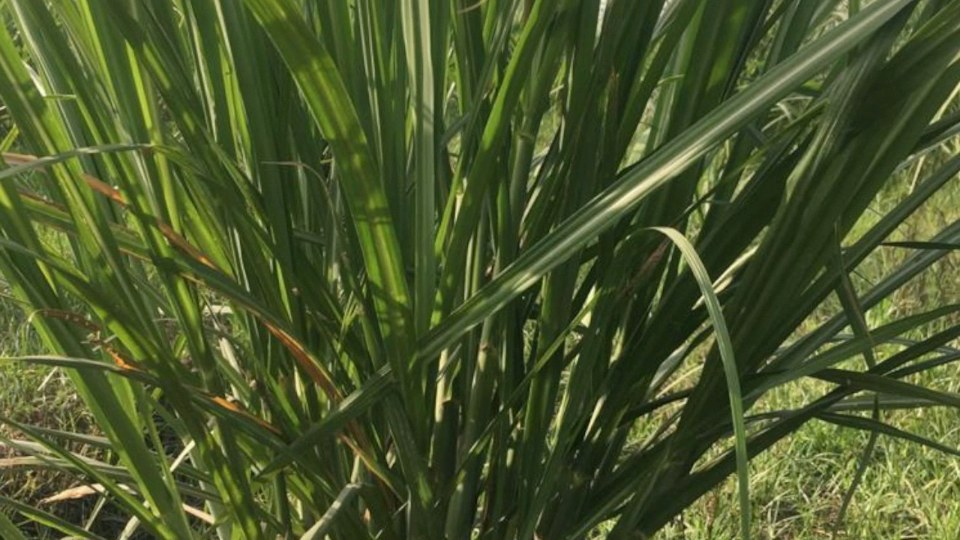
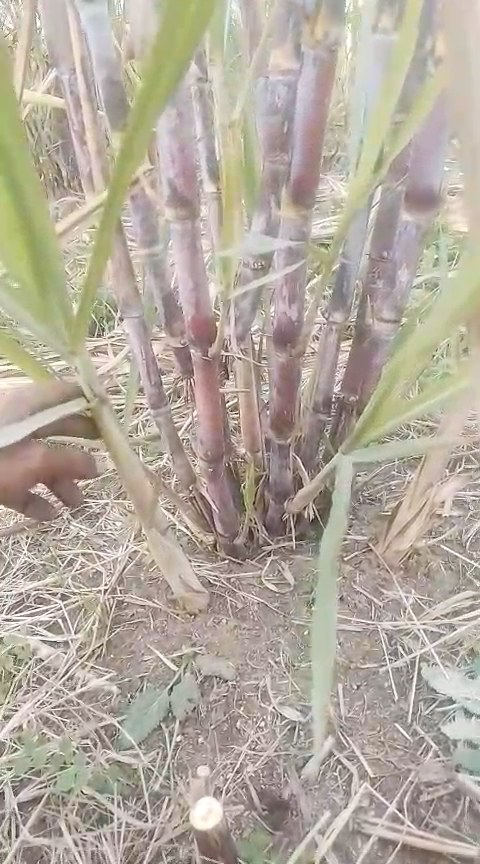
1. Reframing Sugarcane: The Bamboo
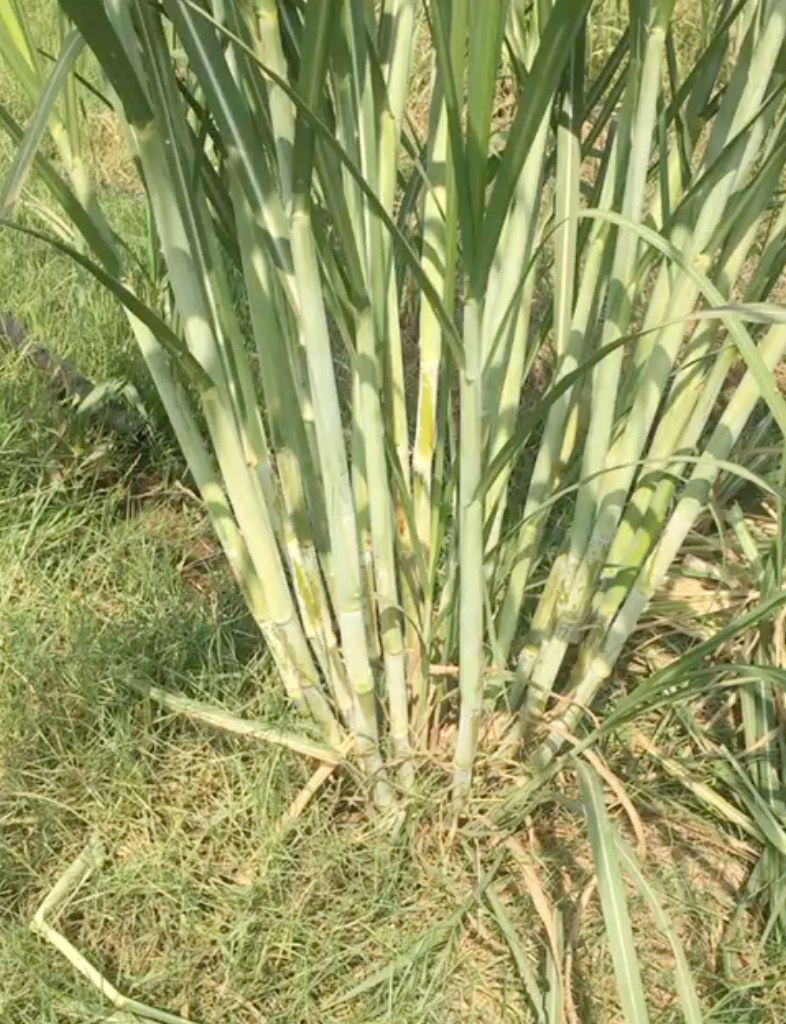
Principle
Under PQNK, sugarcane must be understood correctly. Sugarcane is:
• A perennial grass
• A rhizome-based plant
• A clump-forming system
Biologically, it behaves like bamboo, not like wheat or maize.
Just as bamboo:
• Is planted once and harvested for decades
• Produces stronger culms over time
• Responds positively to selective cutting
Sugarcane under PQNK:
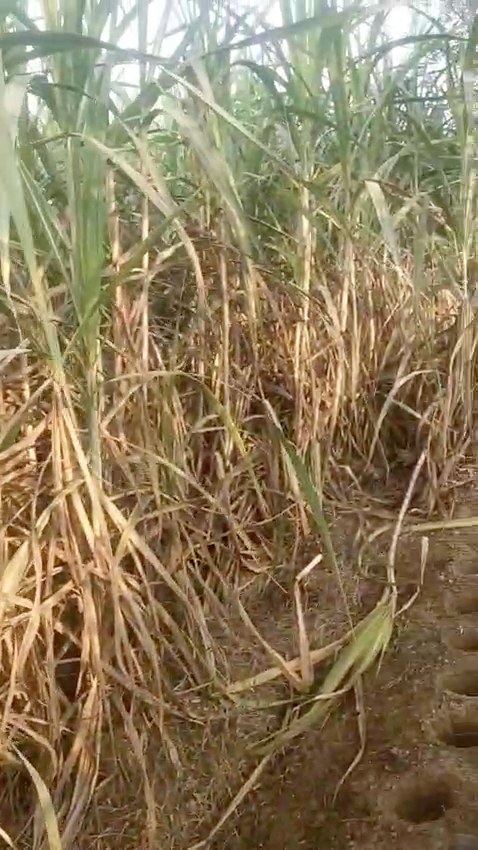
• Strengthens with each harvest
• Increases stalk thickness and sweetness
• Produces continuously without replanting
Misunderstanding sugarcane as an annual crop is the root cause of low yields and high costs.
2. Mandatory ACI → PQNK Conversion (Non-Negotiable)
Sugarcane cannot express its perennial nature unless the soil is corrected first. All four PQNK conversion steps are compulsory.
2.1 Hardpan Breaking (Once Only)
Deep subsoiling restores:
• Root penetration
• Oxygen availability
• Infiltration in rains
Without this, sugarcane roots remain shallow and productivity collapses.
2.2 Soil Detoxification with Water
One deep irrigation is applied to:
• Flush accumulated salts
• Remove chemical residues
• Reset soil chemistry
This prepares soil for biological rebuilding.
2.3 Permanent Bed & Traffic Discipline
Where applicable:
• Soil is shaped once
• Movement restricted to furrows
• No re-compaction allowed
Sugarcane thrives only in undisturbed soil.
2.4 Roots Retained, Mulch Maintained, No-Till
• Old roots remain in soil
• Harvest residues stay as mulch
• No ploughing between cycles
This converts the field into a living, regenerative system.
3. Selective Harvesting: The Core Rule
❌ Conventional practice: Harvest the entire field at once.
✅ PQNK practice: Harvest only mature, fully developed canes, leaving:
• Young shoots
• Medium-sized canes
• Newly emerging basal tillers
This mirrors bamboo forestry, where:
Mature culms are harvested, not the entire clump. Selective harvesting stimulates regeneration, not depletion.
4. Circular Production System (Field-Verified)
A PQNK farmer implementing this system reports:
“When 10–12 sugarcane stalks are ready and harvested, 10–15 new shoots are already emerging from the base, and another set is following. This makes circular production possible.”
This observation confirms PQNK biology:
• Sugarcane produces overlapping generations
• The plantation never becomes empty
• Growth and harvest happen simultaneously
This is circular production, not repeated cropping.
5. Year-Round Harvesting Model
Under PQNK:
• Sugarcane does not have a single harvest season
• Mature stalks can be harvested throughout the year
• The plantation remains permanently productive
Benefits:
• Continuous income
• No harvest-time labor shock
• Better market timing
• Reduced risk and stress
What appears as “two or three crops per year” is actually multiple harvest cycles from the same plantation.
6. Why Cane Improves After Every Harvest
Each selective harvest:
• Allows light penetration
• Reduces internal competition
• Activates root growth
• Strengthens rhizome energy
Over time:
• Root mass increases
• Soil biology deepens
• Mineral cycling stabilizes
Results observed:
• Thicker stalks
• Longer internodes
• Higher juice concentration
• Improved sweetness
This improvement comes from soil maturity, not fertilizers.
7. Density Increase: A Health Indicator
Increasing cane density is often misunderstood. Under PQNK, higher density means:
• Stronger rhizome networks
• Better soil coverage
• Improved moisture retention
• Higher climate resilience
Do not thin aggressively. The system self-regulates when soil is alive.
8. Mulch & Soil Cover: Absolutely Mandatory
Like bamboo forests:
• Soil must never be exposed
• Leaves, trash, and cut material stay on the ground
• No burning, no cleaning
Mulch:
• Insulates soil from heat and cold
• Protects rhizomes
• Feeds microbial life
• Extends plantation lifespan
Bare soil kills perennial systems.
9. What PQNK Sugarcane Does NOT Require
PQNK sugarcane does not need:
• Annual replanting
• Chemical fertilizers
• Growth boosters
• Trash burning
• Excess irrigation
• Frequent irrigations (over 80% water savings)
Forcing growth destroys circular production.
10. Long-Term Economic Impact
By treating sugarcane as bamboo:
• One planting lasts 8–10+ years
• Costs reduce every year
• Yield improves annually
• Income becomes continuous
Sugarcane shifts from:
Seasonal, high-risk crop → perennial livelihood system
Conclusion
Sugarcane under PQNK (PICNIC) is not a crop to be finished — it is a system to be managed.
When harvested selectively and protected biologically:
• Circular production emerges naturally
• Continuous harvest become possible
• Cane quality, thickness, and sweetness increase with time
PQNK does not multiply crops by force. It multiplies them by understanding nature.
Footnote
PQNK (pronounced “picnic”)—the regenerative & sustainable Pristine Organic Farming System —is grounded in Natural Ecosystem Science. This science employs perennial biodiversity, protects soil with organic mulch, and avoids practices such as water inundation, tillage disturbance, and leaving soil bare.
It is the process that matters most. PQNK is a pristine production system designed not merely for yield, but for optimal, balanced output—where quality, sustainability, and ecological harmony emerge from a self‑regulated, zero‑external‑input methodology.
About This Paper
- Crop
- Sugarcane
- Problem
- Price Volatility / Market Glut · Excess Vegetative Growth (at expense of yield/flowering) · Yield Stagnation / Decline
- Science
- Soil · Plants · Production Architecture · Economics
- Evidence
- Farmer Testimony
- Authority
- Current / Approved PQNK Knowledge
Related PQNK Science
Key Takeaways
- The paper's central operating rule is selective harvesting: only mature, fully developed canes are cut, while young shoots and basal tillers are always left standing.
- A field-verified farmer observation shows overlapping generations within a single clump, 10-12 harvested stalks replaced by 10-15 new shoots already emerging, with another generation behind them, enabling true circular, year-round production.
- Rising cane density under PQNK is reframed as a soil-health indicator (stronger rhizome networks, better moisture retention) rather than overcrowding to be thinned.
- Because harvesting is continuous rather than seasonal, farmers can sell into the market whenever prices are favorable, not only during the low-price peak harvest glut.
- Mulch and trash cover are treated as absolutely mandatory and are never burned or removed; bare soil is described as destruction of the system's engine.
- Cane quality is supported by deepening soil biology rather than added fertilizer (revised R1, per the PQNK book): quality and yield are recorded crop by crop, not assumed to rise after every harvest.
Related Crops
Related Knowledge
Companion paper
Sugarcane: The Bamboo Principle
Sugarcane is conventionally treated like wheat, sown, harvested, and replanted every few years, but this paper uses bamboo as an analogy for a rhizome-forming perennial that can be harvested repeatedly from a protected living base. It lays out the wide-spacing planting geometry and selective-cut discipline behind PQNK field cases of eight harvest cycles from one planting, with recorded yields of over two thousand maunds per acre, with documented fields reaching 2,800 maunds (about 112 tonnes) (revised R1, per the PQNK book).
same problem
PQNK Knowledge Paper: The Twofold Art of Pruning as Compensatory Grazing
With grazing animals absent, plants read the lack of browsing pressure as a sign their foliage isn't wanted and pour energy into ever more vegetative growth instead of fruit. This paper sets out a two-phase pruning protocol, formative and reproductive, standing in for that missing herd, with a detailed crop-by-crop benchmark table and a full sugarcane case study covering two distinct harvest strategies.
same problem
PQNK Advisory: Strategic Pruning of Brinjal (Eggplant) for a Prolific Harvest
This advisory frames brinjal pruning not as damage control but as energy stewardship, walking through a three-phase framework, an early architectural tip-pinch, ongoing canopy-opening cuts, and a mid-season rejuvenation prune, that keeps a closed-loop PQNK bed producing continuous flushes of fruit.
same problem
Chilli Production Under PQNK (PICNIC)
Chilli is biologically perennial and can remain productive for over a decade, but conventional short-cycle, urea-dependent management collapses that potential into a pest-prone annual grind. This paper shows how PQNK's soil-conversion framework and a single apical-pinching intervention restore chilli to a low-cost, high-density perennial crop, validated on a Hafizabad farm.