

Knowledge Exchange
What PQNK farms actually show — questions and answers, advisory notes, farmer testimony and field evidence, indexed and searchable. The original videos stay on YouTube and Facebook; this page just helps you find them.
Knowledge Papers explain the science. Knowledge Exchange documents what happened in the field. See the Knowledge Papers →
Explore the Complete Knowledge Exchange
The cards below present a selected and indexed sample of farmer testimonies, field evidence, questions, advisory discussions and practical experiences with PQNK.
Pedaver’s knowledge exchange with farmers has developed over many years and includes a much larger collection of field videos, farmer experiences, discussions and practical observations. The extended collection remains available through our public video channels.
New selected evidence will continue to be indexed here with permanent KE numbers, while the original video collections remain on their source platforms.
Find a crop, a KE number
Search by KE number, crop, topic, evidence type, or keywords.
43 records match
KE-043 · Field Evidence · Raya (mustard) sown with the SIPP on mature permanent beds
Raya (Mustard) Sown with SIPP Straight into Mature PQNK Beds
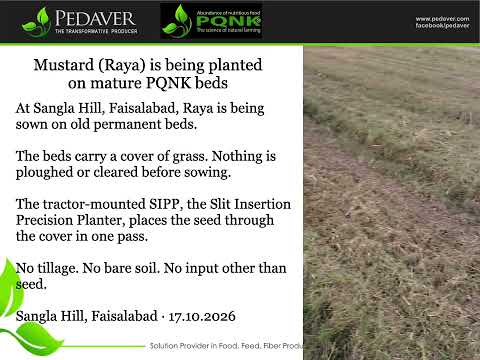
At Sangla Hill, Faisalabad, Raya (mustard) is being sown on mature PQNK permanent beds. The beds carry a cover of grass, and nothing is ploughed or cleared before sowing. The tractor-mounted SIPP, the Slit Insertion Precision Planter, places the seed through the cover in one pass. No tillage, no bare soil.
Sangla Hill, Faisalabad
Watch Video →KE-042 · Field Evidence · Alfalfa sown with the VIPP on permanent beds
VIPP: Sowing Alfalfa Straight Through the Cover
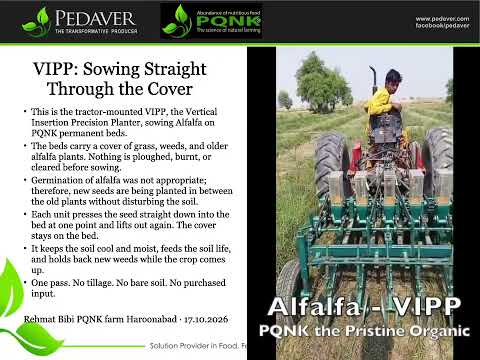
At Rehmat Bibi Farm in Haroonabad, the tractor-mounted VIPP (Vertical Insertion Precision Planter) is sowing alfalfa on PQNK permanent beds. The beds carry a cover of grass, weeds and older alfalfa plants, and nothing is ploughed, burnt or cleared before sowing. The earlier alfalfa germination was not satisfactory, so new seed is being planted in between the old plants without disturbing the soil. This is the advantage of the VIPP: it can plant a crop into a standing crop (crop-in-crop). Each unit presses the seed straight down into the bed at one point and lifts out again, so the cover stays on the bed, keeping the soil cool and moist, feeding the soil life and holding back new weeds while the crop comes up. One pass, no tillage, no bare soil and no purchased input.
Haroonabad (Rehmat Bibi Farm)
Watch Video →KE-041 · Farmer Testimony + Field Evidence · Canola (rapeseed) sown without tillage in an orange orchard
No-Till Canola Germinating on Rain Moisture in a PQNK Orange Orchard
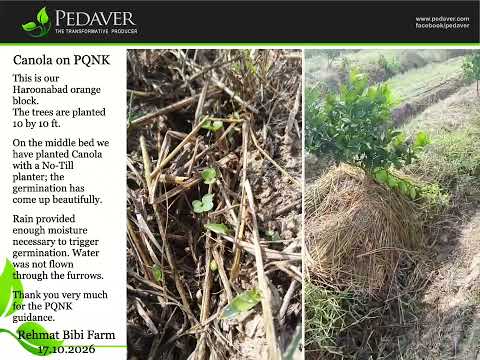
At Rehmat Bibi Farm in Haroonabad, the orange block is planted 10 by 10 feet. Canola was sown on the middle bed with SIPP, the Slit Insertion Precision Planter, and the germination has come up beautifully. Rain provided the moisture needed to trigger germination; no water was run through the furrows. The farm thanks PQNK for its guidance. The sowing window and care of PQNK canola are covered in Knowledge Paper KP-215.
Haroonabad (Rehmat Bibi Farm)
Watch Video →KE-040 · Field Evidence · Sugarcane
Sugarcane Tillering Strongly Beside Weeds on PQNK
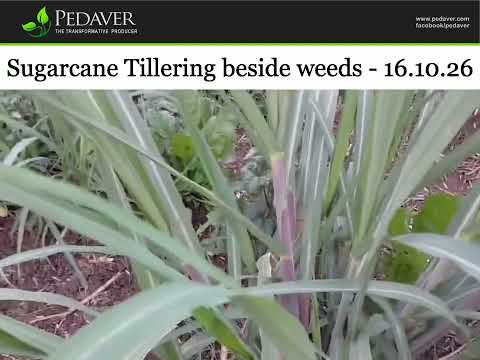
A PQNK sugarcane field filmed on 16 October 2026 is tillering strongly: new shoots are coming up in large numbers, and they are thick and uniform. A few plants stand out, taller and more vigorous with every shoot thicker, like a sturdy boy in a class, and can be picked out even from a distance; the rest of the field gradually comes up alongside them. The field is covered with weeds at this stage, and the narration is clear that this is no cause for worry at all.
Watch Video →KE-039 · Farmer Testimony + Field Evidence · Biodiversity in a PQNK field
Behind the Obvious: Reading a Living Agricultural Ecosystem
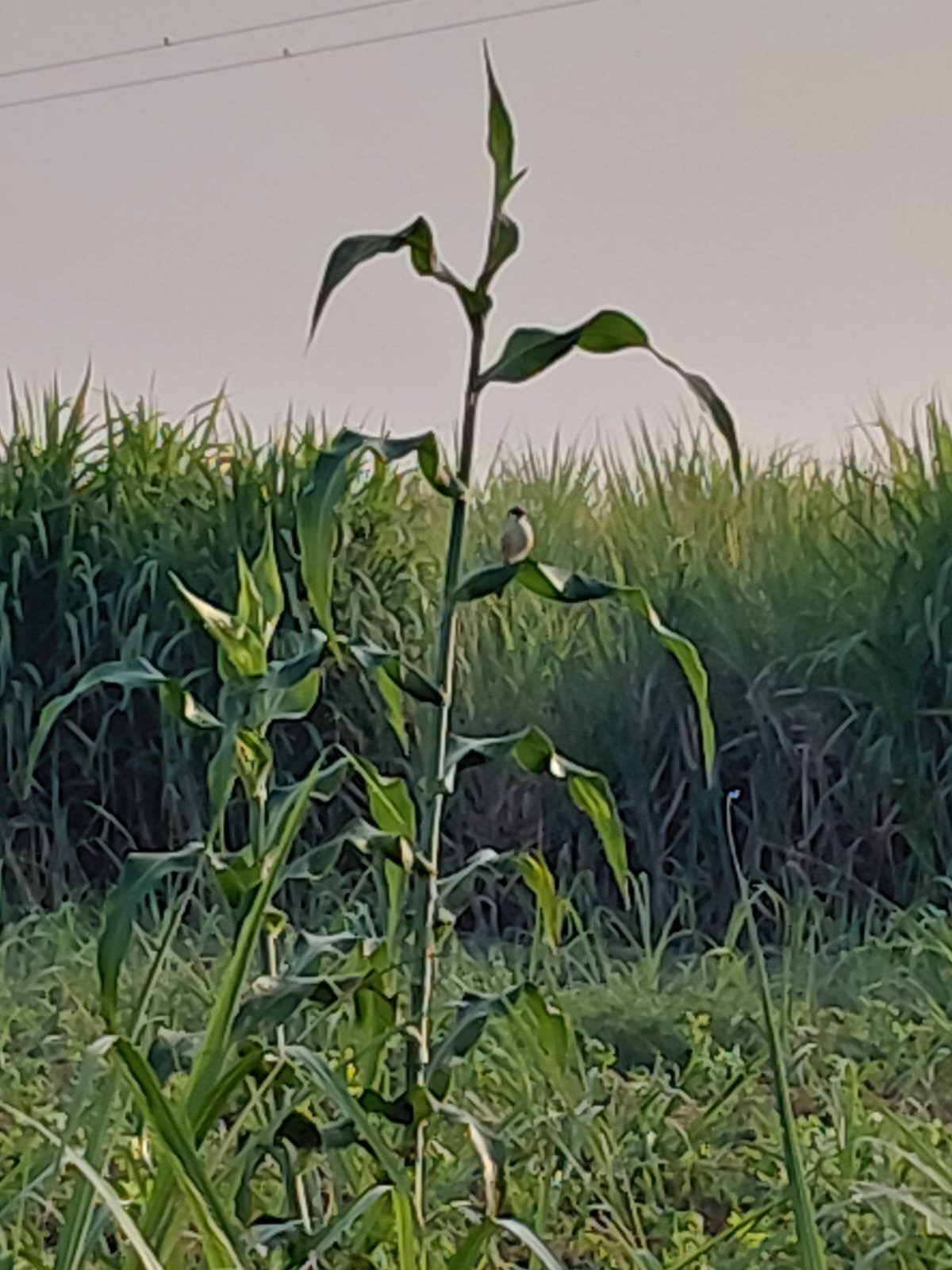
Vasudha Sardar photographed a small bird perched on a crop plant in her PQNK field and shared it as “A bird watching.” Her friend Madhuri Paranjape, of Vasudha’s PQNK Training group, looked “behind the obvious”: the deep green leaves are making sugars, and send 20 to 40 percent of their carbon below ground to feed the soil life that makes minerals available to the roots; the bird, which she identified as a shrike (khatik in Marathi), is a small predator that lives only where a whole food chain is at work. On PQNK beds, never tilled and never left bare, that chain is whole again, and pests are held in balance by their natural enemies and by healthy plants, without sprays. A field is more than its harvest: it is a living system, and its biological relationships produce the harvest.
Vasudha Sardar
Read the full exchange (PDF) →Download PDF ↓KE-038 · Field Evidence + Machinery Demonstration · Canola (rapeseed) sown without tillage between mango rows
No-Till Planting of Canola on PQNK Permanent Beds in a Mango Orchard
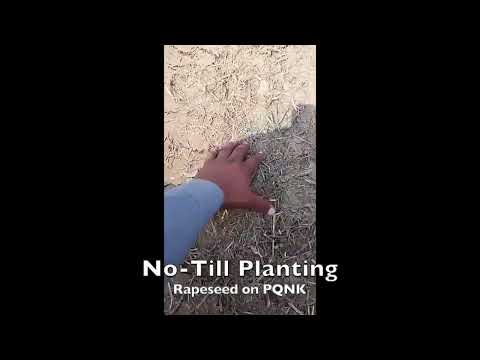
On an organic PQNK mango orchard at Haroonabad, with the trees planted 10 by 20 feet, the three empty permanent beds between the tree rows are sown with canola without tillage. A Jantar cover crop grown on the beds is cut with a mulcher, the beds are lightly renovated and the furrows cleaned, and all the residue stays on the surface as mulch. The canola is then sown straight through the residue with a precision planter, the two outer rows about 6 inches in from the bed edges. The field had received rain, and the crop was sown on that moisture with no irrigation. The sowing window and care of PQNK rapeseed are covered in Knowledge Paper KP-215.
Haroonabad (Maxim Farm)
Watch Video →KE-037 · Farmer Testimony + Field Evidence · Dew, mulch and soil moisture in PQNK sugarcane
Dew on PQNK Sugarcane at Dawn: Wet Mulch, Moist Living Soil Beneath
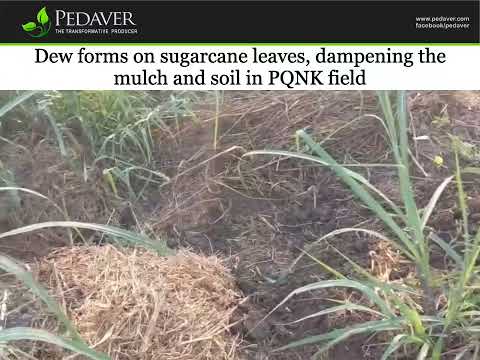
On a clear morning, Vasudha Sardar walks her PQNK sugarcane plot and shows dew collected on the leaves of almost every plant, with the mulch beneath wet with it. Lifting the mulch with a stick, she finds the soil underneath moist and sweet-smelling, with white fungal growth in it, which she reads as beneficial fungi. It is the water a living, covered soil gathers from the air every night: dew condenses on the leaves and runs down into the mulch, and the mulch keeps the soil beneath moist. The PQNK water cycle of receiving, retaining and using this water is explained in Knowledge Papers KP-214 and KP-217.
Vasudha Sardar
Watch Video →KE-036 · Farmer Testimony + Field Evidence · Papaya on PQNK permanent beds
Papaya on PQNK: The Profitable Tropical Plant
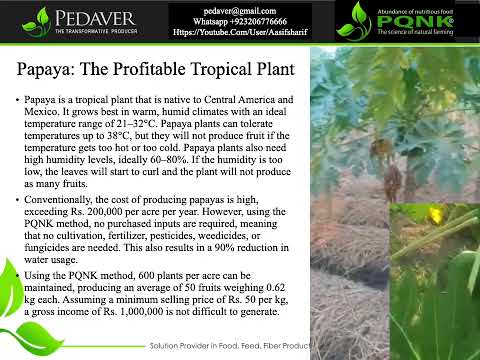
A papaya grower shows his orchard, fully on PQNK: no fertiliser and no spray. Last year the beds were mulched with paddy straw; over the year the mulch blew away in places and broke down, so after the water channel was cleaned the beds were mulched again. The trees are fruiting heavily, the fruit is going to market, and his crop is better than that of the growers around him. Before PQNK, he says, there was endless labour, spraying day and night at high cost, and still the diseases were not controlled; since the beds were mulched the family has been free of that worry, and they only check the plants and give water. The slide sets out the economics, kept on the low side: conventional papaya costs more than Rs. 200,000 per acre per year, while PQNK needs no purchased inputs and about 90 percent less water. At 600 plants per acre, an average of 50 fruits per plant at 0.62 kg each and Rs. 50 per kg, well below the wholesale price of over Rs. 100, the gross income is close to Rs. 1,000,000 per acre. Papaya under PQNK is covered in PQNK Book Chapter 41.
Watch Video →KE-035 · Farmer Testimony + Field Evidence · Mango orchard recovery on PQNK
Mango Orchard on Death Row, Recovered Within Nine Months on PQNK
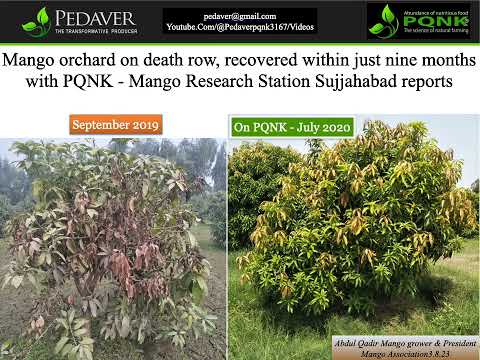
The slide, "Mango orchard on death row, recovered within just nine months with PQNK: Mango Research Station Sujjahabad reports", shows the same declining mango tree in September 2019 and, on PQNK, in full healthy leaf in July 2020. In the video, Abdul Qadir, mango grower and President of the Mango Association, says growers had believed they would never reach the planned plant population per acre: trees raised for ten to twelve years fell to dieback, disease and decline, and had to be planted again. With PQNK he is now sure that every tree in the orchards will be healthy and give a proper crop. His orchards are healthy, produce without fertiliser, and the cost of production has fallen sharply. He has about 200 acres of mango and, with the fruit harvest almost over, has started shifting the whole orchard onto beds this winter, so that not a single tree will be off the beds. Orchards under PQNK, including this recovery, are covered in PQNK Book Chapter 40.
Abdul Qadir · Sujjahabad
Watch Video →KE-034 · Q&A + Advisory · Citrus orchard on PQNK permanent beds
Q&A on PQNK Citrus: Soil in the Furrows, Water, and the Empty Centre Bed
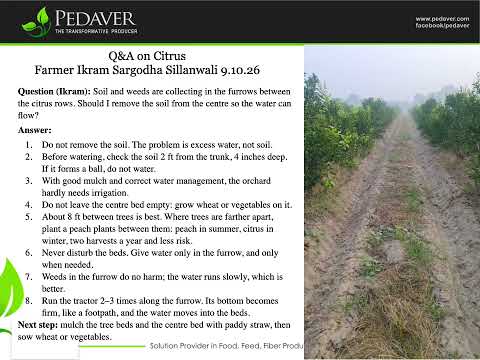
Farmer Ikram has moved his citrus orchard onto PQNK permanent beds and the trees are healthy and active. Soil and weeds are collecting in the furrows between the rows, and he asks whether to remove the soil from the centre so the water can flow. The answer: do not remove the soil; the problem is excess water, not soil. Before watering, check the soil 2 feet from the trunk and 4 inches deep, and if it forms a ball, do not water; with good mulch and correct water management the orchard hardly needs irrigation. Do not leave the centre bed empty: grow wheat or vegetables on it. About 8 feet between trees is best; where trees are farther apart, plant a peach between them, for a peach harvest in summer and citrus in winter, two harvests a year and less risk. Never disturb the beds, and give water only in the furrow and only when it is needed. Weeds in the furrow do no harm, as the water runs slowly. Running the tractor two or three times along the furrow makes its bottom firm, like a footpath, so the water moves into the beds. Next step: mulch the tree beds and the centre bed with paddy straw, then sow wheat or vegetables. Orchards under PQNK are covered in PQNK Book Chapter 40.
Ikram · Sillanwali, Sargodha
Watch Video →KE-033 · Field Evidence · Soil moisture under organic cover
Harvesting Without Irrigation: Residue Holds Moisture, Even in the Desert
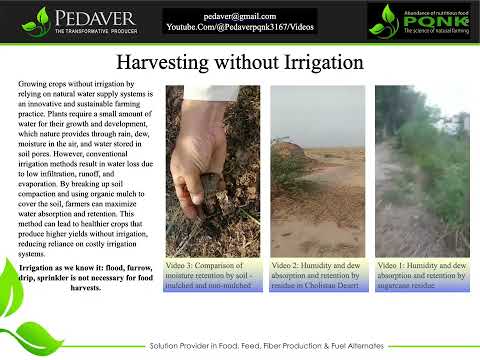
Three field clips on how organic cover keeps soil moist without irrigation. Sugarcane residue lying on a roller-compacted road is pulled aside to show moist soil soft enough to open by hand, while the uncovered road beside it is as hard as rock. In the Cholistan Desert, on the road from Chishtian towards Haroonabad, a heap of residue left in an open place for five to six months is lifted to reveal moist, soft soil, while the land around it is so dry and hard that a metal key cannot open it. A third clip compares soil with and without mulch. Residue captures humidity and dew and slows the loss of moisture, so the soil beneath stays soft and alive. The field evidence behind Knowledge Paper KP-214.
Watch Video →KE-032 · Farmer Testimony + Field Evidence · Kinnow orchard: rainfall infiltration after hardpan breaking
When 13 Inches of Rain Falls in Eight Hours: PQNK Beds Take the Water In
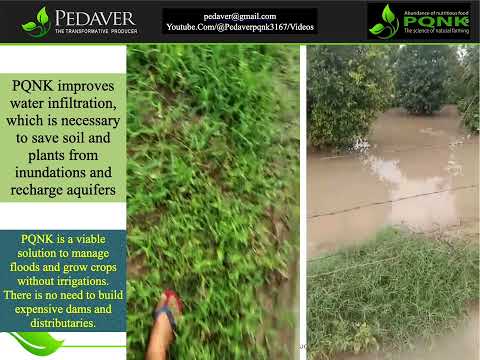
Jaskaran Singh, a PQNK farmer in Fazilka district, Indian Punjab, records his Kinnow orchard after extreme rain (13 inches in eight hours). On the permanent beds he made under PQNK, where the hardpan had been broken, the water has gone into the soil within a short time and he walks on the beds in slippers; water is left only in the furrows. In the neighbouring conventionally managed orchards and fields, water stands a foot deep. A strip of his own orchard where beds were shaped but the hardpan was not broken still holds water. He credits the guidance he received and notes the Jantar cover crop and mulch on his beds. The field evidence behind Knowledge Paper KP-213.
Watch Video →KE-031 · Field Evidence · Tomato
Tomato on PQNK: Healthy, Vigorous Plants in Intense Heat
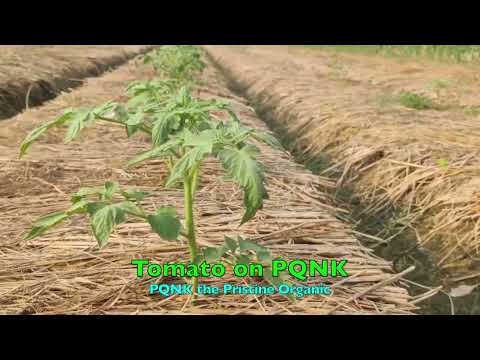
A short field clip of tomatoes growing under PQNK in the field of farmer Abdul Razak at Sherkpur. Even in intense heat the plants show strong health, good colour and exceptional vigour; the farmer himself calls it the happiness of the plants. Organic mulch on the soil surface shields the soil from direct sun, conserves moisture and helps moderate the environment around the roots. The clip sums up the PQNK approach: PQNK does not control the weather; it improves the environment of the soil and roots so that the plant can express its natural potential.
Watch Video →KE-030 · Field Evidence · Green peas
Green Peas on PQNK: Strong Germination in Unusually Hot Weather
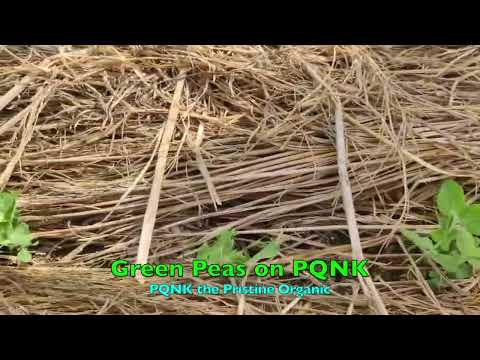
A short field clip, in Urdu and English, of green peas sown under PQNK, emerging through a thick layer of organic mulch on the bed. Although the temperature at sowing was unusually high for peas, germination is uniform and the young plants are healthy and vigorous. The reason is the organic mulch on the soil surface: it shields the soil from direct sun, moderates soil temperature and conserves moisture around the seed and the young roots. The clip sums up the PQNK approach: instead of making the crop fight the weather, give its roots a better environment.
Watch Video →KE-029 · Q&A + Advisory · Saline soils and high-TDS irrigation water
Using High-TDS Water in PQNK Agriculture (Urdu Version)
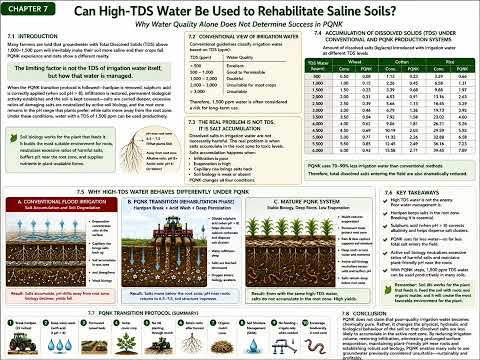
The Urdu version, with Urdu on-screen text and voiceover, of the PQNK explainer on whether groundwater with high total dissolved solids can be used to grow crops on saline or alkaline soil (the English version is KE-026). The message is the same: the limiting factor is not the salt concentration of the water alone but what happens to the salts once the water enters the soil. Conventional flood irrigation, a hardpan, surface evaporation and capillary rise leave salts concentrated in the root zone. PQNK conversion breaks the hardpan to about 22 inches, gives a deep water wash (with acid where soil pH is high), forms permanent raised beds and grows a cover crop, and the mature system keeps the soil covered and the root zone moist and aerated. Because the salt load is concentration multiplied by the volume of water applied, using far less water means far less salt entering the field. High-TDS water is not automatically the enemy; poor water and soil management is the greater problem.
Watch Video →KE-028 · Advisory · Learning PQNK
The Five Stages of Learning: From Information to Wisdom
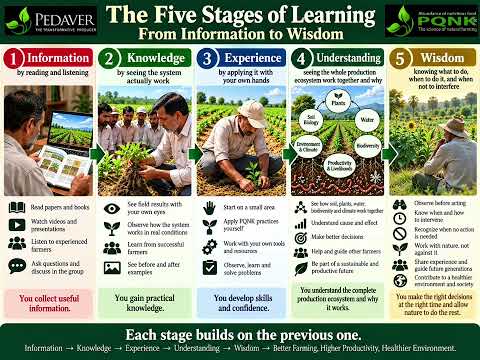
An illustrated advisory on learning PQNK as a journey in which each stage prepares the farmer for the next. Information comes by reading and listening: papers, books, videos, experienced farmers and group discussion. Knowledge comes by seeing the system actually work: crops, soil and roots in the field, compared results and farmers already applying it. Experience comes by doing it yourself, preferably on a small area with your own soil, water, tools and conditions, making mistakes and solving problems until knowledge becomes skill and confidence. Understanding comes when soil, plants, water, biodiversity, climate and productivity are seen as one living production ecosystem, with cause and effect clear enough to decide well when conditions change. Wisdom, the fifth stage, is knowing what to do, when to do it and when not to interfere: an insect seen is not automatically a reason to spray, a dry surface not automatically a reason to irrigate, a changing plant not automatically a reason to add fertiliser. Sometimes the ecosystem is already correcting itself, and wisdom also carries the responsibility to share experience and guide those who follow.
Watch Video →KE-027 · Field Evidence · Sugarcane
Sugarcane on PQNK: 2,800 Maunds (112 Tonnes) per Acre
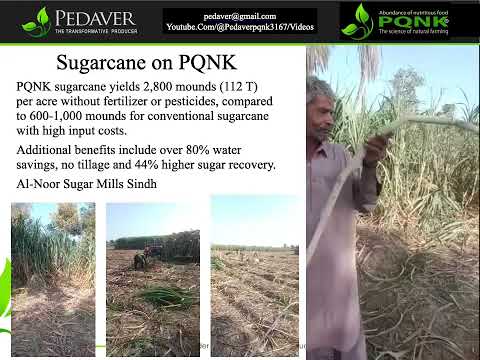
Field footage of a mature PQNK sugarcane crop being harvested from a residue-covered field, with the stalks cut and the trash left on the ground. The video's summary slide states a yield of 2,800 maunds (about 112 tonnes) per acre grown without fertiliser or pesticides, against 600 to 1,000 maunds for conventional sugarcane with high input costs, together with over 80 percent water saving, no tillage and 44 percent higher sugar recovery, and credits Al-Noor Sugar Mills, Sindh. It is the documented result behind the 2,800-maund figure in Chapters Five and Thirty-Seven of the PQNK book.
Watch Video →KE-026 · Q&A + Advisory · Saline soils and high-TDS irrigation water
Can High-TDS Water Rehabilitate Saline Soils? The PQNK Salt Equation
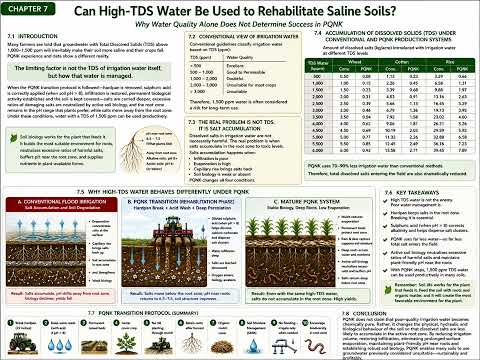
An illustrated explainer on whether groundwater with high total dissolved solids can be used for crops on saline or alkaline soil. It argues that the limiting factor is not the salt concentration alone but what happens to the salts after the water enters the soil. Under conventional flood irrigation, poor infiltration, surface evaporation, capillary rise and a hardpan leave salts concentrated in the root zone. PQNK conversion breaks the hardpan to about 22 inches, gives a deep water wash (with acid where soil pH is high), forms permanent raised beds and grows a Jantar cover crop; the mature system keeps the soil covered and the root zone moist and aerated. Because the salt load equals concentration multiplied by the volume of water applied, far less irrigation water means far less salt entering the field. The ten-step transition protocol is summarised, and the conclusion is that high-TDS water is not automatically the enemy: poor water and soil management is the greater problem.
Watch Video →KE-025 · Farmer Testimony + Field Evidence · High-density orchard
Laying Out a High-Density Orchard on a Four-Year PQNK Field: Mian Arfan Khalid, Rajanpur
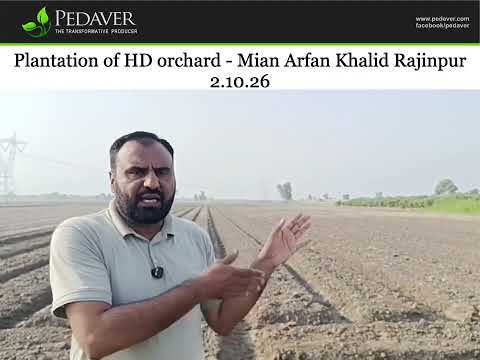
Speaking on camera in front of freshly shaped raised beds, the farmer explains that his plot has been under PQNK for about four years. This season he re-laid the beds, not because they had failed to mature, but to plan a systematic high-density orchard: the earlier one-acre plots watered from a central channel have become straight two-acre plots across a six to eight acre belt, fed directly from a lined water channel. Mustard has been sown as an intercrop, and the orchard will be planted next with reduced plant-to-plant and row-to-row spacing, laid out so that picking and transport stay easy. He reports that the farm has become a model in his area that other farmers visit to learn from, and describes PQNK as farming without fertiliser or chemicals.
Mian Arfan Khalid · Rajanpur
Watch Video →KE-024 · Field Evidence · Soybean
Soybean on PQNK Raised Beds: No Inputs but the Seed and Two Furrow Waterings
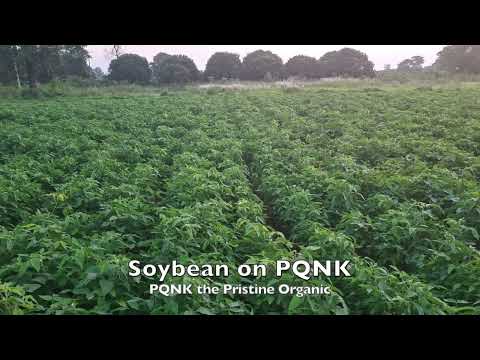
Field footage of a dense, even soybean crop growing on PQNK permanent raised beds, with the canopy closing over the beds and the furrows still visible between them. As reported by Asif Sharif, the crop received no input other than the seed and two supplementary flows of water through the furrows: no fertiliser, no pesticide and no other purchased input. It is a legume grown on the living, covered soil of the permanent beds, relying on the field's own biology for its nutrition. No yield is reported yet.
Watch Video →KE-023 · Farmer Testimony + Field Evidence · Rice
Rice on PQNK Raised Beds — First Crop With No Puddling or Fertiliser
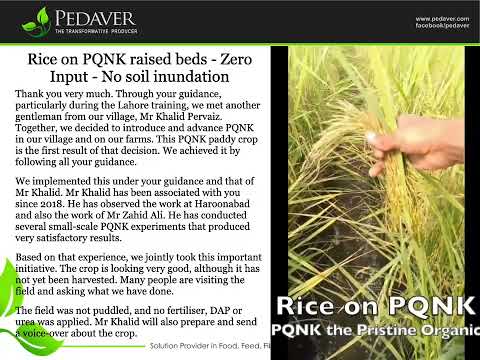
Field footage of a standing PQNK paddy crop on raised beds, followed by the farmer's own voice report and an English reading of it. After attending the PQNK training in Lahore, he and a fellow farmer from his village decided to introduce PQNK on their farms, and this rice is their first result. His partner has been associated with PQNK since 2018 and had already run small-scale PQNK trials with satisfactory results. The crop was grown without puddling (kaddu) and, the farmer reports, with no fertiliser at all: no DAP and no urea. The crop was still standing ahead of harvest, drawing a steady stream of neighbouring farmers asking how it was grown. No yield is reported yet.
Watch Video →KE-022 · Farmer Testimony + Field Evidence · Sesame
Sesame Between Ber (Jujube) Rows on PQNK — Farmer from Nepal
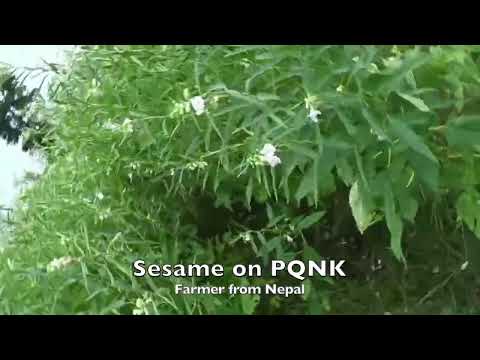
The PQNK farmer in Nepal whose papaya field appears in KE-018 shows sesame (til) grown between rows of ber (jujube) trees. The land was first shaped into raised beds and mulched, then the ber was planted with 20 feet between rows, leaving three beds between each tree row, which were sown with sesame. The plants are compact rather than tall and flowering well, with three to four branches each carrying pods along their length. A small conventional plot grown alongside as a comparison shows visible crop problems, while the PQNK beds show none. He values sesame as an easily grown oilseed and a good dietary source of calcium, and says the same guided approach is being applied to papaya, ber, guava and mango on the farm.
Nepal
Watch Video →KE-021 · Field Evidence · One Acre Prosperity
One Acre Prosperity Model on PQNK — Fruit Tree Biodiversity
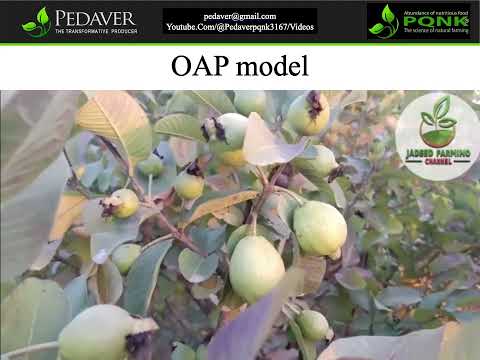
A field walkthrough of the fruit-tree component of the One Acre Prosperity model under PQNK, moving between nectarine, guava, date, lemon and peach trees at different growth and fruiting stages within the same managed plot. The clip illustrates the perennial fruit layer of the OAP design described in the PQNK book's Closed-Loop Farm chapter, showing several species carrying fruit simultaneously on the same acre rather than a single-crop planting.
Watch Video →KE-020 · Field Evidence · Gladiolus
Gladiolus on PQNK — Early September Planting and Germination
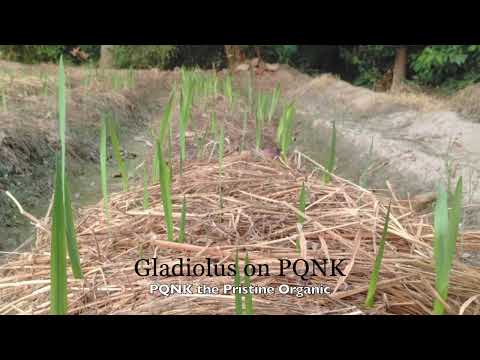
A field update on gladiolus grown under PQNK, planted on 5 September, roughly a month earlier than the previous practice of planting only after October. Germination is described as excellent, with strong leaf colour and growth achieved before any irrigation was given. Planting density was also substantially increased over previous seasons, from a single row on one side of the bed to four rows spanning both sides, including the bed top. A small patch left without mulch after wind disturbed it shows patchier emergence than the surrounding mulched area, illustrating mulch’s role in even germination.
Watch Video →KE-019 · Field Evidence + Machinery Demonstration · SIPP / Precision Planting
SIPP in Operation — Planting in a Matured Crop
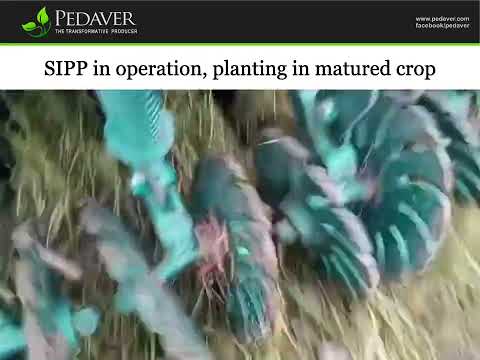
A short field clip of the SIPP (Slit Insertion Precision Planter) operating in a bed where the standing crop has already matured, placing seed through the existing crop and residue without disturbing it — a practical demonstration of the crop-in-crop, no-till planting capability described in the PQNK machinery chapters.
Watch Video →KE-018 · Farmer Testimony + Field Evidence · Papaya
Papaya on PQNK — Farmer from Nepal
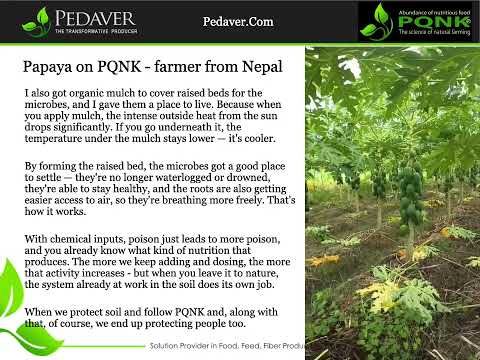
A papaya farmer in Nepal explains how organic mulch on PQNK raised beds gives soil microbes both an organic-matter food source and a place to live, keeps the soil under the mulch noticeably cooler than the exposed surface, and lets roots breathe rather than sitting waterlogged. He contrasts this with chemical-input farming, where poison compounds poison and nutrition quality suffers, arguing that leaving the soil's own biological system alone lets it do its own work — protecting the soil ecosystem, he says, ultimately protects people too.
Nepal
Watch Video →KE-017 · Farmer Testimony + Field Evidence · Citrus (Lemon)
Citrus (Lemon) on PQNK — No Agrochemicals, Farmer's Best Result Yet
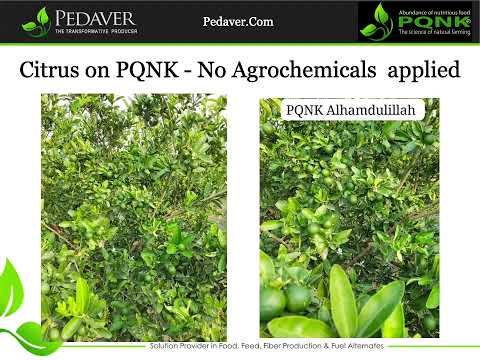
A farmer in a lemon-growing belt reports that most growers around him are spraying pesticide heavily against recurring pest and disease pressure, while his own PQNK crop has had no spray applied at all. He describes this season's result as the best he has ever seen — better even than last year's already strong result.
Watch Video →KE-016 · Farmer Testimony + Field Evidence · Peanut (Groundnut)
Peanut on PQNK — Mulch Keeps Water Off the Bed in Heavy Monsoon Rain
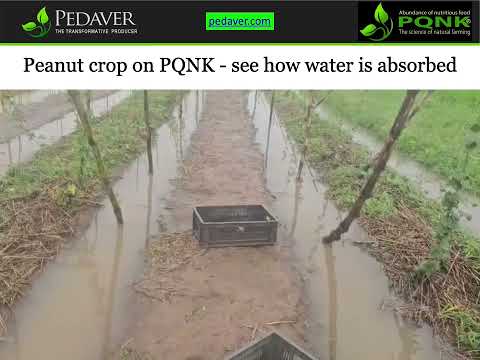
A farmer's own field demonstration during a heavy monsoon downpour: on PQNK beds with mulch — peanut, cucumber and tomato — a footstep on the bed stays firm and water does not rise onto the surface, while on unmulched beds, including an unmulched section of the same peanut plot, water climbs the bed and the soil gives way underfoot. The farmer credits the mulch layer and the retained root network of prior crops for holding the bed together, and thanks Asif Sharif directly for the technique.
Watch Video →KE-015 · Advisory + Field Evidence · Mango
Mango on PQNK in Saline Waterlogged Soil
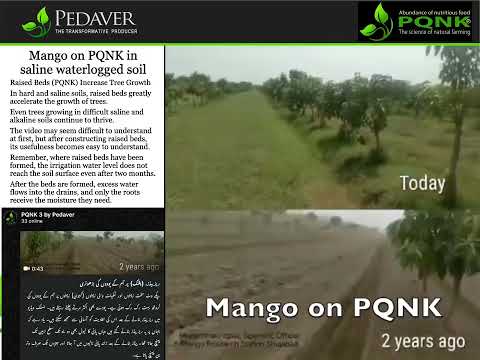
Raised beds under PQNK accelerate tree growth even in hard, saline and alkaline soils prone to waterlogging. Once the beds are formed, the irrigation water level does not reach the soil surface for weeks at a time — excess water moves off into the drains, and only the roots draw the moisture the tree needs.
Watch Video →KE-014 · Media Coverage + Farmer Testimony
PQNK Crosses the Border: Kutchmitra Newspaper Coverage, Kutch, Gujarat, India
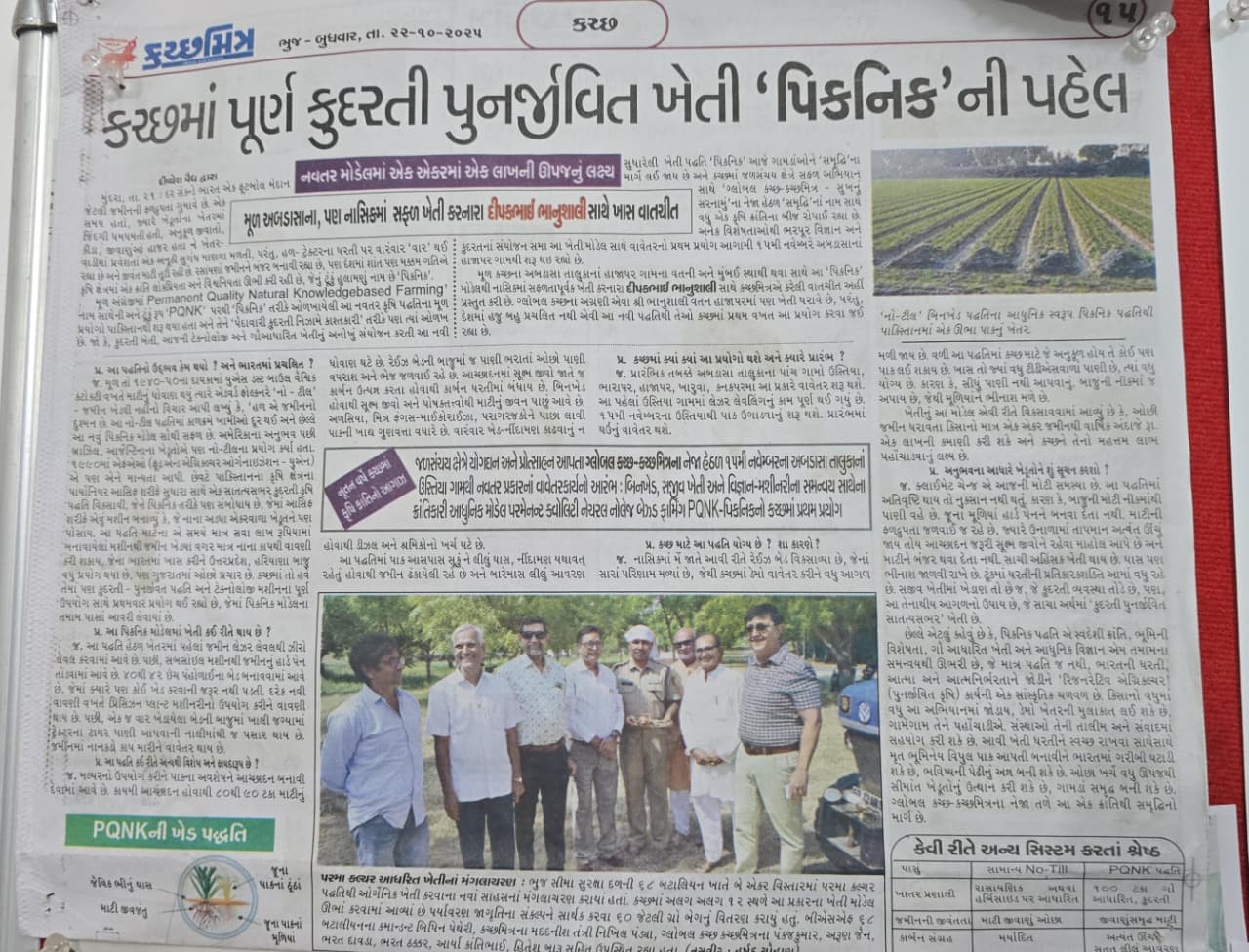
Kutchmitra, a regional Gujarati-language newspaper published in Bhuj, ran a special interview feature on PQNK's introduction into Kutch, India, under the headline “Complete Natural Regenerative Farming ‘PQNK’ Initiative in Kutch – India.” The piece profiles farmer Deepakbhai BhanuShali, who is practising PQNK in Nakhatrana under Kutch's difficult rainfall, water and soil conditions, and explains the system's no-till, minimum-disturbance approach and its use of raised beds and furrows to balance soil moisture and aeration under water scarcity. The coverage documents PQNK's first reported field adoption outside Pakistan, where the system was developed.
Deepakbhai BhanuShali · Nakhatrana, Kutch, Gujarat, India
KE-013 · Farmer Testimony + Field Evidence · Amla (aonla) on rolling land
Amla on PQNK on Rolling Land
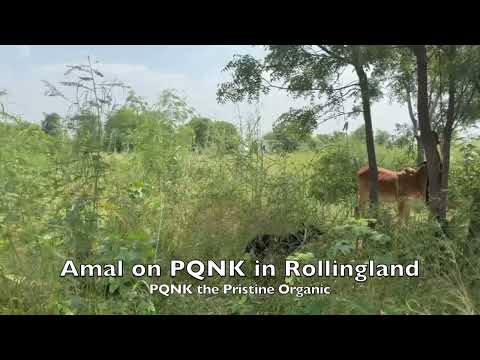
A PQNK farmer's field report on an amla (aonla) plantation established on rolling land using a contour-line layout — grown rainfed with no irrigation, no agrochemicals and no tillage.
Watch Video →KE-012 · Advisory + Field Evidence · Hardpan & soil aeration
The Role of Hardpan, Nematodes, and Aeration in Plant Health
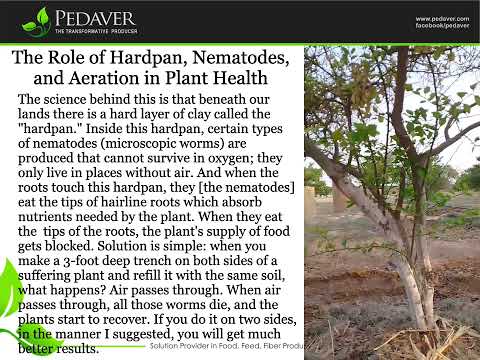
Asif Sharif explains how the Farmer Advisory guidance on the compaction hardpan, nematode activity, and soil aeration played out in the field — a confirmation of how the advisory worked in practice.
Watch Video →KE-011 · Farmer Testimony + Field Evidence · Citrus (Kinnow)
Citrus Under PQNK — No Agrochemicals Applied
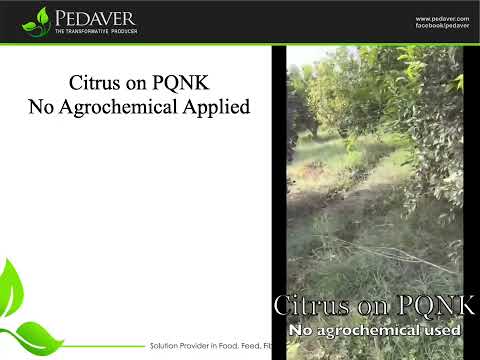
Citrus performing under PQNK with no agrochemical inputs applied.
Watch Video →KE-010 · Q&A + Advisory
A Question on Natural Ecosystem Science
Brought a question on the Natural Ecosystem Science of Production Agriculture directly to our farmer WhatsApp group — answered as part of our ongoing advisory support.
KE-009 · Q&A + Advisory
Crop Light Requirements Under PQNK
Raised detailed questions on crop light requirements under PQNK, answered directly by our advisory team.
KE-008 · Farmer Testimony + Field Evidence · Citrus (Kinnow)
Citrus on PQNK
Citrus on PQNK, documented on his own orchard.
Watch Video →KE-007 · Farmer Testimony + Field Evidence · Wheat
Wheat on PQNK
Wheat on PQNK — lowest cost of production, highest quality.
Watch Video →KE-006 · Farmer Testimony + Field Evidence
PQNK Results
Reports on his own PQNK results and adoption.
Watch Video →KE-005 · Farmer Testimony + Field Evidence · Vegetables
Vegetables on PQNK
High-nutrition, high-density vegetables produced under PQNK.
Watch Video →KE-004 · Farmer Testimony + Field Evidence · Mango & Citrus
Mango & Citrus Recovery on PQNK
Citrus recovery on PQNK — bringing a declining orchard back to health.
Watch Video →KE-003 · Farmer Testimony + Field Evidence · Citrus (Kinnow)
Citrus on PQNK
Citrus on PQNK, documented on our own orchard.
Watch Video →KE-002 · Farmer Testimony + Field Evidence · Guava
Guava on PQNK — Mian Arfan Khalid, Rajanpur
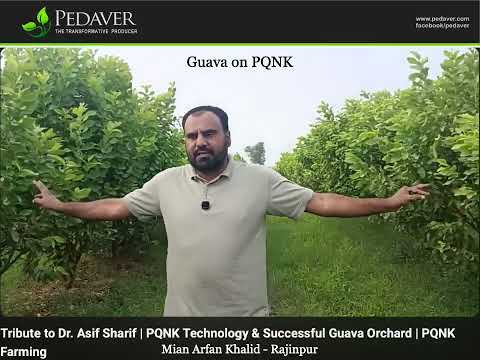
Guava on PQNK — high-density planting, three years without a single chemical input, and market shelf life stretched from two days to two weeks.
Mian Arfan Khalid · Rajanpur
Watch Video →KE-001 · Farmer Testimony + Field Evidence · Wheat
Wheat on PQNK
Wheat on PQNK — lowest cost of production, highest quality.
Watch Video →More From Pedaver’s Knowledge Exchange
Related material not yet folded into the KE-numbered index above.