

KP-137 · Plant Physiology & Production Systems
PQNK Fully Supports Tropism
A farmer-question-and-answer paper on how PQNK relates to plant tropism, phototropism, hydrotropism, geotropism, and acoustic tropism, arguing that PQNK does not apply these natural response systems but removes the soil-level barriers (compaction, chemical damage, blocked water movement) that suppress them in conventional farming.
Read or listen to the full paper ↓Abstract
Responding to a farmer question about whether PQNK supports tropism theory, this paper's central position is that tropism, the directional growth response of plants to stimuli, is not a technique to be applied but a natural capacity that functions correctly only when soil, water, air, and biology are restored. PQNK's role, in this framing, is to remove the barriers, compacted soil, chemically burned roots, blocked water movement, dead biology, that suppress a plant's tropic responses in conventionally managed fields, rather than to engineer tropism directly.
The paper works through each tropism in turn. Phototropism (bending toward light, driven by unequal auxin distribution) is supported through vertical canopy management, proper spacing, and the absence of nitrogen forcing or chemical stress, producing plants that orient their leaves for maximum light capture and stand upright without staking. Hydrotropism (root growth toward moisture) is supported by hardpan breaking, permanent raised beds, and undisturbed living roots and mulch, letting roots grow deeper and wider for better drought tolerance; the paper notes that in compacted or chemically hardened soils, hydrotropism is blocked rather than absent.
Geotropism (roots down, shoots up) is supported by loose, oxygenated, undisturbed soil structure, producing strong anchorage and lodging resistance, with frequent tillage identified as the specific practice that confuses geotropic signals and weakens root architecture. Acoustic tropism (response to sound and vibration), described as an emerging and only partially established field of plant science, is treated cautiously: PQNK does not depend on artificial sound stimulation, but the paper argues that a living PQNK soil is naturally 'noisy' in a biological sense, full of root-zone vibration, flowing water sounds, and root-microbe signaling that a dead, tilled soil cannot produce.
The paper's closing argument is that tropism 'fails' visibly in conventional farming specifically because compaction, chemical root damage, blocked water movement, and excess fertilizer override the natural hormone balance that tropic responses depend on, and that PQNK farmers commonly report deeper roots, better plant posture, reduced irrigation demand, and natural self-orientation of crops as this balance is restored.
Full Paper
If you use “Listen”, the text of the page may be sent to your browser or operating system’s speech provider, such as Apple, Google or Microsoft, depending on the voice your device uses. Pedaver does not process, transmit or store any audio.
PQNK fully supports tropism
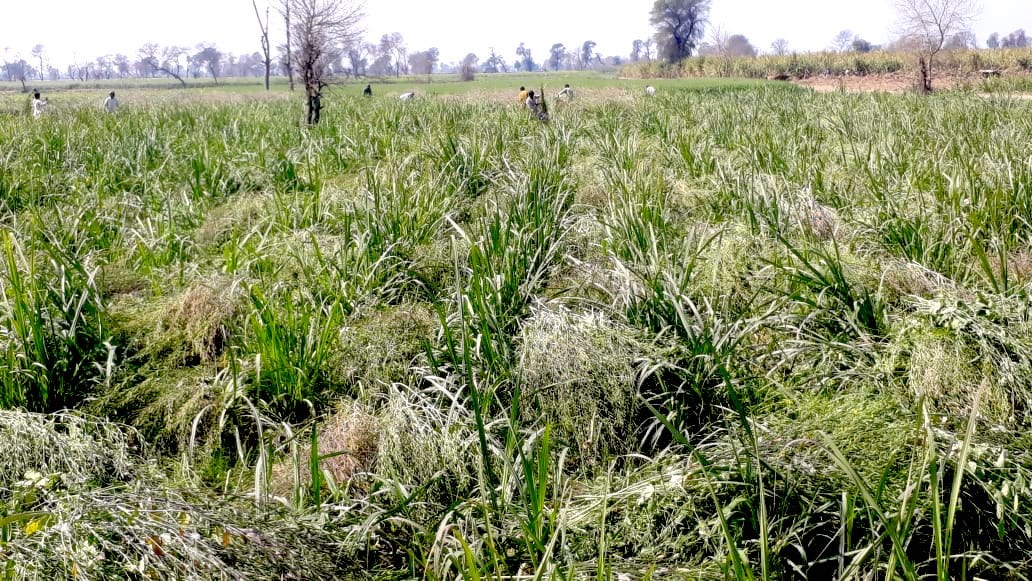
Question raised by Mr. Rakesh Rajistan India in PQNK farmers
“Sir, does PQNK support any type of tropism theory? If yes, how do phototropism, hydrotropism , geotropism , and acoustic tropism affect plant growth and yield? Please explain how each of these theories works. If any farmer has any experience with any of these theories, please share it. Thank you”
PQNK answers:
Thank you for raising this question. It is highly relevant to PQNK. Yes, PQNK fully supports tropism, because tropism is not a theory invented by humans— it is a natural response system built into plants. PQNK simply creates the conditions in which these natural responses can function optimally, without disturbance. Let us understand this clearly.
1. What Is Tropism (PQNK Understanding)
Tropism is the directional growth response of plants to natural stimuli. Plants do not move, but they respond by growing in the right direction. PQNK is based on one simple principle: When soil, water, air, and biology are restored, plants automatically express correct tropic behavior. PQNK does not “apply” tropism. It removes barriers that block it.
2. Phototropism (Response to Light)
Scientific basis
Phototropism is the bending of shoots toward sunlight due to unequal distribution of the hormone auxin.
How PQNK supports phototropism
• Vertical canopy management
• Proper spacing
• No nitrogen forcing
• No chemical stress
Field effects under PQNK
• Leaves orient themselves naturally to capture maximum sunlight
• Uniform photosynthesis
• Strong stems
• Better flowering and fruiting
• Reduced disease (sunlight penetration improves air flow)
Farmer observation (common but often unnoticed):
Under PQNK, plants “stand correctly” without staking or forcing.
3. Hydrotropism (Response to Water)
Roots grow toward zones with higher moisture.
How PQNK supports hydrotropism
• Deep hardpan breaking
• Permanent raised beds
• Living roots and mulch
• No soil compaction
• Roots grow deeper and wider
• Better drought tolerance
• No surface root dependency
• Efficient water use
Important clarification:
In compacted or chemically hardened soils, hydrotropism is blocked, not absent.
4. Geotropism / Gravitropism (Response to Gravity)
• Roots show positive geotropism (grow downward)
• Shoots show negative geotropism (grow upward)
How PQNK supports geotropism
• Loose, oxygenated soil
• No plough-pan
• Undisturbed root channels
• Stable soil structure
• Strong anchorage
• Upright plants
• Better nutrient uptake
• Lodging resistance
Common mistake:
Frequent tillage confuses geotropic signals and weakens root architecture.
5. Acoustic Tropism (Response to Sound & Vibration)
Scientific status
This is an emerging and partially established field of plant science. Plants respond to:
• Root-zone vibration
• Low-frequency sound
• Flowing water sounds
• Insect and chewing vibrations
PQNK position (very important)
PQNK does not reject acoustic response, but it also does not depend on artificial sound stimulation. Why? Because under PQNK:
• Living soil organisms already produce vibrations
• Flowing water in soil pores creates sound signals
• Root–microbe interactions generate biochemical and mechanical signals
In short:
PQNK creates a naturally “noisy” soil, biologically speaking.
6. Why Tropism Often “Fails” in Conventional Farming
Tropism appears weak when:
• Soil is compacted
• Roots are chemically burned
• Water movement is blocked
• Biology is dead
• Excess fertilizers override natural hormone balance
PQNK removes all of these barriers.
7. PQNK Summary Statement (Very Important)
Tropism is not something to be applied. It is something to be allowed. When:
• Soil breathes
• Water moves freely
• Roots are alive
• Sunlight reaches leaves
Plants automatically:
• Find light
• Find water
• Find depth
• Find stability
8. Invitation to Farmers (Group Participation)
Many farmers practicing PQNK have already observed:
• Deeper roots without effort
• Better plant posture
• Reduced irrigation demand
• Natural self-orientation of crops
We have 100’s of testimonies in pictures and videos from farmers showing:
• root pictures
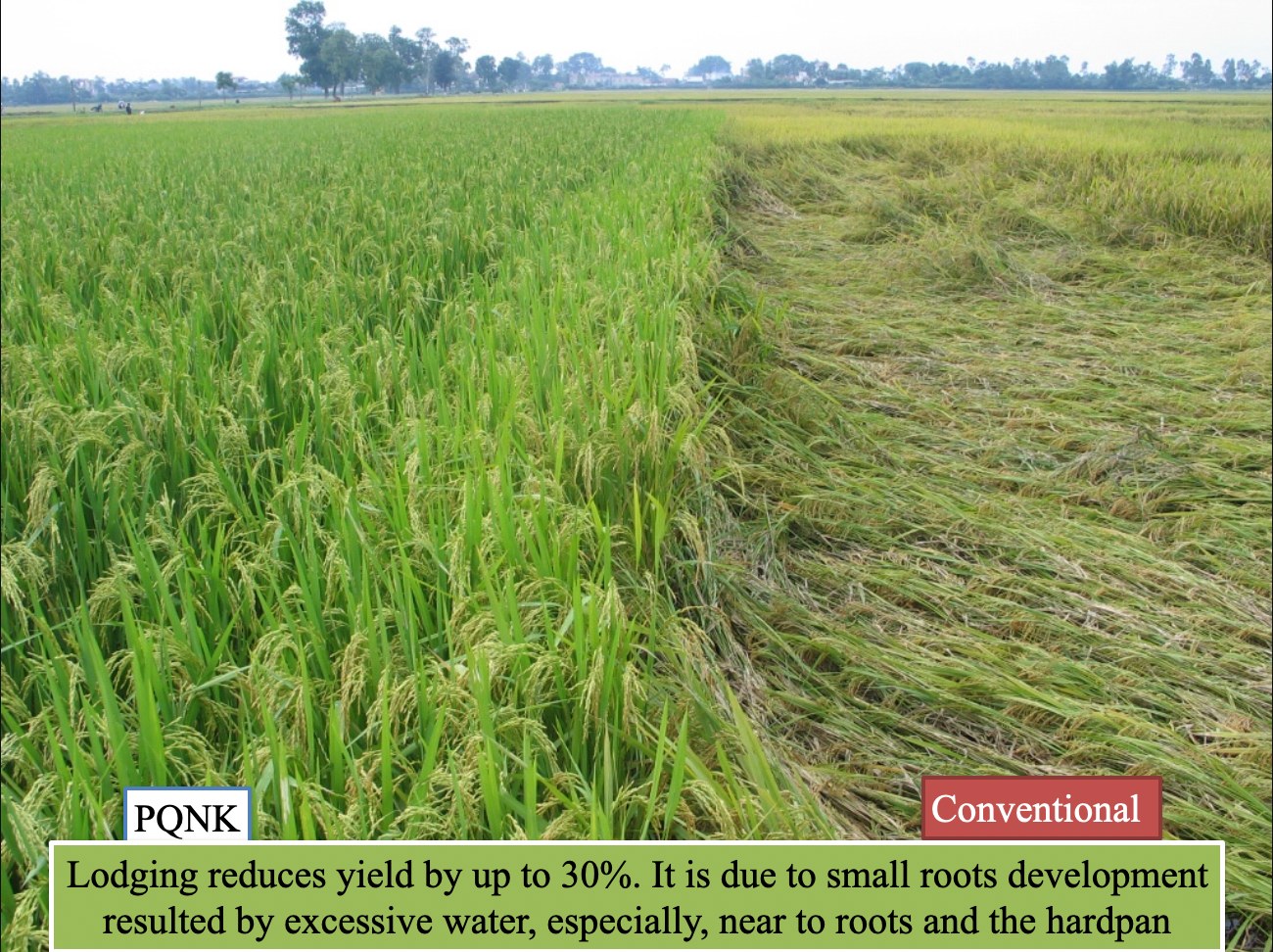
• lodging resistance examples
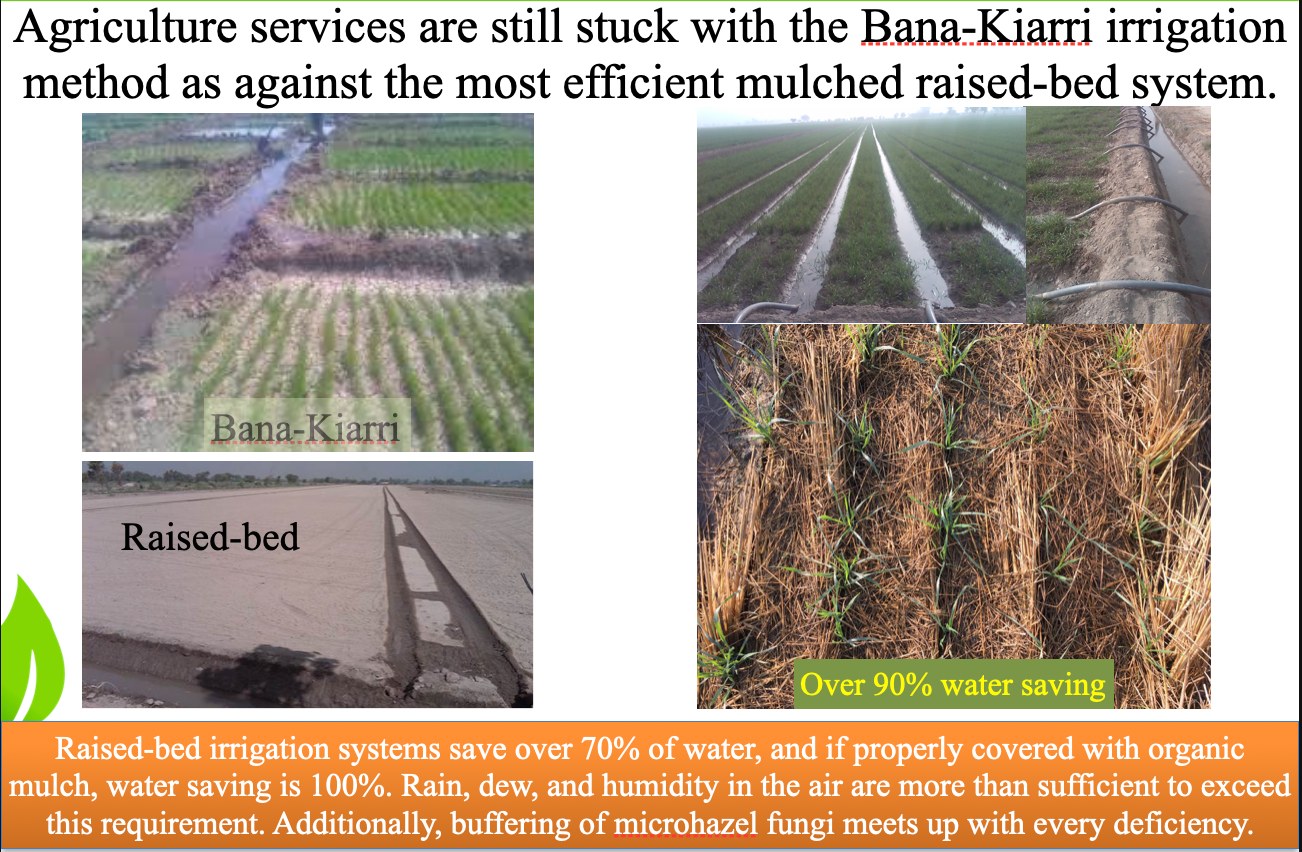
• drought tolerance experiences
• canopy behavior observations
This practical evidence is more powerful than theory; see picture gallery below.
Final PQNK Line
Nature already knows the theory. PQNK simply stops interfering.
Pictures gallery
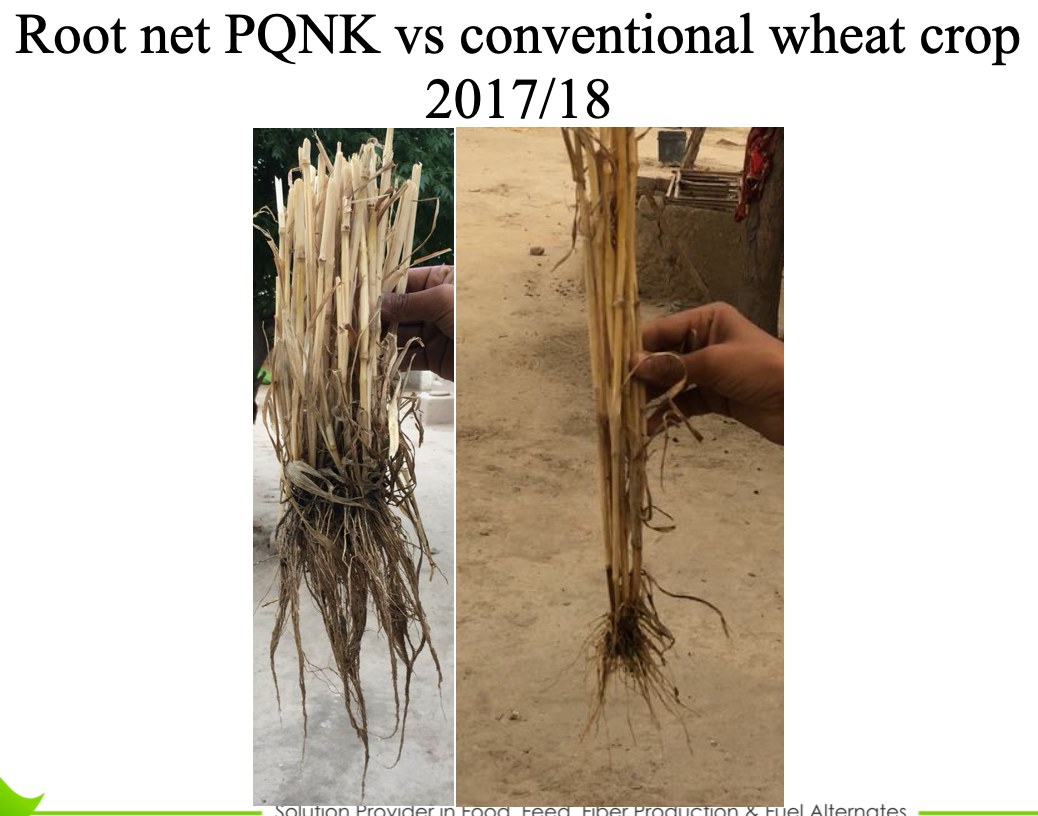
PQNK vs Conventional Root Lodging resistance
Drought tolerance Canopy behavior
Footnote
PQNK (pronounced “picnic”)—the regenerative & sustainable Pristine Organic Farming System —is grounded in Natural Ecosystem Science. This science employs perennial biodiversity, protects soil with organic mulch, and avoids practices such as water inundation, tillage disturbance, and leaving soil bare.
It is the process that matters most. PQNK is a pristine production system designed not merely for yield, but for optimal, balanced output—where quality, sustainability, and ecological harmony emerge from a self‑regulated, zero‑external‑input methodology.
About This Paper
- Problem
- Lodging / Weak Stem Structure · Drought / Water Scarcity
- Science
- Plants · Soil · Water
- Evidence
- Scientific Mechanism
- Authority
- Current / Approved PQNK Knowledge
Related PQNK Science
Key Takeaways
- PQNK's core claim on tropism: it does not apply tropism as a technique, it removes soil-level barriers (compaction, chemical damage, blocked water, dead biology) that suppress it.
- Phototropism is supported through vertical canopy management, proper spacing, and no nitrogen forcing or chemical stress, producing self-orienting leaves and upright plants without staking.
- Hydrotropism depends on hardpan breaking and undisturbed roots; in compacted or chemically hardened soil, hydrotropism is described as blocked rather than absent.
- Frequent tillage is identified as the specific practice that confuses geotropic (root-down, shoot-up) signals and weakens root architecture, increasing lodging risk.
- Acoustic tropism is treated as an emerging field; PQNK does not rely on artificial sound stimulation but argues a living soil already generates natural root-zone vibration and signaling.
- Reported field effects of restored tropic function include deeper roots, better plant posture, reduced irrigation demand, and improved lodging and drought resilience.
Related Knowledge
same problem
Banana Cultivation on PQNK (PICNIC)
Documenting a tissue-culture banana plantation in the frost-prone, heat-extreme foothills of Nainital, this paper argues that banana is not climate-limited but soil-limited, and that a permanent grass and mulch cover, not soil cleanliness, is what lets it survive both winter frost and summer heat without chemical inputs.
same problem
PQNK Foundational Document, Topic 13: The Autonomous Cycle — Planting and Harvesting in the Perfected System
This paper describes the end-state of a matured PQNK farm as a one-time ecological engineering project rather than an ongoing method, in which the only permitted human interventions become planting and harvesting, and lists the specific evidence, including a claimed zero yield response to added fertilizer, that proves a farm has reached this autonomous state.
same problem
The PQNK Water System: Receive, Retain, Use
The PQNK water work in one account: break the hardpan once so the field receives the rain where it falls, retain it under permanent mulch in a living soil that also gathers dew and humidity, and use that water before adding any. Irrigation becomes a small furrow supplement, given only on the soil-ball test and never above a 4-inch (10 cm) head; a kilogram of wheat takes 154 litres of irrigation water under PQNK in transition against 1,175 under flood, and mature beds at 400 mm (16 inches) or more of rain need none.
same problem
When a Natural Climate Cycle Meets a Broken Planet: Understanding Super El Niño Through the PQNK Water Cycle Lens
An argument that Super El Niño's increasingly destructive impacts stem not from the oscillation itself, a natural pattern spanning millennia, but from industrial agriculture's prior destruction of Earth's land-based water storage and cooling capacity.