

KP-026 · Crop-Specific Guides
Banana Cultivation on PQNK (PICNIC)
Documenting a tissue-culture banana plantation in the frost-prone, heat-extreme foothills of Nainital, this paper argues that banana is not climate-limited but soil-limited, and that a permanent grass and mulch cover, not soil cleanliness, is what lets it survive both winter frost and summer heat without chemical inputs.
Read or listen to the full paper ↓Abstract
The paper documents open-field banana cultivation under PQNK in the foothills near Nainital, India, a site with cold winters and frost risk, hot summers with high evaporation, heavy monsoon rainfall, and sloping land under erosion pressure. Under conventional systems, banana in such conditions suffers winter damage, collapses under summer heat, and requires constant external inputs; under PQNK, plants documented on this site remain healthy, upright, and productive, which the paper treats as confirmation of the system's ecological strength.
The stated core principle is that 'PQNK does not grow crops, PQNK grows soil that grows crops,' and banana's high biomass and high transpiration make it an especially sensitive indicator crop for soil health. Success rests on the same four mandatory ACI-to-PQNK conversion steps used across PQNK crops: one-time hardpan breaking to restore deep root penetration, drainage, and oxygen; a single deep irrigation to leach salts and reset soil chemistry; permanent raised beds where terrain allows, with traffic confined to furrows; and permanent retention of old roots and biomass as mulch under a strict no-till regime.
A specific farmer concern the paper addresses directly is grass growth around the banana stems, whether it should be cleared. The answer is an unambiguous no: grass cover is protection, not a problem, insulating soil from cold and heat extremes, preventing rapid moisture loss, absorbing monsoon impact, feeding soil biology, and preventing banana stem stress. Maize stover mulch is optional and only added where already available; the operative rule is do not clean the soil, do not expose the soil, do not fight vegetation. Older banana leaves are removed only when naturally aging, and are used as mulch rather than discarded, maintaining nutrient cycling without cosmetic pruning.
Water is managed biologically rather than mechanically: the mulch-rich soil holds moisture and irrigation frequency reduces naturally over time, with farmer observation confirming no water stress despite heat and no rot despite heavy rainfall. This same soil-built resilience shows up structurally, PQNK banana develops deep anchoring roots and stands firm without props, a root-architecture outcome rather than a variety effect, in contrast to conventional banana's shallow roots and loose-soil lodging risk. Healthy plants show timely inflorescence emergence, uniform fruit set, a strong peduncle, and no nutrient burn or deficiency signs, and the paper is explicit that PQNK banana needs no chemical fertilizer, growth promoters, pesticides, fungicides, or micronutrient cocktails, all of which are described as disrupting soil biology and creating long-term dependency if forced in.
The farmer's role is reframed as protector of process rather than controller: observe soil cover, retain biomass, avoid panic interventions, and allow biological correction, in contrast to the wrong actions of removing grass, exposing soil, over-watering, or adding inputs out of fear. The paper's conclusion distills its central claim: climate does not kill crops, broken soil systems do, and a PQNK-managed banana plantation demonstrates that even in a climatically harsh site, restoring natural processes rather than replacing them with inputs is what keeps banana resilient and productive.
Full Paper
If you use “Listen”, the text of the page may be sent to your browser or operating system’s speech provider, such as Apple, Google or Microsoft, depending on the voice your device uses. Pedaver does not process, transmit or store any audio.
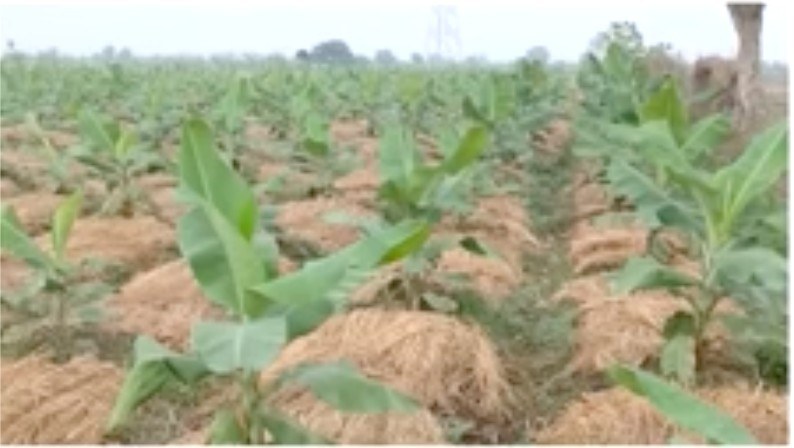
1. Site Context: Nainital Foothills
The documented banana farm is located in the foothills near Nainital, a region characterized by:
• Cold winters with frost risk
• Hot summers with high evaporation
• Heavy monsoon rainfall
• Sloping land and erosion pressure
Under conventional systems, banana in such regions suffers winter damage, collapses in summer heat, and requires constant external inputs. Yet under PQNK, the banana plants remain healthy, upright, and productive, confirming the system's ecological strength.
2. PQNK Principle Applied to Banana
PQNK does not grow crops. PQNK grows soil that grows crops.
Banana success under PQNK is the outcome of:
• Stable soil temperature
• Continuous biological activity
• Balanced water and mineral availability
• Zero chemical shock
Banana, being a high biomass and high transpiration plant, becomes an ideal indicator crop for soil health.
3. Mandatory ACI → PQNK Conversion (Non-Negotiable)
Banana on PQNK cannot succeed unless all four conversion steps are completed.
3.1 Hardpan Breaking (Once Only)
Deep subsoiling restores deep root penetration, infiltration in monsoon, and oxygen availability. Without this step, banana roots remain shallow and plants topple.
3.2 Soil Detoxification with Water
One deep irrigation is applied to leach accumulated salts, flush chemical residues, and reset soil chemistry. This prepares the soil for biological recovery.
3.3 Permanent Raised Beds (If Applicable)
Where terrain allows, soil is shaped once, traffic is confined to furrows, and there is no re-compaction. Banana thrives in undisturbed root zones.
3.4 Roots Retained, Mulch Maintained, No-Till
Old roots remain in soil, all biomass becomes surface mulch, and there is no ploughing between cycles. This converts the field into a living sponge.
4. Mulch: The Central Protection System
A key farmer concern raised was about grass growth (live cover / grass posts) and whether it should be removed.
PQNK clarification: grass cover is not a problem. It is protection.
Functions of grass and mulch in banana:
• Insulates soil from extreme cold and heat
• Prevents rapid moisture loss
• Absorbs monsoon impact
• Feeds soil biology
• Prevents banana stem stress
Without this grass cover, banana plants in Nainital would not survive winter or peak summer.
Maize stover mulch is optional and not mandatory. It can be added if available, but is not required if grass biomass already exists.
Rule: do not clean the soil. Do not expose the soil. Do not fight vegetation.
5. Banana Leaf Management under PQNK
• Lower, older banana leaves are removed only when naturally aging
• Removed leaves are used as mulch, not discarded
• No green leaf stripping
• No cosmetic pruning
This maintains nutrient cycling, prevents stress, and supports fruit filling.
6. Water Regulation (Not Irrigation Dependency)
Under PQNK, soil holds water biologically, irrigation frequency reduces naturally, and even after heavy rain, soil remains aerated.
Farmer observation confirms no water stress despite heat, and no rot despite rainfall. This is biological water management, not mechanical irrigation.
7. Banana Stability & Wind Resistance
Conventional banana fails due to shallow roots, loose soil, and nutrient imbalance.
PQNK banana develops deep anchoring roots, stands firm without props, and does not lodge easily. This is a root architecture outcome, not a variety effect.
8. Flowering & Fruiting Indicators
Healthy PQNK banana shows timely emergence of inflorescence (flower bud / “langer”), uniform fruit set, a strong peduncle, and no nutrient burn or deficiency signs.
Farmer monitoring should focus on flower emergence timing, fruit filling consistency, and natural leaf senescence.
9. Inputs: What PQNK Does NOT Use
PQNK banana does not require chemical fertilizers, growth promoters, pesticides, fungicides, or micronutrient cocktails.
Any forced input disrupts soil biology, weakens plant immunity, and creates long-term dependency.
10. Farmer's Role under PQNK
The farmer is not a cleaner or controller, but a protector of processes.
Correct actions: observe soil cover, retain biomass, avoid panic interventions, allow biological correction.
Wrong actions: removing grass, exposing soil, over-watering, adding inputs out of fear.
11. Why Banana Thrives on PQNK
Banana succeeds because PQNK buffers temperature extremes, regulates water naturally, supplies minerals in ionic balance, and eliminates stress cycles.
Climate does not kill crops. Broken soil systems do.
Conclusion
Banana cultivation under PQNK (PICNIC) in the climatically harsh foothills of Nainital demonstrates the power of regenerative soil intelligence. Without tunnels, chemicals, or heavy inputs, banana plants remain healthy, productive, and resilient.
PQNK transforms banana from a high-risk input crop into a stable, low-cost livelihood crop by restoring natural processes rather than replacing them.
About This Paper
- Crop
- Banana
- Problem
- Cold / Frost Damage · Heat Stress on Crop · Lodging / Weak Stem Structure · Waterlogging · Weed Pressure
- Science
- Soil · Plants · Climate · Water
- Evidence
- Field Observation
- Authority
- Current / Approved PQNK Knowledge
Related PQNK Science
Key Takeaways
- A tissue-culture banana plantation in the frost-prone, high-heat foothills of Nainital remains healthy and productive under PQNK with no tunnels, chemicals, or heavy inputs.
- The paper's central reframe: grass and residue cover on the soil surface is not a maintenance failure to be cleaned up, it is the insulation and moisture protection that lets banana survive climate extremes.
- Deep anchoring roots, developed after hardpan breaking, let PQNK banana stand firm through wind without props, described as a root-architecture outcome, not a variety trait.
- Water is managed biologically rather than mechanically: mulch-rich soil buffers both drought stress and monsoon rainfall without rot or wilting.
- No chemical fertilizers, growth promoters, pesticides, or fungicides are used; any forced input is described as disrupting soil biology and creating dependency.
- The paper's core conclusion is that banana is soil-limited rather than climate-limited; broken soil, not cold or heat, is what actually kills conventional plantations.
Related Crops
Related Knowledge
same problem
Farming Beyond the Calendar
Explains why changing weather has made the fixed sowing calendar unreliable and why PQNK does not depend on weather forecasts. Permanent raised beds under continuous organic mulch hold soil temperature and the moisture-air balance, so healthy plants withstand heat, cold, drought, intense and excessive rainfall and an erratic monsoon; a 1-2% ethanol foliar spray relieves ambient temperature stress, and the sowing decision is made from the condition of the field.
same problem
The Healer's Dialogue: From Weed Signal to Soil Silence — A PQNK Pathway to Self-Regulating Abundance
Responding to a farmer's question about using weeds as nutrient-deficiency indicators, this dialogue explains that in PQNK the goal isn't to manage weeds as permanent indicator crops, but to run a four-step protocol that resolves the soil problems they signal so the weeds voluntarily depart.
same problem
Comprehensive Guidance for Farmers Adapting to Man-Made Erratic Weather Using PQNK Principles
A farmer Q&A collection addressing a delayed, compressed winter season (monsoon arriving early, winter delayed 1-1.5 months) and its effect on wheat, alongside related questions on why weeds outperform crops under drought stress; the wheat section lays out a biology-based, soil-temperature-triggered sowing and pruning protocol built specifically to recover the lost growing time.
same problem
When 13 Inches of Rain Falls in Eight Hours
After 13 inches of rain in eight hours, the PQNK orchard beds of Jaskaran Singh in Fazilka district, Indian Punjab, had taken the water into the soil and could be walked on in slippers, while neighbouring conventional orchards and fields stood under water, and so did a strip of his own orchard where the hardpan had not been broken. The paper explains why hardpan is a water barrier as well as a root barrier, and why the soil is the first reservoir.