

KP-030 · Crop-Specific Guides
Knowledge Paper: Mitigating Post-Harvest Losses in Rice Through Controlled Environment Agriculture PQNK – A Case Study in Grain Structural Integrity
Broken rice kernels sell for 30-50% less than whole grain, and this paper traces that breakage back to micro-cracks formed during the growing season itself, not the milling process, arguing that a PQNK-style controlled, consistent growing environment produces a structurally uniform grain that survives milling intact.
Read or listen to the full paper ↓Abstract
The paper opens from the rice value chain's persistent problem of broken kernels, or 'brokens,' which command a 30-50% lower market price than whole-grain rice and represent a substantial economic loss for farmers, millers, and the broader agricultural economy. Where conventional wisdom attributes this breakage to mechanical stress during milling, the paper argues the real root causes are agronomic and post-harvest handling practices that create internal structural weakness, specifically micro-cracks and fissures, long before the grain ever reaches the mill.
This 'brittle grain syndrome' is traced through three compounding phases. In the field phase, inconsistent soil fertility and uneven fertilizer application cause asynchronous grain development, with potassium and silicon deficiency producing weaker cell walls; moisture fluctuation from drought or uneven irrigation triggers cycles of swelling and shrinking that create internal micro-fissures; and temperature extremes during grain-filling disrupt the orderly deposition of amylose and amylopectin starch, leaving a heterogeneous internal structure that concentrates stress. The cumulative effect is a grain that already carries a latent network of microscopic cracks at harvest.
The post-harvest phase compounds this through drying, the most critical single step: conventional sun or batch drying at high temperature creates a steep moisture gradient between the outer endosperm and the hydrated core, and the resulting tensile stress propagates the field-stage micro-cracks into full fissures, sometimes visible as concentric 'stress rings,' physical evidence of differential drying and cyclical stress-strain events. In the milling phase, a grain riddled with these internal fissures behaves as a brittle solid under the abrasive and compressive forces of milling and polishing, fracturing along its pre-existing planes of weakness into a high percentage of broken kernels.
The PQNK paradigm offered as an alternative shifts from an open-field, variable growing model to a controlled, consistent production continuum that eliminates the abiotic stresses creating brittleness in the first place: consistent nutrient delivery through a precise, balanced nutrient solution rather than variable soil, ensuring uniform grain development and robust cell wall formation; stable hydration that eliminates drought-and-flood cycling and prevents micro-cracking during grain-filling; and uniform temperature that keeps starch biosynthesis orderly and the endosperm structurally consistent from kernel to kernel. Because the resulting grain emerges with a more compact cell structure and a lower initial moisture gradient, it tolerates a gentler, more uniform drying process that avoids the thermal shock responsible for ring formation and fissure propagation.
The measurable outcome is a grain fundamentally different from its conventional counterpart: lower initial brittleness, lower and more uniform moisture at harvest, and an absence of internal stress rings, which together translate into a substantial reduction in milling breakage, higher economic value from a larger share of premium whole-grain output, reduced post-harvest loss across the food system, and superior culinary texture for the consumer. The paper's closing argument reframes the entire post-harvest-loss problem: the future of premium rice lies not in better milling machines, but in cultivating a more resilient grain from the very start of the growing cycle.
Full Paper
If you use “Listen”, the text of the page may be sent to your browser or operating system’s speech provider, such as Apple, Google or Microsoft, depending on the voice your device uses. Pedaver does not process, transmit or store any audio.
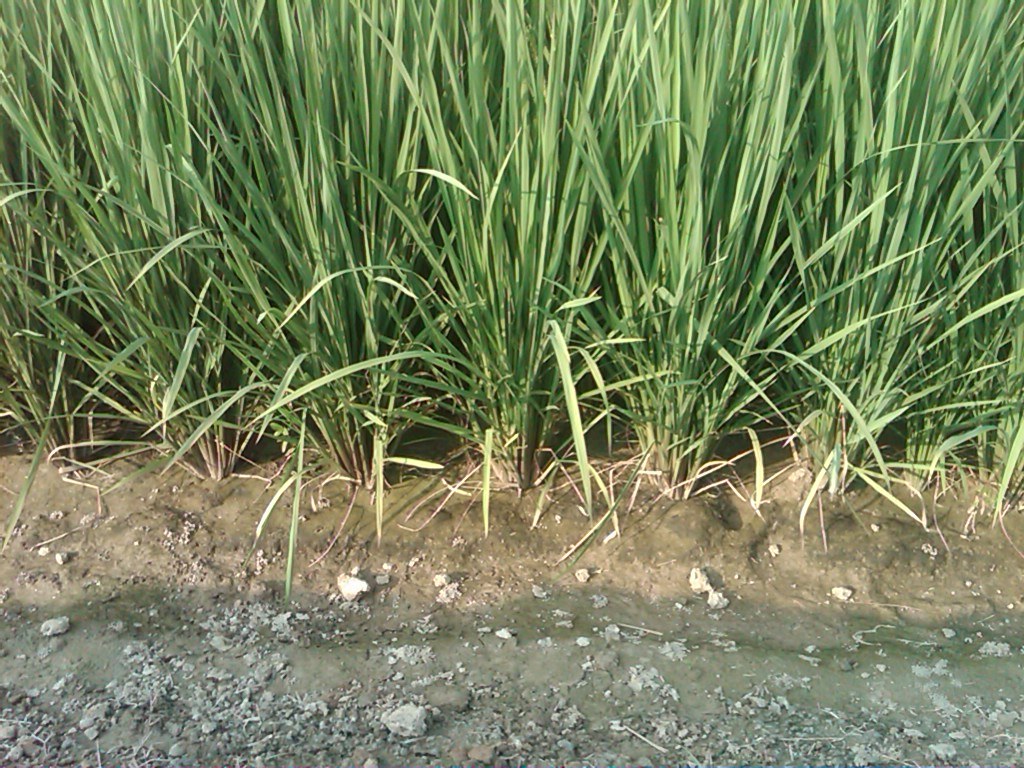
1. Introduction
Rice (Oryza sativa) is a staple food for over half of the global population, and its production is central to food security and economic stability, particularly in Asia. A persistent challenge in the rice value chain is the high percentage of broken kernels, or “brokens,” that result from the milling process. While broken rice has secondary uses, it commands a significantly lower market price (often 30-50% less) than whole-grain rice, representing a substantial economic loss for farmers, millers, and the broader agricultural economy.
Conventionally, this breakage is attributed to mechanical stress during milling. However, a deeper analysis reveals that the root causes are inherent in the agronomic and post-harvest handling practices. The susceptibility to breakage is a direct consequence of internal structural weaknesses—specifically, micro-cracks and fissures—that develop long before the grain reaches the mill. This paper explores the etiology of rice grain breakage and presents a novel approach, exemplified by the PQNK production system, which addresses these vulnerabilities at the source through controlled environment agriculture (CEA) to produce a grain with superior structural integrity.
2. The Etiology of Breakage: The Brittle Grain Syndrome
The conventional rice production cycle is characterized by variability and abiotic stress, which together create a grain predisposed to breakage. This can be understood through three key phases:
2.1. Field Phase: The Foundation of Micro-Cracks
During the growing season, rice plants in open fields are subject to significant environmental heterogeneity.
• Nutrient Variation: Inconsistent soil fertility and uneven application of fertilizers lead to asynchronous grain development. Kernels that mature under nutrient stress, particularly potassium and silicon deficiency, develop weaker cell walls and a less compact starch-protein matrix.
• Moisture Fluctuations: Intermittent drought or uneven water management in the field induces periodic water stress. This leads to cycles of swelling and shrinking within the developing grain, creating internal stresses that manifest as micro-fissures.
• Temperature Extremes: Unseasonal heat or cold spikes during the grain-filling stage disrupt the orderly deposition of amylose and amylopectin (the two components of starch), resulting in a heterogeneous internal structure that acts as a stress concentration point.
The cumulative effect of these field variations is a grain that, at harvest, already possesses a latent network of microscopic cracks—an inherent brittleness.
2.2. Post-Harvest Phase: The Fissure Propagation
The structural integrity of the grain is further compromised during drying, the most critical post-harvest step.
• Thermal Shock: Conventionally, rice is dried in the sun or in batch dryers using high temperatures. The rapid removal of moisture creates a steep moisture gradient between the outer endosperm and the kernel’s core. The outer layer shrinks and sets while the inner core remains hydrated. The resulting tensile stress exceeds the grain’s already compromised strength, causing the latent micro-cracks from the field phase to propagate into full-fledged fissures.
• The “Ring” Formation: This process often results in visible concentric rings within the grain, which are physical manifestations of differential drying and the cyclical stress-strain events. A grain with such rings is structurally compromised and will inevitably shatter under the mechanical action of milling.
2.3. Milling Phase: The Point of Failure
The milling and polishing processes apply abrasive and compressive forces to remove the husk and bran layers. A grain with a high density of internal fissures acts as a brittle solid; under these forces, it fractures along its pre-existing planes of weakness, resulting in a high percentage of brokens.
3. The PQNK Paradigm: Production Continuity for Structural Homogeneity
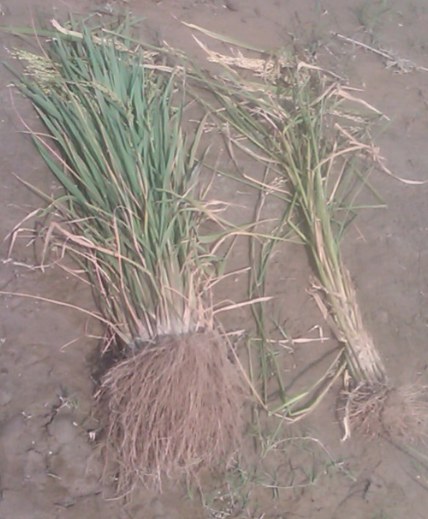
The PQNK production system offers an alternative paradigm by shifting from an open-field, variable model to a controlled environment approach. The core principle is the elimination of the environmental stresses that create brittleness. By providing a stable and balanced production continuum, PQNK cultivates a grain with fundamentally different physical properties. PQNK Conventional
3.1. Controlled Growing Environment
The system eliminates field variation by controlling the key abiotic factors:
• Consistent Nutrient Delivery: Instead of relying on variable soil, PQNK utilizes a precise, balanced nutrient solution. This ensures each plant receives optimal nutrition, leading to uniform grain development, robust cell wall formation, and a homogenous starch composition from kernel to kernel.
• Stable Hydration: Eliminating the stress of drought and flood cycles, the system maintains optimal and consistent moisture availability. This prevents the development of micro-cracks during the grain-filling stage.
• Uniform Temperature: By maintaining a stable temperature profile throughout the growing cycle, the system ensures orderly and consistent metabolic processes, particularly starch biosynthesis, resulting in a structurally uniform endosperm.
3.2. Mitigated Post-Harvest Process
The benefits of controlled growth extend to post-harvest handling. Because the grain emerges from the growing phase with a stable and balanced composition—specifically, a more compact cell structure and a lower initial moisture gradient—it is inherently less susceptible to drying stress. This allows for a gentler, more uniform drying process that does not induce the thermal shock responsible for ring formation and fissure propagation.
4. Results and Implications: From Brittle to Resilient Grain
The output of the PQNK system is a rice grain that is fundamentally different from its conventionally grown counterpart. Its physical characteristics are defined by:
• Lower Initial Brittleness: The absence of micro-cracks from the field phase means the grain does not possess latent structural weaknesses.
• Lower Moisture Content at Harvest: A more controlled growth cycle results in a grain with a naturally lower and more uniform moisture content, reducing the severity of drying required.
• Absence of Stress Rings: The elimination of thermal and hydration shock during drying results in a grain with no internal fissures or stress rings.
This stable and balanced composition has a direct and significant impact on milling yield. As the grain is less brittle and less moist, it can withstand the abrasive forces of the milling and polishing process with far greater resilience. The result is a substantial reduction in the percentage of broken rice, translating to:
1. Increased Economic Value: A higher yield of premium, whole-grain rice improves profitability for producers and millers.
2. Reduced Post-Harvest Loss: Less breakage means more of the harvested crop reaches the consumer as intended, enhancing food system efficiency.
3. Superior Culinary Quality: Whole grains cook more uniformly and offer a better texture and consumer experience compared to broken grains.
5. Conclusion
The high percentage of broken rice in conventional milling is not an inevitable consequence of the milling process itself, but rather the final failure point of a grain structurally compromised by environmental variability during growth and thermal shock during drying. The PQNK production system represents a fundamental advancement by addressing these root causes. By ensuring production process continuity through controlled environment agriculture, it produces a rice grain that is nutrient-dense, structurally homogeneous, and inherently resilient. This approach demonstrates that optimizing pre-harvest and harvest-stage conditions is the most effective strategy for minimizing post-harvest losses, enhancing economic returns, and contributing to a more sustainable and efficient rice production system. The future of premium rice production lies not in better milling machines, but in cultivating a better, more resilient grain from the start.
Applying PQNK without understanding nature’s operating system will not deliver abundance, stability, or nutrient density.
PQNK (pronounced “picnic”)—the regenerative & sustainable Pristine Organic Farming System —is grounded in Natural Ecosystem Science. This science employs perennial biodiversity, protects soil with organic mulch, and avoids practices such as water inundation, tillage disturbance, and leaving soil bare.
It is the process that matters most. PQNK is a pristine production system designed not merely for yield, but for optimal, balanced output—where quality, sustainability, and ecological harmony emerge from a self‑regulated, zero‑external‑input methodology.
About This Paper
- Crop
- Rice
- Problem
- Grain Quality Defects (Chalkiness, Breakage, Shriveling) · Post-Harvest Loss / Spoilage
- Science
- Plants · Food Quality · Production Architecture
- Evidence
- Scientific Mechanism
- Authority
- Current / Approved PQNK Knowledge
Related PQNK Science
Key Takeaways
- Broken rice kernels sell for 30-50% less than whole grain, and the paper argues the root cause is micro-cracks formed during growth and drying, not the milling process itself.
- Field-stage nutrient variation, moisture swings, and temperature extremes during grain-filling create latent micro-fissures by disrupting orderly amylose/amylopectin starch deposition.
- Conventional high-temperature drying creates a steep moisture gradient between the outer endosperm and core, propagating those micro-cracks into visible internal 'stress rings.'
- A controlled, consistent growing environment, stable nutrient delivery, hydration, and temperature, produces a structurally uniform grain that enters the drying stage with less latent brittleness.
- Because the resulting grain has a lower and more uniform moisture content, it can be dried more gently, avoiding the thermal shock that causes fissure propagation.
- The paper's core argument: minimizing post-harvest rice losses is best achieved by cultivating a more resilient grain from the start, not by improving milling machinery.
Related Crops
Related Knowledge
same problem
Transforming Pakistan's Sugar Industry Through the PQNK (Pristine Organic Farming) System
Pakistan's sugar sector runs on a decades-old cycle of farmer exploitation, long-haul cane transport, and volatile supply. This paper proposes concentrating high-yield PQNK sugarcane cultivation within a 10-15 km radius of each mill, and models the profit, sugar-recovery, and crushing-season gains that follow.
same problem
Why Conventional Rice Keeps Failing: At the Mill, At the Table, and At the EU Border
Answering a farmer's direct question about what actually changes inside a rice grain under PQNK, this paper traces the mechanism from root-zone moisture through grain-filling stress to milling yield, aroma, and grain safety, then applies it directly to the specific EU border rejections costing Pakistan's basmati export trade.
same problem
PQNK Advisory Paper: Tomato (Solanum lycopersicum)
Tomato is naturally perennial in its tropical highland origin, and this advisory shows how PQNK's stable microclimate, mulch, living companion canopy, and a low-dose ethanol spray, can restore that perennial behavior in open-field cultivation, alongside a full sucker-pruning and harvest protocol.
same problem
Commercial Onion Seed Production: A PQNK Ecosystem
A factsheet on producing commercial True Onion Seed under PQNK, covering optimal planting density, the economics of mother-bulb size, and a head-to-head quality and post-harvest comparison against conventional and organic onion production.