

KP-146 · Soil Science & PQNK System
The Rhizospheric Dialogue: How Microbial Biodiversity Mines Geological Abundance and Plant Diversity Unlocks Nutrient-Dense Food
Answers a practicing farmer's question on whether specific microbes target specific nutrients and whether plant diversity affects food quality, reframing the soil microbiome as a specialized geochemical mining workforce rather than a passive recycling system.
Read or listen to the full paper ↓External Knowledge — this paper is sourced from outside Pedaver/PQNK. It is presented as supporting evidence, not as PQNK's own approved doctrine.
Abstract
Responding directly to a farmer's question about nutrient-specific microbes and the food-quality effect of plant diversity, this paper argues that the soil microbiome's primary function is not waste recycling but the active liberation of nutrient wealth already locked in soil's geological parent material. It documents four specialist microbial groups by element: mycorrhizal fungi and phosphate-solubilizing bacteria (Pseudomonas, Bacillus) that secrete organic acids to dissolve calcium phosphates, with mycorrhizal hyphal networks increasing the soil volume mined for phosphorus by several hundredfold; potassium-solubilizing bacteria such as Bacillus mucilaginosus that bioleach feldspar, mica, and illite, releasing potassium alongside iron, zinc, manganese, and silicon; siderophore-producing bacteria and fungi that chelate insoluble ferric iron oxide into a plant-absorbable complex; and nitrogen-fixing Rhizobia and free-living diazotrophs such as Azotobacter, the only organisms capable of breaking atmospheric N2's triple bond, which the paper distinguishes as primary production from an infinite atmospheric source rather than recycling.
Root exudates are framed as a conscious biochemical "work order": plants detect their own nutrient status and exude a targeted blend of sugars, acids, enzymes, and phenolics that selectively recruits the specific microbial specialists needed at that moment, a mechanism the paper backs with Bais et al. (2006) on root exudates as mediators of rhizosphere community structure.
This produces a direct contrast between monoculture and polyculture systems: a single-crop field issues one narrow, repetitive biochemical order, cultivating a limited microbial crew vulnerable to the collapse of any single pathway, while a diverse plant community issues a continuous, varied symphony of directives that sustains a versatile, functionally redundant mining consortium capable of extracting a complete nutrient profile.
The paper links this microbial completeness directly to food quality, citing Baranski et al. (2014), whose meta-analysis found significantly higher antioxidant concentrations and lower cadmium levels in organically grown, typically more biodiverse-managed crops, and argues that functional redundancy across microbial pathways is what buffers nutrient availability against drought, pH shifts, and other stresses.
It closes by answering the farmer's original question directly: yes, specific microbes do target specific nutrients as a specialized geochemical workforce, and yes, plant diversity critically affects food quality because it is the mechanism that recruits and sustains that workforce, positioning the PQNK farmer's task as Phytocentric Management, cultivating diverse, continuous plant cover to feed and direct the mining consortium rather than feeding the plant directly.
Full Paper
If you use “Listen”, the text of the page may be sent to your browser or operating system’s speech provider, such as Apple, Google or Microsoft, depending on the voice your device uses. Pedaver does not process, transmit or store any audio.
Knowledge Paper
Title: The Rhizospheric Dialogue: How Microbial Biodiversity Mines Geological Abundance and Plant Diversity Unlocks Nutrient-Dense Food
Author(s): PQNK Team lead by Mr. Asif Sharif
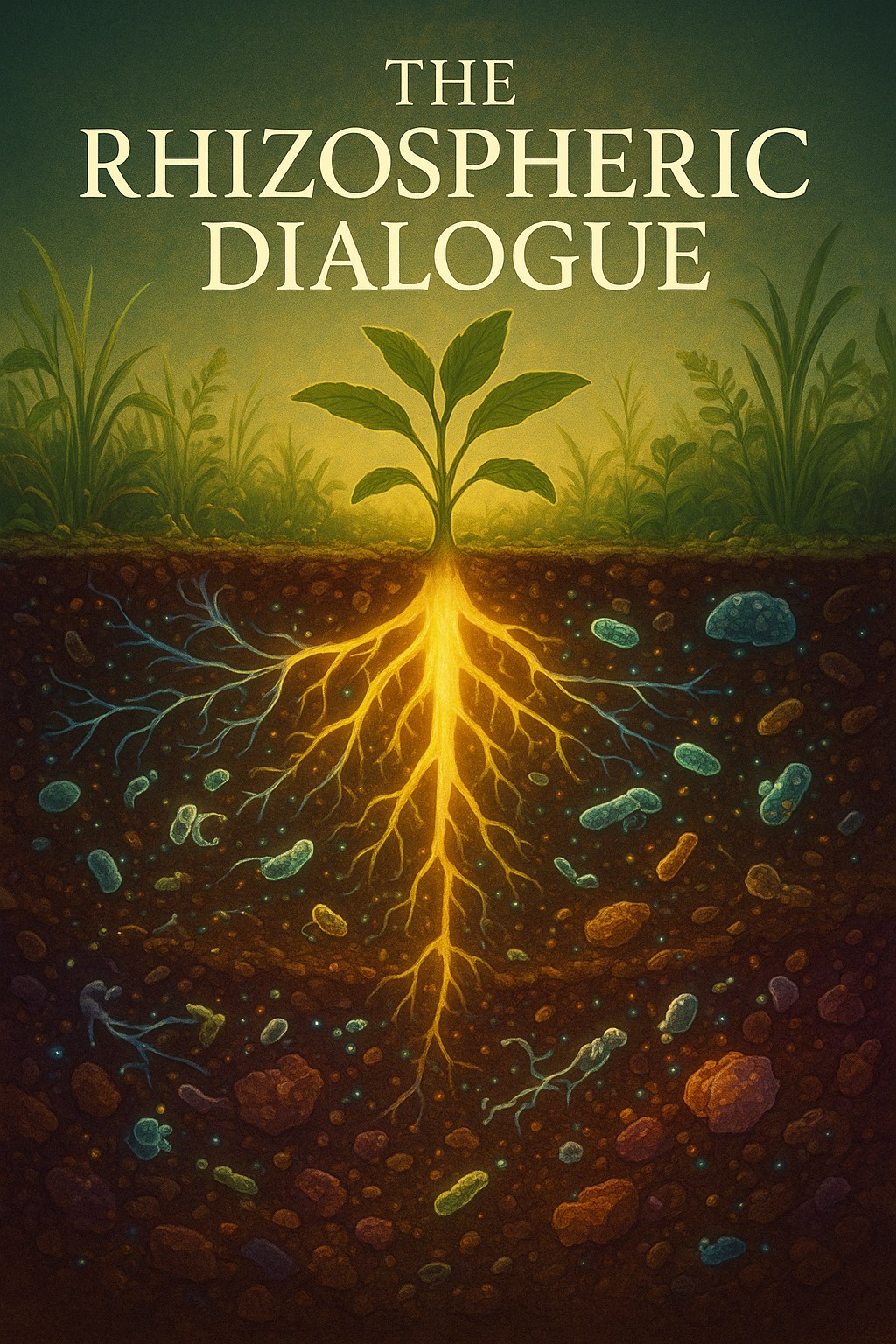
Philosophical Foundation: Paedar Qudratti Nizam Kashatqari (PQNK) & From Weapon to Worship Date: October 3, 2025
Abstract
This paper addresses a fundamental question from a practicing farmer: "Are there specific microbes for specific nutrients, and does plant diversity impact food quality?" Moving beyond the conventional, scarcity-based model of soil nutrition, we reframe the soil ecosystem through the PQNK lens as a conscious, self-organizing mining consortium. We posit that the primary role of the soil microbiome is not waste recycling, but the active liberation of the vast nutrient abundance inherent in soil's geological parent material. We demonstrate that specific microbes are indeed specialized "miners" for specific elements, and that plant diversity acts as a consortium of "mining foremen," directing this microbial workforce to extract a complete nutrient profile. This direct access to the geological bank, unmediated by synthetic inputs, is the foundational principle for producing food of superior nutrient density and vitality, answering the farmer's question and charting a path for regenerative agriculture.
1. Introduction: From Weapon to Worship – A Paradigm of Abundance
For decades, mainstream agriculture has been wielded as a weapon. This paradigm, rooted in a mindset of scarcity and dominion, treats soil as an inert substrate—a mere anchor for roots and a reservoir for chemical solutions. The reliance on synthetic, water-soluble fertilizers represents a form of force-feeding that bypasses natural soil processes, leading to the systematic dismantling of soil life, nutrient leaching, and the production of food that is often deficient in vital micronutrients and phytonutrients.
In stark contrast, the philosophy of PQNK (Paedar Qudratti Nizam Kashatqari) and the thesis of From Weapon to Worship invite us into a relationship of worship with the land. This paradigm is founded on a recognition of abundance. It understands soil as a conscious, living ecosystem—a dynamic manifestation of the Panch Mahabhutas (Five Great Elements), where life begets life through reciprocal, intelligent exchange.
Within this new framework, the farmer’s question—“Are there specific microbes for specific nutrients? Does diversity of plants impact the quality of food produced?”—takes on profound significance. It is no longer a question of what we must add to a broken system, but how we can activate and collaborate with the sophisticated, self-regulating system that already exists. This paper explores the rhizosphere—the zone of intense interaction between roots, microbes, and soil—as the stage for this conscious symbiosis, providing answers grounded in both modern science and timeless ecological wisdom.
2. The Specialized Mining Consortium: Microbes as Geochemical Engineers
The conventional view of soil nutrients is one of a simple, soluble pool. The PQNK view reveals a far more sophisticated reality: the soil is a geological bank containing virtually all elements in mineral form, and the microbiome is the specialized workforce that unlocks this vault.
Core Concept: The soil microbiome is a highly specialized consortium whose primary function is to solubilize the locked-up mineral wealth of the soil's geological matrix.
2.1. The Phosphorus (P) Miners
Phosphorus, a vital macronutrient, is notoriously locked into stable minerals like apatite in the soil. The microbial solution is elegant and effective.
Mechanism: Mycorrhizal fungi and Phosphate-Solubilizing Bacteria (PSB) such as Pseudomonas and Bacillus species act as expert phosphorus miners. They secrete powerful low-molecular-weight organic acids (e.g., citric, gluconic) and chelating agents. These compounds dissolve the rigid chemical bonds of calcium phosphates, liberating the phosphorus into a soluble form. Mycorrhizal fungi extend their vast, microscopic hyphal networks (the "root internet") far beyond the root zone, effectively increasing the soil volume mined for immobile phosphorus by several hundredfold.
Scientific Authentication: Research by Jones (1998) details the critical role of organic acids in rhizosphere phosphorus mobilization. The work of Smith & Read (2008) comprehensively documents the unparalleled ability of mycorrhizal fungi to access "unavailable" soil P pools, a function impossible for roots alone.
2.2. The Potassium (K) & Micronutrient Miners
Potassium and essential trace elements are often trapped within the crystal lattices of silicate minerals.
Mechanism: Potassium-Solubilizing Bacteria (KSB) like Bacillus mucilaginosus are the primary agents here. They engage in "microbial weathering," producing acids and enzymes that break down minerals like feldspar, mica, and illite. This process, known as bioleaching, releases not only potassium but also a suite of critical trace elements including iron, zinc, manganese, and silicon directly from the rock particles into the soil solution.
Scientific Authentication: Studies, such as those by Sheng (2005), have demonstrated the efficacy of specific KSB strains in significantly increasing plant-available potassium in soil and enhancing its uptake in crops like cotton and rape, reducing dependence on potassic fertilizers.
2.3. The Iron (Fe) Specialists
In aerobic soils, iron is predominantly found in its insoluble ferric (Fe³⁺) oxide form, inaccessible to plants.
Mechanism: Siderophore-producing bacteria and fungi are the key. They release siderophores—highly specific, iron-chelating compounds with an affinity for iron so strong they can effectively "strip" it from mineral oxides. The resulting iron-siderophore complex is soluble and can be transported to and absorbed by the plant root.
Scientific Authentication: Crowley (2006) and others have well-established the pivotal role of microbial siderophores in plant iron nutrition, highlighting this as a fundamental pathway for iron acquisition in many plant species, particularly in calcareous soils.
2.4. The Nitrogen (N) Exception: Atmospheric Miners
While the above microbes mine the soil's geological bank, another group mines the atmosphere.
Mechanism: Rhizobia (in symbiosis with legumes) and free-living diazotrophs (e.g., Azotobacter) are the only organisms on Earth capable of breaking the triple bond of atmospheric nitrogen (N₂). Using the nitrogenase enzyme, they convert this inert gas into ammonia (NH₃), a biologically usable form. This is not nutrient recycling; it is primary production, introducing new nitrogen into the ecosystem from an infinite atmospheric source.
Scientific Authentication: The literature on biological nitrogen fixation is extensive and foundational to soil science, as documented by researchers like Ladha et al. (1997), showing its critical role in sustainable nitrogen management.
2.5. The Context for Recyclers
It is crucial to place the role of decomposers—the recyclers of organic matter—within this "mining" framework. While vital, their primary ecological functions are:
Fuel Themselves: They use the carbon in organic matter as their energy source.
Manage Waste: They clean up dead biological material, a natural form of pollution management.
Remobilize Nutrients: The nutrients they mineralize from organic matter were previously mined from the geological bank by the primary miners. This is a critical cycling function that maintains nutrient mobility, but it is not the primary source. The ultimate, abundant source is the soil's mineral matrix itself.
Conclusion for Part 1: The farmer's intuitive "assembly line" is, with greater accuracy, a "mining assembly line." Different microbial specialists are stationed to liberate specific elements from geological particles. The system is not designed for scarcity but is inherently equipped to draw from the Earth's abundant, mineralogical wealth.
3. The Diversity Dividend: Plant as Mining Foremen for Nutrient-Dense Food
If microbes are the miners, then plants are the mining foremen. The quality of the food harvested is a direct reflection of the efficiency and comprehensiveness of the mining operation they are able to direct.
Core Concept: A diverse plant community, through a symphony of root exudates, cultivates and directs a diverse microbial mining consortium, enabling access to a complete nutrient profile and resulting in superior food quality.
3.1. The Root Exudate as a Conscious Mining Directive
Root exudates are far more than passive leakage; they are a conscious, energetic investment - a form of biological language and currency.
Mechanism: A plant can detect its own nutrient status and the local soil conditions. In response, it exudes a specific blend of sugars, acids, enzymes, and phenolic compounds from its roots. This unique chemical signature acts as a targeted "work order" and "payment," selectively attracting and feeding the specific microbial miners required to liberate the nutrients the plant needs at that moment. A plant deficient in phosphorus will exude compounds that enrich PSB; one needing iron will support siderophore producers.
Scientific Authentication: Bais et al. (2006) provide a seminal review, establishing root exudates as key mediators of rhizosphere interactions, capable of shaping the microbial community structure to the plant's benefit.
3.2. Monoculture vs. Polyculture: A Tale of Two Workforces
The implications for farming systems are profound.
The Monoculture Model: A single-crop system issues a single, repetitive, and narrow work order. This selectively enriches a limited suite of microbes, leading to a narrow, imbalanced mining crew. Over time, this can lead to the specific depletion of certain nutrients and creates a system vulnerable to collapse, as the lack of functional redundancy means the failure of one microbial pathway leads to nutrient deficiency.
The Polyculture Model: A diverse plant community, with its wide array of root architectures and exudate profiles, issues a complex and continuous symphony of directives. This cultivates a vast, versatile, and resilient mining consortium. The microbial workforce is diverse enough to ensure that every essential element is being actively mined from the geological bank, creating a balanced and complete nutrient environment for all plants in the community.
3.3. The Direct Link to Food Quality (Nutrient Density)
This comprehensive mining operation is the very foundation of nutrient-dense food.
Mechanism: When a plant has access to the full spectrum of essential minerals and trace elements—the complete "periodic table" facilitated by a diverse microbiome—its metabolic machinery functions optimally. It can fully synthesize proteins, enzymes, vitamins, antioxidants, essential oils, and a wide array of complex phytonutrients (e.g., lycopene, beta-carotene, polyphenols). These compounds are not only crucial for plant health and resilience but are also the very components that confer health benefits to the consumers of the food.
Result: The outcome is food with measurably higher bionutrient density—a greater concentration of vitamins, minerals, and antioxidants per calorie. This food possesses a higher vitality, or prana, a quality that is palpable even if not always easily quantified by standard metrics.
Scientific Authentication: Meta-analyses, such as the one by Baranski et al. (2014), have shown significantly higher concentrations of antioxidants and lower levels of toxic cadmium in organically grown crops, which are typically managed with greater attention to biodiversity. Furthermore, the work of the Bionutrient Food Association is providing growing evidence correlating soil health and biological activity with the nutrient density of food.
3.4. The Resilience of a Fully-Staffed Mine
Beyond quality, biodiversity provides indispensable resilience.
PQNK Lens: This functional redundancy is a manifestation of the system's consciousness and intelligence—its ability to self-regulate and maintain balance (Prakriti). If one microbial pathway for solubilizing zinc is compromised by drought or a temporary pH shift, another, functionally redundant species can take over. This ensures continuous nutrient availability and stable productivity despite environmental stresses, buffering the farm against climate variability and pest outbreaks.
4. Synthesis, Conclusion, and PQNK Call to Action
The farmer's questions lead us to the heart of a regenerative future.
4.1. Answering the Farmer:
Yes, there are specific microbes for specific nutrients. They function as a specialized geochemical mining workforce, liberating phosphorus, potassium, iron, and other elements from the abundant geological parent material of the soil.
Yes, plant diversity critically impacts food quality. It is the mechanism that hires, manages, and sustains the diverse microbial consortium required to extract a complete and balanced nutrient profile. This direct access to the Earth's mineral wealth is the fundamental prerequisite for producing food of superior nutrient density and vitality.
4.2. The PQNK Principle Reiterated: The Pristine Organic Farming System (PQNK) is the practical embodiment of this understanding. It represents a conscious move from the "weapon" of chemical fertilizers—which bypasses, silences, and ultimately dismantles the sophisticated microbial mining consortium - to the "worship" of nurturing this conscious, symbiotic partnership. It is a shift from fighting nature to facilitating its innate wisdom and abundance.
4.3. Call to Action: The Farmer as Ecosystem Steward: The role of the regenerative farmer is transformed from a chemical input manager to an Ecosystem Steward. The primary task is Phytocentric Management: to cultivate a diverse, continuous, and thriving plant community through practices like multi-species cover cropping, intercropping, and agroforestry.
The focus shifts from feeding the plant directly to feeding and protecting the soil's microbial miners by maintaining living roots and soil cover. By doing so, the farmer becomes a partner in unlocking the Earth's inherent abundance, ensuring long-term sustainability, ecosystem resilience, and the production of truly life-giving food that nourishes the body and the spirit. This is the promise of PQNK: a return to a sacred relationship with the land, from weapon to worship.
References
Bais, H. P., Weir, T. L., Perry, L. G., Gilroy, S., & Vivanco, J. M. (2006). The role of root exudates in rhizosphere interactions with plants and other organisms. Annual Review of Plant Biology, 57, 233-266.
Baranski, M., Średnicka-Tober, D., Volakakis, N., Seal, C., Sanderson, R., Stewart, G. B., ... & Leifert, C. (2014). Higher antioxidant and lower cadmium concentrations and lower incidence of pesticide residues in organically grown crops: a systematic literature review and meta-analyses. British Journal of Nutrition, 112(5), 794-811.
Crowley, D. E. (2006). Microbial siderophores in the plant rhizosphere. In Iron Nutrition in Plants and Rhizospheric Microorganisms (pp. 169-198). Springer, Dordrecht.
Jones, D. L. (1998). Organic acids in the rhizosphere – a critical review. Plant and Soil, 205(1), 25-44.
Ladha, J. K., Kirk, G. J. D., Bennett, J., Peng, S., Reddy, C. K., Reddy, P. M., & Singh, U. (1997). Opportunities for increased nitrogen-use efficiency from improved lowland rice germplasm. Field Crops Research, 56(1-2), 41-71.
Sheng, X. F. (2005). Growth promotion and increased potassium uptake of cotton and rape by a potassium releasing strain of Bacillus edaphicus. Soil Biology and Biochemistry, 37(10), 1918-1922.
Smith, S. E., & Read, D. J. (2008). Mycorrhizal Symbiosis (3rd ed.). Academic Press.
Footnote: Any Production Process That Inundates Soil With Water, Disturbs Soil Through Tillage, Or Leaves Soil Bare Without Organic Mulch Cover Does Not Qualify As Natural Ecosystem Science For Production Agriculture.
PQNK, to be pronounced as 'picnic', which stands for Paedar Qudratti Nizam Kashatqari, and means: the regenerative & sustainable Pristine Organic Farming System.
www.Facebook.Com/Pedaver
https://www.youtube.com/@pedaverpqnk3167/videos
pedaver@gmail.com
WhatsApp +92 320 677 6666
About This Paper
- Problem
- Nutrient Deficiency Symptoms (Plant-Visible) · Monoculture Vulnerability · Declining Nutrient Density in Food
- Science
- Soil · Biodiversity · Nutrition · Food Quality
- Evidence
- External Scientific Evidence
- Authority
- External Knowledge / Evidence
Related PQNK Science
Key Takeaways
- Four microbial specialist groups mine specific elements: mycorrhizal fungi/PSB for phosphorus (extending the mined soil volume several hundredfold), KSB like Bacillus mucilaginosus for potassium via bioleaching of feldspar and mica, siderophore producers for iron, and Rhizobia/Azotobacter for atmospheric nitrogen fixation.
- Root exudates function as a targeted biochemical 'work order,' with plants exuding specific sugar/acid/enzyme blends to recruit exactly the microbial specialists needed for their current deficiency.
- Monoculture issues a single narrow biochemical order, producing a vulnerable, limited microbial crew; polyculture issues a continuous varied signal that sustains a complete, functionally redundant mining consortium.
- Cites Baranski et al. (2014): organically/biodiversity-managed crops show significantly higher antioxidant concentrations and lower cadmium levels in a systematic meta-analysis.
- Frames the regenerative farmer's core task as Phytocentric Management: cultivating diverse, continuous plant cover (cover cropping, rotation, intercropping, agroforestry) to recruit and sustain the microbial mining workforce, rather than feeding the plant directly with inputs.
Related Knowledge
same problem
The Nutritional Roots of Healthcare Expansion and the PQNK Solution
Argues that the healthcare sector's growth has outpaced population growth primarily because industrial agriculture has degraded nutrient density and dietary diversity, fueling preventable chronic disease, and proposes regenerative PQNK agriculture as the upstream intervention that reduces demand on the healthcare system itself.
same problem
The PQNK Food Chain: From Soil to Soul — The Principle of Bio-potentiation
Introduces bio-potentiation as the inverse of biomagnification: where conventional agriculture concentrates toxins as they move up the food chain, a PQNK-managed living-soil system is argued to amplify nutritional value and potency at each successive trophic level, from soil to plant to animal to human.
same problem
The Mechanism of Nutrient Absorption in PQNK Farming
This knowledge paper reframes the textbook mechanics of passive and active nutrient absorption as expressions of a plant's vitality within a living soil ecosystem, arguing that PQNK doesn't force uptake but removes the stressors that block it, primarily through mycorrhizal partnership and the rhizophagy cycle.
same problem
PQNK Knowledge Paper: The Origin of Plant Mass and the Role of the Soil System
Countering the assumption that plants are built from soil nutrients, this paper traces a plant's physical bulk to photosynthesis, condensed carbon dioxide and water, and reframes soil minerals, typically just 1-10% of a plant's dry matter, as catalysts a restored microbial community makes available rather than bulk the farmer must supply.