

KP-179 · Nutrition & Food Quality
The Nutritional Roots of Healthcare Expansion and the PQNK Solution
Argues that the healthcare sector's growth has outpaced population growth primarily because industrial agriculture has degraded nutrient density and dietary diversity, fueling preventable chronic disease, and proposes regenerative PQNK agriculture as the upstream intervention that reduces demand on the healthcare system itself.
Read or listen to the full paper ↓Abstract
The paper opens with what it calls the paradox of expansion: global population has grown substantially over the past 50 to 70 years, but hospitals, clinics, specialized treatment, and healthcare costs have expanded at a rate that far outpaces that demographic growth. It argues the standard explanations, technology, aging populations, access, are incomplete, and that the real driver is the rise of non-communicable diseases (NCDs) whose etiology traces to environmental and lifestyle factors, nutrition foremost among them, and nutrition is shaped overwhelmingly by agricultural systems.
It attributes this nutritional decline to industrial agriculture optimized for yield, shelf-life, and transportability rather than nutrient content: measurable declines in vitamin, mineral, and phytonutrient concentrations in staple crops; a global diet homogenized around a handful of species, displacing diverse, locally-adapted crops rich in unique micronutrients; and a food system that supplies the raw material for energy-dense, nutrient-poor ultra-processed foods, producing 'hidden hunger,' obesity coexisting with micronutrient deficiency.
The resulting suboptimal cellular nourishment is presented as a key contributor to NCD pathogenesis (diabetes, cardiovascular disease, certain cancers), reduced overall resilience, and increased susceptibility to mental health disorders, feeding a healthcare system that responds with increased demand for hospitals and specialized centers, escalating costs from expensive late-stage intervention rather than root-cause prevention, and a structural bias toward managing symptoms over advocating agricultural reform.
PQNK is proposed as the correction at the origin point, the farm, on the basis that regenerating soil health facilitates full-spectrum mineral uptake by plants, that promoting polycultures, crop rotations, and heirloom varieties restores nutritional diversity to the food supply, and that eliminating synthetic pesticides and fertilizers removes another vector of toxic burden that healthcare systems must otherwise absorb.
The paper's conclusion is stated as a direct causal chain: population growth requires a proportional healthcare response, but the disproportionate expansion beyond that is a direct result of chronic disease fueled by nutrient-deficient food, making regenerative agriculture a public-health and healthcare-sustainability strategy in its own right, summarized as 'to build fewer hospitals, we must grow more nutritious food.'
Full Paper
If you use “Listen”, the text of the page may be sent to your browser or operating system’s speech provider, such as Apple, Google or Microsoft, depending on the voice your device uses. Pedaver does not process, transmit or store any audio.
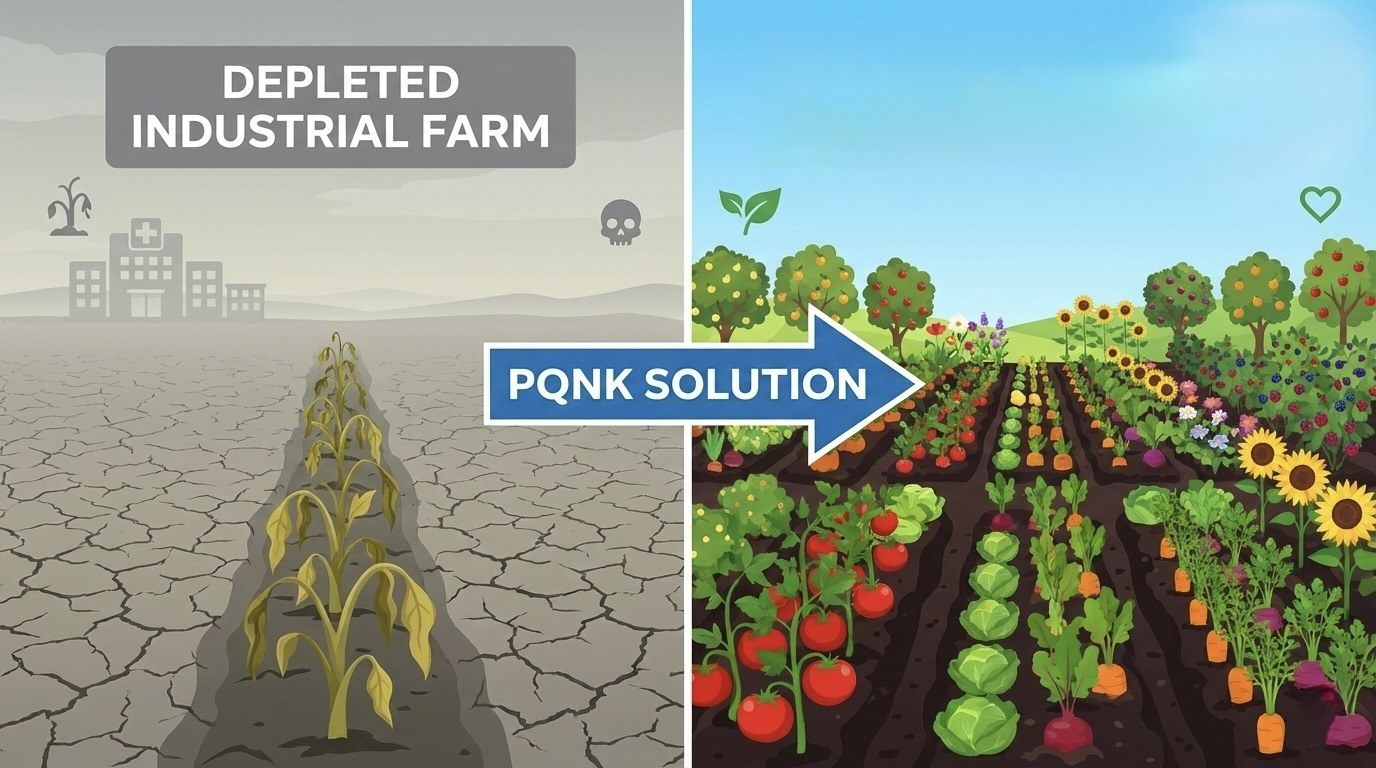
Subject: Analyzing the disproportionate expansion of healthcare services relative to population growth through the lens of declining nutritional density and diversity in the food system, and proposing the regenerative framework of PQNK as a systemic solution.VIBRANT BIODIVERSE PQNK PRISTINE ORGANIC FARM
Executive Summary: This paper posits that the rapid expansion of hospitals and healthcare services in recent decades is not proportionate to, nor solely caused by, population increase. Instead, a primary, underlying driver is the decline in population-level health due to malnutrition of abundance—specifically, the deficiency of essential micronutrients and the loss of dietary diversity resulting from modern industrial agriculture. While serving more people, healthcare systems are increasingly burdened by managing chronic, diet-related illnesses that are preventable at their root. This paper explores the causal chain from agricultural practice to nutritional deficit to illness burden, and finally to the reactive expansion of medical infrastructure. It concludes by presenting PQNK (pronounced "picnic")—Paedar Qudratti Nizam Kashtqari, the regenerative & sustainable Pristine Organic Farming System—as a foundational solution to reverse this trend by realigning food production with human health.
1. Introduction: The Paradox of Expansion
Global population has grown significantly over the past 50-70 years. Concurrently, the footprint of the healthcare sector—in terms of hospitals, clinics, specialized treatments, and economic cost—has expanded at a rate that far outpaces mere demographic growth. This expansion is often attributed to technological advancement, aging populations, and increased access. However, this explanation is incomplete. It overlooks a fundamental shift in the type of health burden dominating these systems: the rise of non-communicable diseases (NCDs). The etiology of these conditions points directly to environmental and lifestyle factors, with nutrition as a cornerstone—a nutrition shaped overwhelmingly by our agricultural systems.
2. The Primary Cause: Industrial Agriculture and the Decline of Nutritional Density and Diversity
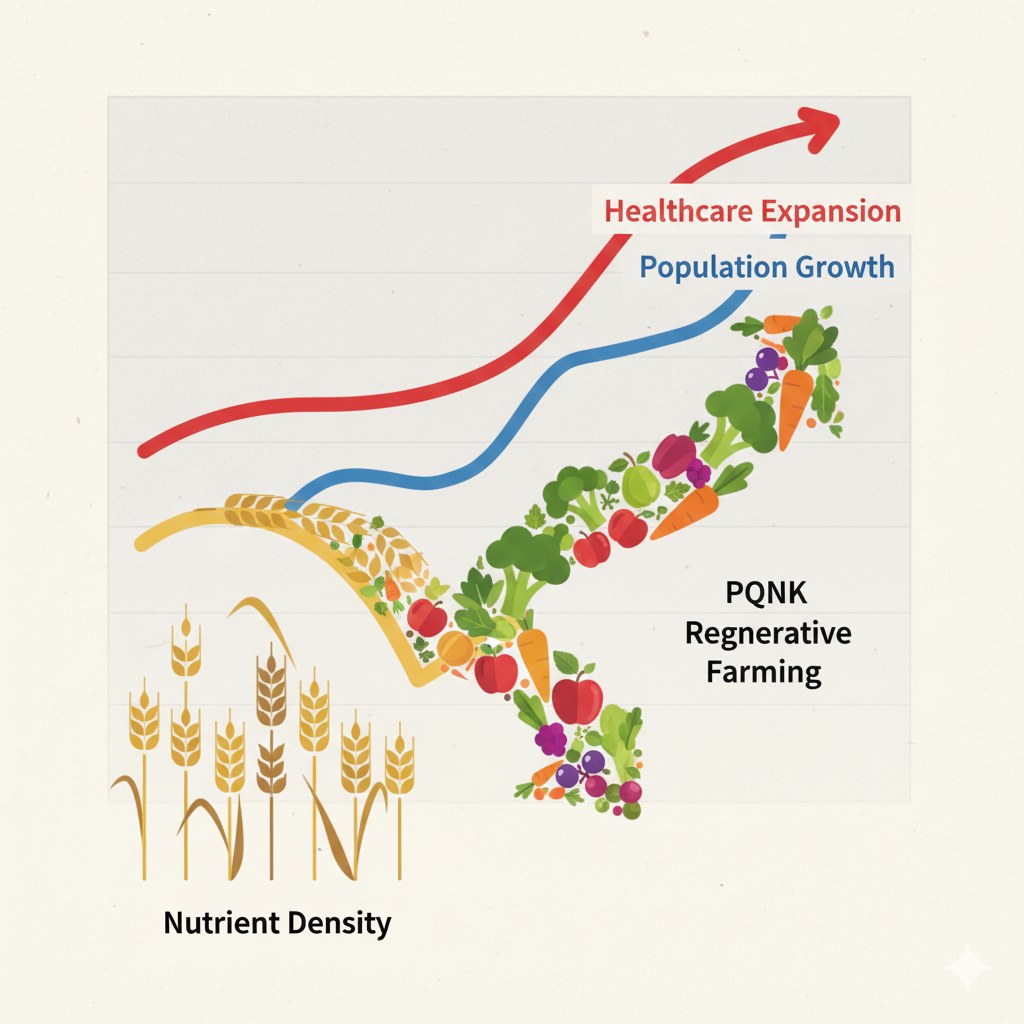
Industrial agriculture, optimized for yield, shelf-life, and transportability, has inadvertently engineered a nutritional crisis.
Declining Nutrient Density: Studies show measurable declines in the concentrations of vitamins, minerals, and phytonutrients in many staple crops. This is attributed to depleted soils, selection of high-yield varieties over nutrient-rich ones, and harvest timing for transport over ripening.
Loss of Biodiversity: The global diet has homogenized around a handful of staple crops, displacing diverse, locally-adapted species rich in unique micronutrients essential for immune function and metabolic health.
The Rise of Ultra-Processed Foods: This system provides the raw materials for energy-dense, nutrient-poor ultra-processed foods, directly contributing to obesity co-existing with micronutrient deficiencies—"hidden hunger."
3. The Consequence: A Less Healthy Population, Driving Healthcare Demand
The result is suboptimal nourishment at a cellular level, a key contributor to the pathogenesis of NCDs (e.g., diabetes, cardiovascular disease, certain cancers). Lowered nutritional status reduces overall resilience, increases susceptibility to mental health disorders, and creates intergenerational health risks. This ill health is the fuel for healthcare expansion.
4. The Symptom: Reactive and Unsustainable Expansion of Healthcare Services
The healthcare system, designed to diagnose and treat disease, is overwhelmed by this preventable tide:
Increased Demand: More hospitals and specialized centers are built to manage the complications of nutrition-driven chronic diseases.
Economic Unsustainability: Costs skyrocket as systems focus on expensive late-stage interventions rather than root-cause prevention.
Distorted Priorities: The sector is trapped in a cycle of managing symptoms, with limited leverage to advocate for agricultural reform.
5. Comparative Analysis: Population Growth vs. Illness-Driven Demand
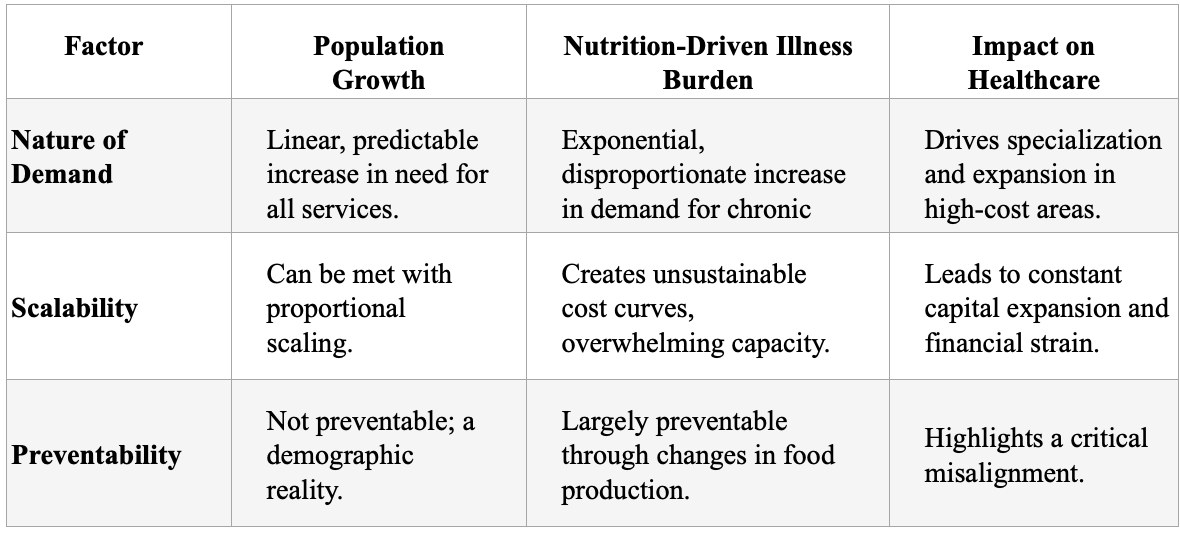
| Factor | Population Growth | Nutrition-Driven Illness Burden | Impact on Healthcare |
|---|---|---|---|
| Nature of Demand | Linear, predictable increase in need for all services. | Exponential, disproportionate increase in demand for chronic | Drives specialization and expansion in high-cost areas. |
| Scalability | Can be met with proportional scaling. | Creates unsustainable cost curves, overwhelming capacity. | Leads to constant capital expansion and financial strain. |
| Preventability | Not preventable; a demographic reality. | Largely preventable through changes in food production. | Highlights a critical misalignment. |
6. The Foundational Solution: PQNK (Paedar Qudratti Nizam Kashtqari)
To break the cycle of malnutrition and escalating healthcare demand, we must address the origin point: the farm. This requires a systemic shift from extractive to regenerative agriculture. PQNK (pronounced "picnic") provides this framework.
PQNK—the regenerative & sustainable Pristine Organic Farming System— is not merely a set of techniques but a holistic philosophy of co-creation with nature. Its principles directly counter the drivers of nutritional decline:
Regeneration of Soil Health: PQNK prioritizes living soils rich in organic matter and microbial diversity. Healthy soil is the prerequisite for nutrient-dense food, as it facilitates the full spectrum of mineral uptake by plants.
Biodiversity as a Core Tenet: By promoting polycultures and integration of heirloom varieties, PQNK restores nutritional diversity to the food supply, ensuring a wider array of phytonutrients and compounds essential for human health.
Sustainability and Absence of Toxins: As a pristine organic system, it eliminates exposure to synthetic pesticides and fertilizers, linked to various health issues, thereby reducing another vector of toxic burden that healthcare systems must address.
Ecosystem and Human Health Synergy: PQNK recognizes that the health of the landscape, the health of the food, and the health of the population are an unbroken continuum. By healing the agricultural ecosystem, we directly cultivate population health.
7. Integrated Conclusion: From Healthcare Expansion to Health Cultivation
The expansion of hospitals is a symptom of a malfunctioning food system. While population growth requires a proportional healthcare response, the unsustainable, disproportionate expansion is a direct result of chronic disease fueled by nutrient-deficient food.
Therefore, the most profound and cost-effective "healthcare intervention" of the 21st century may lie outside the clinic, on the farm. Adopting and scaling frameworks like PQNK represents a paradigmatic upstream solution:
PQNK addresses the root cause by rebuilding the nutritional integrity of the food supply from the ground up.
It prevents illness by providing the nutrients necessary for optimal physiological function and resilience.
It reduces future demand on healthcare systems, curbing the need for reactive expansion and freeing resources for truly unpreventable health challenges.
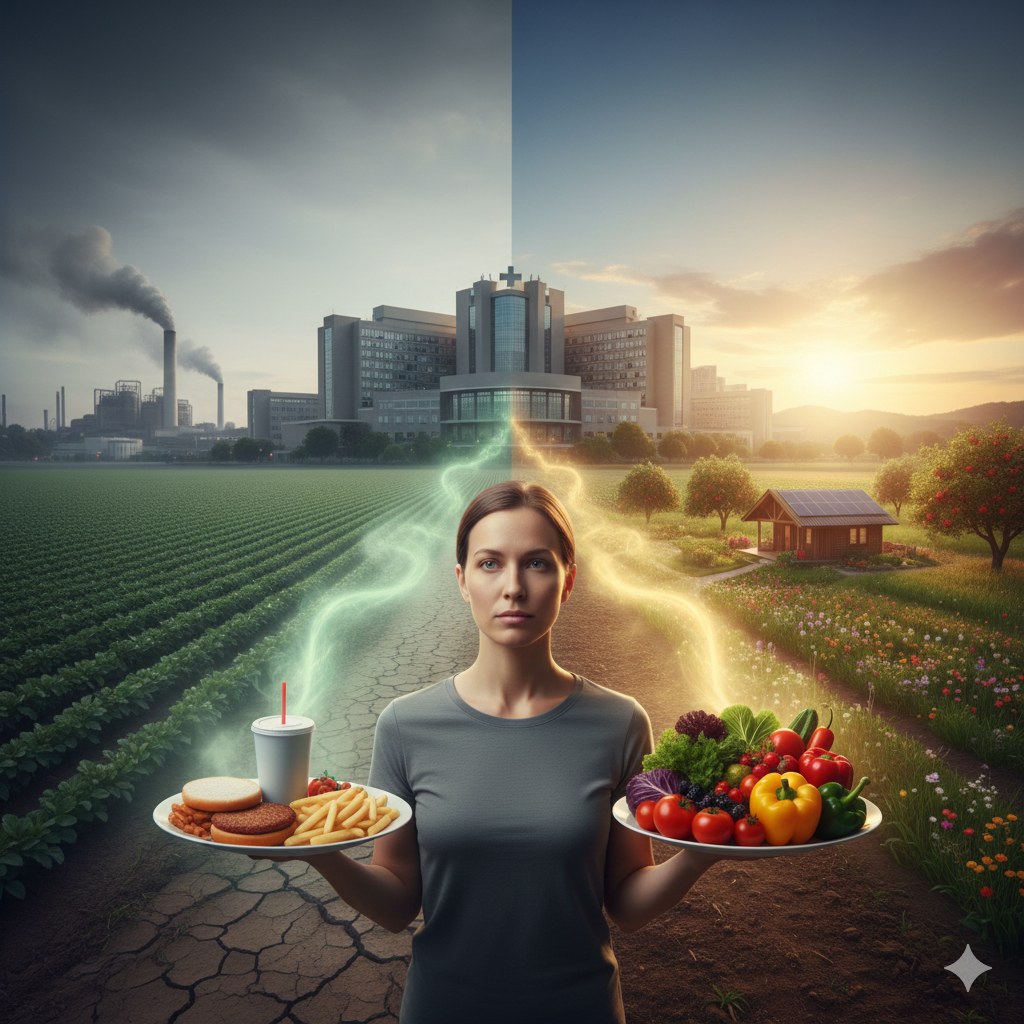
To build fewer hospitals, we must grow more nutritious food. Investing in and transitioning to regenerative agricultural systems like PQNK is not simply an environmental or agricultural policy—it is a foundational strategy for public health and healthcare sustainability. By realigning our farming with the principles of nature, we can cultivate a healthier population and a more manageable, proportionate healthcare footprint for generations to come.
References & Key Concepts: (Implied from text)
PQNK (Paedar Qudratti Nizam Kashtqari) Framework
UN FAO Reports on Agricultural Biodiversity & Diet
Studies on Historical Nutrient Decline
Global Burden of Disease Study data on NCDs
Principles of Regenerative Organic Agriculture
Planetary Health Diet (EAT-Lancet Commission)
—————————
Footnote: Any Production Process That Inundates Soil With Water, Disturbs Soil Through Tillage, Or Leaves Soil Bare Without Organic Mulch Cover Does Not Qualify As Natural Ecosystem Science For Production Agriculture.
PQNK, to be pronounced as 'picnic', which stands for Paedar Qudratti Nizam Kashatqari, and means: the regenerative & sustainable Pristine Organic Farming System.
www.Facebook.Com/Pedaver
https://www.youtube.com/@pedaverpqnk3167/videos
pedaver@gmail.com
WhatsApp +92 320 677 6666
About This Paper
- Problem
- Declining Nutrient Density in Food · Diet-Related Health / Food Security Concern · Contamination / Residue / Food Safety Risk
- Science
- Nutrition · Food Quality · Economics
- Evidence
- Philosophical/Framework Argument
- Authority
- Current / Approved PQNK Knowledge
Related PQNK Science
Key Takeaways
- Argues healthcare-sector expansion has outpaced population growth, and attributes the gap primarily to nutrition-driven non-communicable disease rather than technology or demographic aging alone.
- Identifies three specific mechanisms of nutritional decline under industrial agriculture: falling nutrient density in staple crops, loss of dietary biodiversity, and the rise of energy-dense, nutrient-poor ultra-processed foods ('hidden hunger').
- Frames the healthcare system as structurally biased toward expensive, late-stage intervention rather than root-cause prevention, which it calls economically unsustainable.
- Proposes three specific PQNK mechanisms as the corrective: soil regeneration for full-spectrum mineral uptake, polyculture/heirloom biodiversity for nutritional variety, and elimination of synthetic toxin exposure.
- States its conclusion as a direct causal claim: disproportionate (not merely population-driven) healthcare expansion is a consequence of nutrient-deficient food, making regenerative agriculture a public-health intervention.
Related Knowledge
same problem
Modern (Green Revolution) Semi-Dwarf Wheat vs. Heirloom and Ancient Wheat Varieties
A critical review of the popular claim that Green Revolution semi-dwarf wheat is inherently more harmful than heirloom varieties. Applying the PQNK lens, the paper argues the farming system, not just the genetics, is the overlooked variable driving gluten-related health concerns, and that soil biology can meaningfully change a grain's nutritional and digestive profile regardless of variety.
same problem
Wheat Hybrid and Organic Wheat Through the PQNK Lens
A PQNK response to a widely circulated review comparing hybrid and organic wheat, arguing that hybrid describes genetics while organic describes a production standard, so the two are not opposite categories that can be compared directly. Applies PQNK's seed-is-potential, soil-is-the-production-system framework to modern wheat breeding, chemical dependence, organic certification, water management and the health claims made against modern wheat.
same problem
The PQNK Imperative: Restoring Food, Health, and Sovereignty
Responds directly to a farmer's questions about why certified organic food has failed to earn consumer trust despite its price premium, arguing organic remains an input-substitution model that merely swaps synthetic inputs for approved natural ones, while PQNK eliminates purchased inputs entirely and lets taste serve as the market's proof.
same problem
Chemical Fertiliser Dependency Through the PQNK Lens
An evidence-qualified review of the article “Chemical Fertilizer Industry”. It keeps the article's warning about soil degradation, nutrient pollution and biological decline, disciplines its headline numbers, and argues that fertiliser dependency is a symptom of a damaged production system (tillage, flooding, bare soil and simplified biology) that PQNK removes by restoring aerated, covered, living soil, reaching zero purchased fertiliser and pesticide at maturity.