

KP-007 · Crop-Specific Guides
Transforming Garlic and Onion Cultivation through the PQNK Regenerative System
Garlic and onion farming has been squeezed by rising labour costs and heavy agrochemical reliance, pushing countries toward import dependence. This paper shows how PQNK's raised-bed geometry and mulch management quadruple planting density and let farmers reach up to 300 maunds per acre without synthetic inputs.
Read or listen to the full paper ↓Abstract
Garlic and onion cultivation has long been constrained by a cluster of interconnected problems: manual hoeing for weeding and bed formation runs into a chronic labour shortage, which in turn shrinks the viable cultivation area as labour becomes scarcer and more expensive; reliance on synthetic fertilizers, weedicides, fungicides, and pesticides drives up cost and environmental footprint; and conventionally grown bulbs carry higher water content, leading to significant weight loss and spoilage in storage. Together these have created a persistent supply-demand gap that many countries fill through imports.
PQNK's intervention rests on four pillars. First, planting geometry shifts from flat fields to raised beds, a change the paper calls simple but revolutionary because it allows at least four times more cloves to be planted per acre. Second, a thick layer of organic mulch applied after planting suppresses weeds without hoeing or chemical weedicides, conserves soil moisture by cutting evaporation, and enriches the soil with organic matter as it decomposes. Third, water is applied precisely through furrows between the raised beds rather than broadcast, reaching the root zone efficiently with minimal waste. Fourth, and most striking, is a 'minimal intervention' philosophy: farmers are reported producing up to 300 maunds (12,000 kg) per acre of high-quality Dessi garlic without synthetic fertilizer, weedicides, fungicides, pesticides, or further hoeing.
The yield and quality outcomes follow directly from that model: 250-300 maunds per acre of superior, lower-water-content bulbs with minimal storage weight loss and significantly extended shelf life versus conventional produce. At a conservative 250 maunds (10,000 kg) per acre and a minimum wholesale price of Rs. 100/kg, gross revenue reaches roughly Rs. 1,000,000 per acre, with minimal input costs pushing net profit past a million rupees on some farms for a six-month crop — a scale of return the paper describes as fundamentally changing farmer livelihoods.
Beyond the farm gate, the paper frames PQNK garlic and onion as exceeding organic certification standards by virtue of its natural-production, agro-ecology-rebuilding approach, giving it a distinct premium market position. At the national level, it credits PQNK-driven domestic production increases with already reducing garlic import volumes within a few years, and positions consistent PQNK quality as a strong candidate for future export markets and foreign-exchange generation.
The paper closes by tying these threads together: PQNK increases production efficiency through optimized geometry and precise irrigation, restores agricultural sustainability by removing chemical dependence, boosts farmer profitability by collapsing costs while lifting output value, and strengthens national food security through import substitution with a path toward exports — contingent on continued policy support, farmer training, access to specialized PQNK machinery, and market linkage initiatives.
Full Paper
If you use “Listen”, the text of the page may be sent to your browser or operating system’s speech provider, such as Apple, Google or Microsoft, depending on the voice your device uses. Pedaver does not process, transmit or store any audio.
Subject: A Paradigm Shift in Domestic Production, Import Substitution, and Farmer Prosperity. November 13, 2025
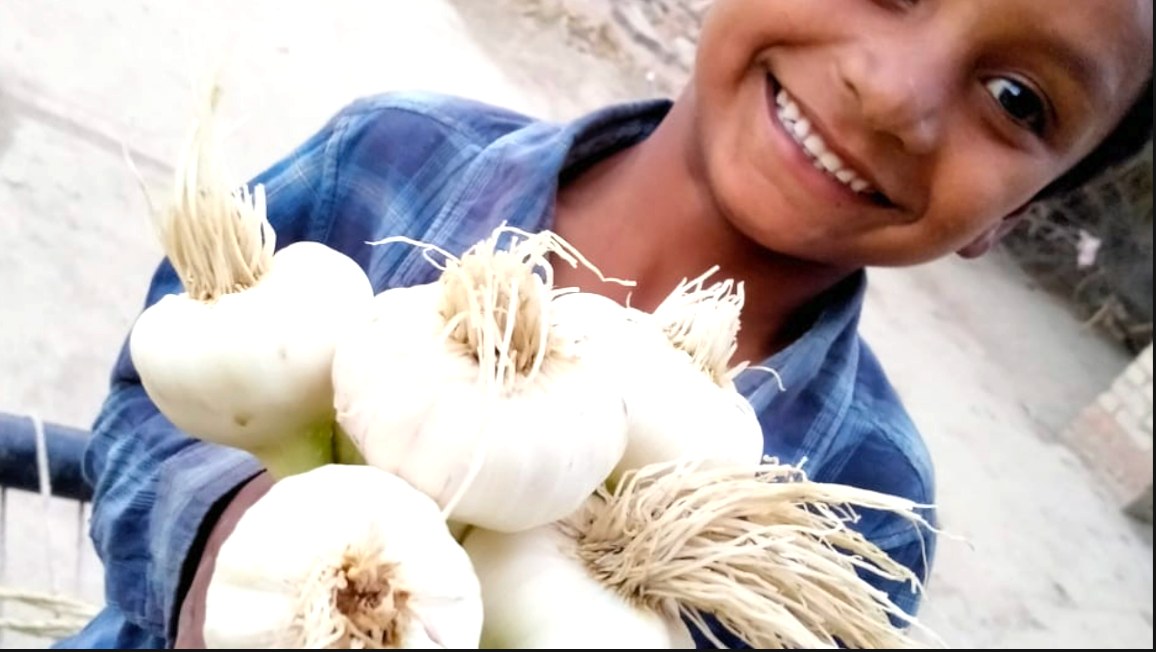
Executive Summary
Garlic and onion, essential staples in global cuisines, have traditionally posed significant cultivation challenges, leading to a heavy reliance on imports. Conventional methods, characterized by low-density planting on flat fields and high labour input, have become economically and environmentally unsustainable due to rising labour costs and the excessive use of agro-chemicals. This paper presents the PQNK (Paedar Qudratti Nizam Kashtqari) production system as a transformative solution. PQNK, a regenerative and pristine organic farming system, revolutionizes garlic and onion cultivation by leveraging raised beds, organic mulch, and precise water management. The result is a dramatic increase in yield and quality, a drastic reduction in input costs and labour, and the production of superior, high-value crops that are enabling import substitution and creating new pathways for farmer profitability and future export potential.
1. Introduction: The Conventional Challenge
The cultivation of garlic and onion has long been hampered by a series of interconnected challenges:
• Labour-Intensive Practices: Conventional methods require manual hoeing for weeding and bed formation, a task facing a critical shortage of labour.
• Decreasing Cultivation Area: As labour becomes scarce and expensive, the viable cultivation area for these crops has been steadily decreasing.
• High Input Reliance: Traditional farming often depends on synthetic fertilisers, weedicides, fungicides, and pesticides, increasing production costs and environmental footprint.
• Post-Harvest Losses: Conventionally grown bulbs often have higher water content, leading to significant weight loss and spoilage during storage.
These factors have created a supply-demand gap, making sustained imports a necessity and undermining the economic viability of domestic production.
2. The PQNK Intervention: A Regenerative Framework
PQNK, pronounced "picnic," stands for Paedar Qudratti Nizam Kashtqari. It is defined as a regenerative and sustainable Pristine Organic Farming System. Its core philosophy is to work with nature rather than against it, creating a closed-loop, highly efficient ecosystem for crop production. The application of the PQNK lens to garlic and onion cultivation involves several key technological and philosophical shifts.
2.1. The Pillars of the PQNK System for Garlic & Onion 1. Optimized Plant Geometry on Raised Beds:
The PQNK system abandons flat planting for a structured system of raised beds. This simple topological change is revolutionary, allowing for at least four times more cloves to be planted per acre. This geometric efficiency optimizes space, light, and resource access, forming the foundation for unprecedented yield increases.
2. Mulching for Ecosystem Management:
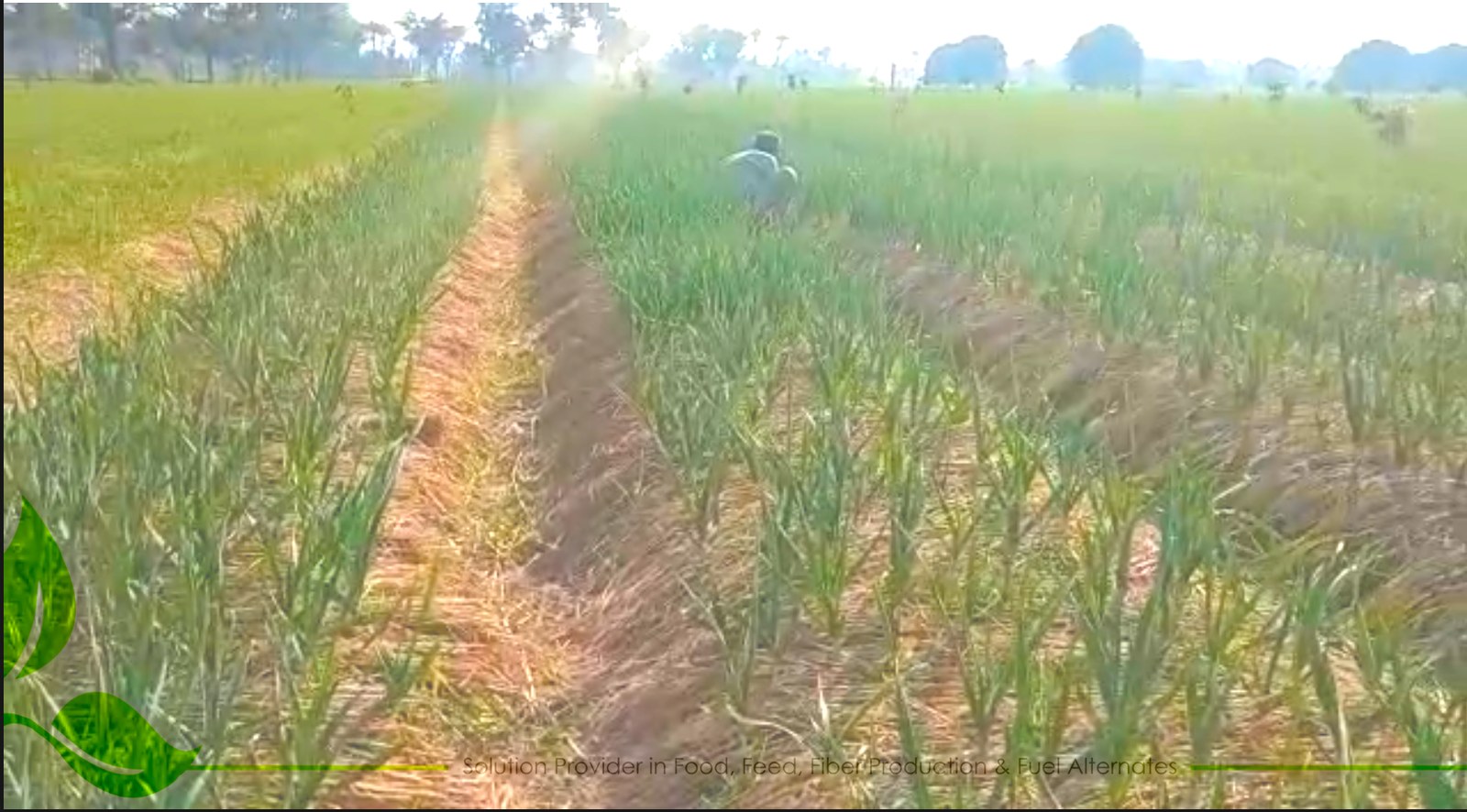
After planting, the raised beds are covered with a thick layer of organic mulch. This serves multiple regenerative functions:
• Weed Suppression: Smothers weeds, eliminating the need for manual hoeing and chemical weedicides.
• Water Conservation: Drastically reduces evaporation, maintaining consistent soil moisture.
• Soil Health: As the mulch decomposes, it enriches the soil with organic matter, fostering a thriving soil biome.
3. Precise Furrow Irrigation:
Water is applied sparingly and strategically directly into the furrows between the raised beds. This targeted approach ensures water reaches the root zone efficiently without wastage, promoting healthy plant growth while conserving a critical resource, especially in dry soil conditions.
4. A "Minimal Intervention" Philosophy:
PQNK farming is defined by what it does not require. Successful farmers are producing up to 300 mounds (12,000 kg) per acre of high-quality garlic (Dessi white or pink variety) without:
• Synthetic fertilisers
• Weedicides
• Fungicides or Pesticides
• Further hoeing or intensive labour
This not only slashes production costs but also ensures a pristine, chemical-free final product.
3. Outcomes and Impacts of the PQNK System
The implementation of the PQNK system leads to a cascade of positive outcomes.
3.1. Enhanced Yield and Quality:
• Yield: Yields of 250-300 mounds per acre (10,000 - 12,000 kg) make garlic and onion cultivation highly viable.
• Quality: The produce is superior, with lower water content. This results in minimal weight loss during storage and a significantly extended shelf life without quality deterioration.
3.2. Economic Prosperity for Farmers:
The economic model under PQNK is transformative. At a conservative yield of 250 mounds (10,000 kg) per acre and a minimum wholesale price of Rs. 100 per kg:
• Gross Revenue: Rs. 1,000,000 per acre.
• Net Profit: Given the minimal input costs, the profit per acre for this six-month crop is exceptionally high, often exceeding one million rupees, fundamentally changing the livelihood of farmers.
3.3. Market Differentiation and Standards:
PQNK produce is not merely organic; it surpasses organic standards. It is the result of a "natural production" system that rebuilds agro-ecology, giving it a unique market position as a premium, high-value product.
3.4. Macro-Economic Impact: Import Substitution to Future Export:
The scalability and success of the PQNK system are having a direct national impact.
• Import Reduction: Within a few years, the increased domestic production from PQNK farms has already led to a significant reduction in garlic imports.
• Export Potential: The consistent high quality and natural production method position PQNK garlic and onion as strong candidates for the international export market, with the potential to generate foreign revenue.
4. Conclusion and the Path Forward
The PQNK system for garlic and onion represents a holistic solution to a complex agricultural problem. It successfully addresses cultivation challenges, environmental sustainability, and economic viability simultaneously. By shifting the paradigm from input-intensive to knowledge-intensive farming, PQNK has:
• Increased production efficiency through optimized planting and water management.
• Restored agricultural sustainability by eliminating chemicals and enhancing soil health.
• Boosted farmer profitability by drastically reducing costs and creating a high-value product.
• Strengthened national food security by enabling import substitution and creating a pathway for exports.
The continued promotion and adoption of the PQNK system are crucial. Supporting policies, farmer education, access to specialized PQNK machines and market linkage initiatives will ensure that this "picnic" revolution continues to transform the agricultural landscape, turning current challenges into future opportunities for prosperity and self-reliance.
Footnote: Any Production Process That Inundates Soil With Water, Disturbs Soil Through Tillage, Or Leaves Soil Bare Without Organic Mulch Cover Does Not Qualify As Natural Ecosystem Science For Production Agriculture.
PQNK, to be pronounced as 'picnic', which stands for Paedar Qudratti Nizam Kashatqari, and means: the regenerative & sustainable Pristine Organic Farming System.
Conventional practice of garlic production
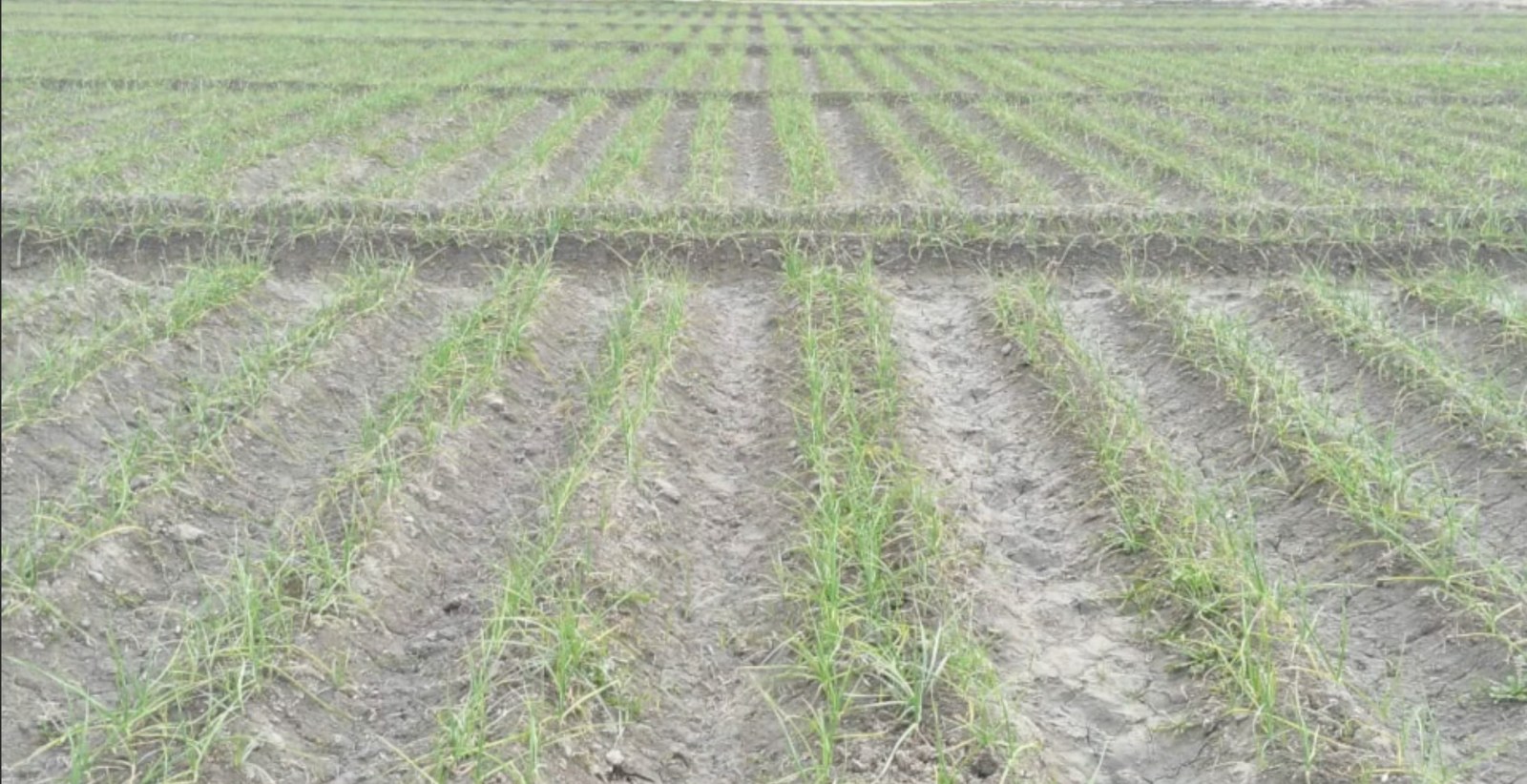
Picture gallery
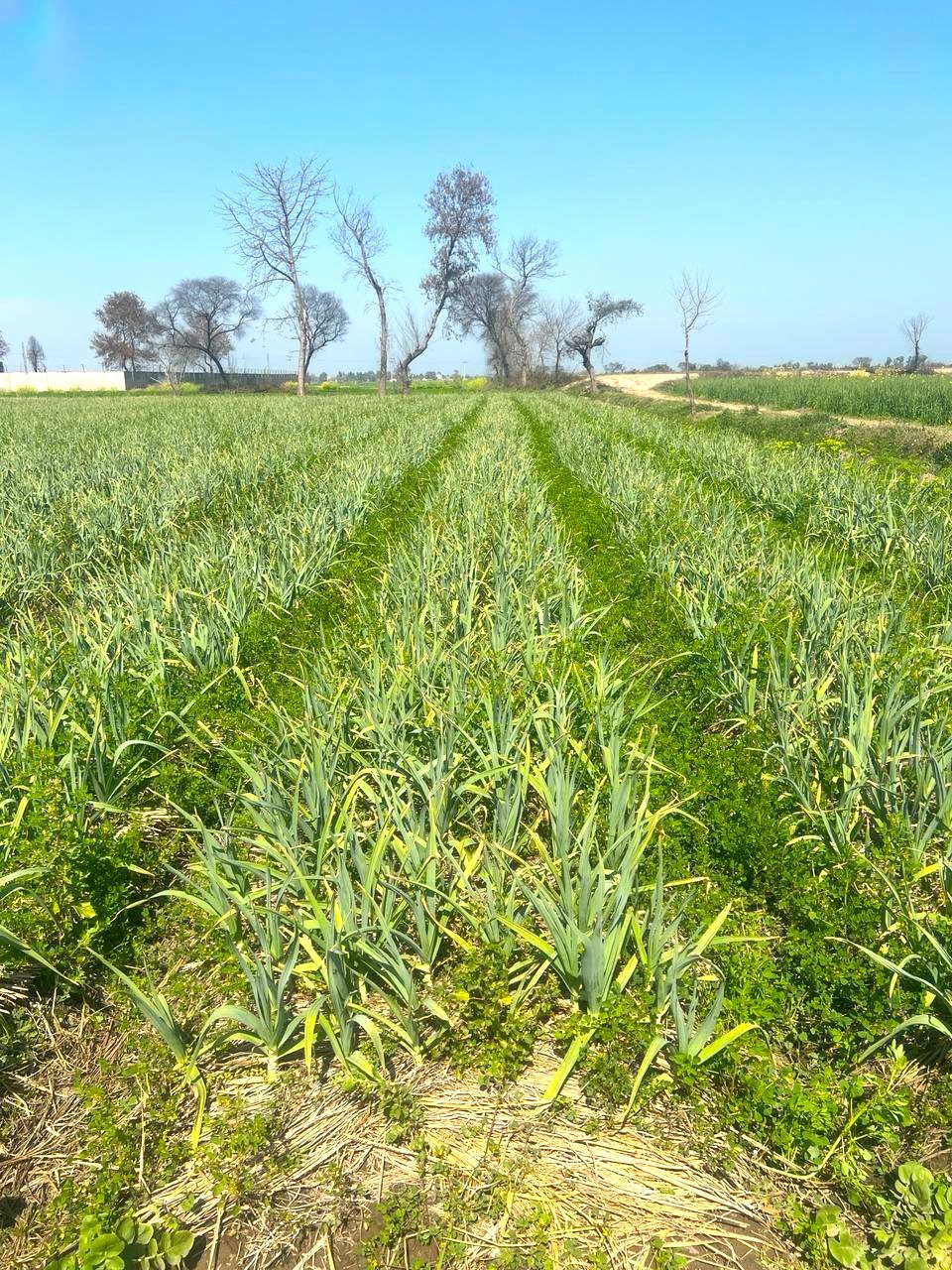
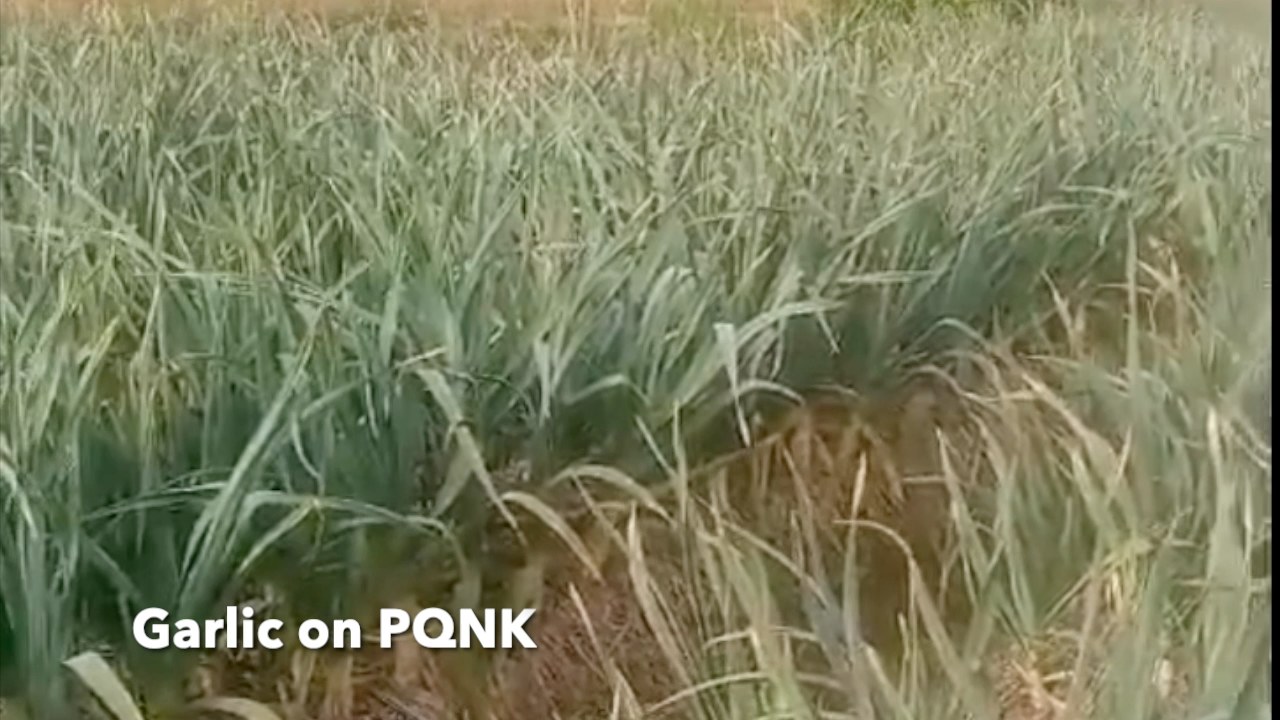
PQNK production system for Garlic
About This Paper
- Crop
- Garlic · Onion
- Problem
- Labor Scarcity / Cost · High Input / Production Cost · Post-Harvest Loss / Spoilage · External Input Dependency
- Science
- Production Architecture · Water · Economics · Food Quality
- Evidence
- Farmer Testimony
- Authority
- Current / Approved PQNK Knowledge
Related PQNK Science
Key Takeaways
- Switching from flat fields to PQNK raised beds allows at least four times more garlic cloves to be planted per acre.
- Farmers are reported reaching up to 300 maunds (12,000 kg) per acre without synthetic fertilizer, weedicides, fungicides, or pesticides.
- At a conservative 250 maunds/acre and Rs. 100/kg, gross revenue is roughly Rs. 1,000,000 per acre, with net profit often exceeding one million rupees.
- Lower water content in PQNK-grown bulbs means significantly less storage weight loss and a longer shelf life than conventional produce.
- PQNK-driven domestic production growth has already contributed to reduced garlic import volumes.
- The system's precise furrow irrigation and organic mulch eliminate the need for manual hoeing and chemical weed control entirely.
Related Crops
Related Knowledge
same problem
Commercial Onion Seed Production: A PQNK Ecosystem
A factsheet on producing commercial True Onion Seed under PQNK, covering optimal planting density, the economics of mother-bulb size, and a head-to-head quality and post-harvest comparison against conventional and organic onion production.
same problem
The PQNK Strawberry Production System: Achieving Commercial Abundance Through Ecosystem Logic
A full production system for open-field commercial strawberries under PQNK, covering ultra-high-density planting (19,600 plants/acre, nearly double the conventional standard), a mulch-hydration system that eliminates irrigation, a three-layer pest defense, and a post-harvest cold-chain protocol, plus a winter-crop rotation that keeps the same permanent bed productive year-round.
same problem
PQNK: The Pristine Organic Production System for Onion and Garlic Cultivation
A propagation-focused guide to onion and garlic under PQNK, comparing seeds, large bulbs, and offsets as planting material before laying out the full 10-step PQNK transition sequence, from hardpan-breaking through raised-bed formation to harvest timed by leaf yellowing.
same problem
Commercial Advantages of PQNK Production: Why Biological Correctness Outperforms Industrial Efficiency
A supplementary business case arguing PQNK's commercial edge comes not from yield or scale but from structurally low cost of production, quality-driven demand, and continuous harvest cash flow, walking through eleven distinct commercial mechanisms from certification-free trust to appreciating soil as a farm asset.