

KP-047 · Soil Science & PQNK System
The Underground Air: Why Soil's Water:Air Balance Governs Nitrogen Fixation, and Every Other Root Function, in the PQNK System
Sparked by a farmer's hunch that nitrogen-fixing microbes must be breathing 'underground air' rather than atmospheric oxygen, this heavily-referenced paper explains that insight through the biochemistry of nitrogenase, then, at a Cornell researcher's prompting, extends the same governing principle to phosphorus and potassium solubilization, soil bioporosity, pH stability, and root water uptake in non-leguminous crops.
Read or listen to the full paper ↓Abstract
The paper's origin is a PQNK farmer's field observation: nodules on Jantar (Sesbania) roots grown on raised beds appeared bigger and more numerous than in conventional flat-bed cultivation, leading to the hunch that nitrogen-fixing microbes must be using 'underground air' rather than atmospheric oxygen, making a Water:Air balance in the soil paramount. The paper is structured in two parts, Part One explains that observation scientifically, with the PQNK position that Jantar is grown for its roots and the nitrogen of a PQNK field comes from free-living nitrogen-fixing bacteria; Part Two, written after Professor Norman Uphoff of Cornell University (the researcher most responsible for the System of Rice Intensification) posed a follow-up question, extends the same governing variable to crops that form no nodule at all.
Part One works through the 'oxygen paradox' of nitrogen fixation: the nitrogenase enzyme is irreversibly inactivated by oxygen, yet fixing one molecule of N2 requires 16 ATP generated only through oxygen-dependent respiration. Rhizobia solve this with an oxygen diffusion barrier in the nodule cortex, the oxygen-binding protein leghemoglobin holding free oxygen at roughly 10-50 nanomolar (about 10,000 times below atmospheric levels), and spatial organization of bacteroids within plant cells. Free-living nitrogen fixers that form no nodule at all solve the identical paradox differently: Azotobacter uses extremely high respiration to consume oxygen locally plus a redox-sensitive protein that locks nitrogenase into an inactive, oxygen-tolerant state under stress, while heterocyst-forming cyanobacteria differentiate specialized, oxygen-excluding cells entirely.
The paper generalizes this into a broader principle: the soil's Water:Air ratio, its position along a gradient from dry to moist to saturated, is the master variable structuring the entire soil microbiome, not just nitrogen fixation, with aerobic decomposers favoring near-atmospheric oxygen, denitrifiers favoring near-total absence of oxygen, and nitrogen-fixers occupying the narrow microaerobic band between them, often within the same soil aggregate. PQNK grows Jantar for its deep roots, which break subsoil compaction and leave biopores, not for nitrogen; the same Water:Air balance serves the free-living nitrogen-fixing bacteria a PQNK field relies on.
A dedicated section introduces the Casparian strip, a microscopic, waterproof suberin band in root and nodule tissue, as a literal gatekeeper: it regulates whether nitrogen deficiency is sensed and nodulation is permitted to begin, and separately governs the sugar-for-nitrogen trade once a nodule is established, while itself depending on adequate oxygen and cellular energy to remain intact, tying plant-level physiology back to the same soil Water:Air condition.
Part Two takes up Professor Uphoff's specific request directly: the same soil aeration that benefits legumes also builds a more diverse, active soil community for every non-leguminous crop, phosphate and potassium solubilizers, biopore-building earthworms and fungal hyphae, pH-stabilizing chemistry, and functioning root water uptake. It draws a parallel to Maharashtra ragi farmers who independently discovered an active-aeration weeding technique paralleling Uphoff's own System of Rice Intensification research, and closes with the PQNK position that the permanent bed needs no added active-aeration step, since the soil is never disturbed after conversion, and that PQNK produce is validated for the market by laboratory tests with the Punjab Agriculture, Food and Drug Authority.
Full Paper
If you use “Listen”, the text of the page may be sent to your browser or operating system’s speech provider, such as Apple, Google or Microsoft, depending on the voice your device uses. Pedaver does not process, transmit or store any audio.
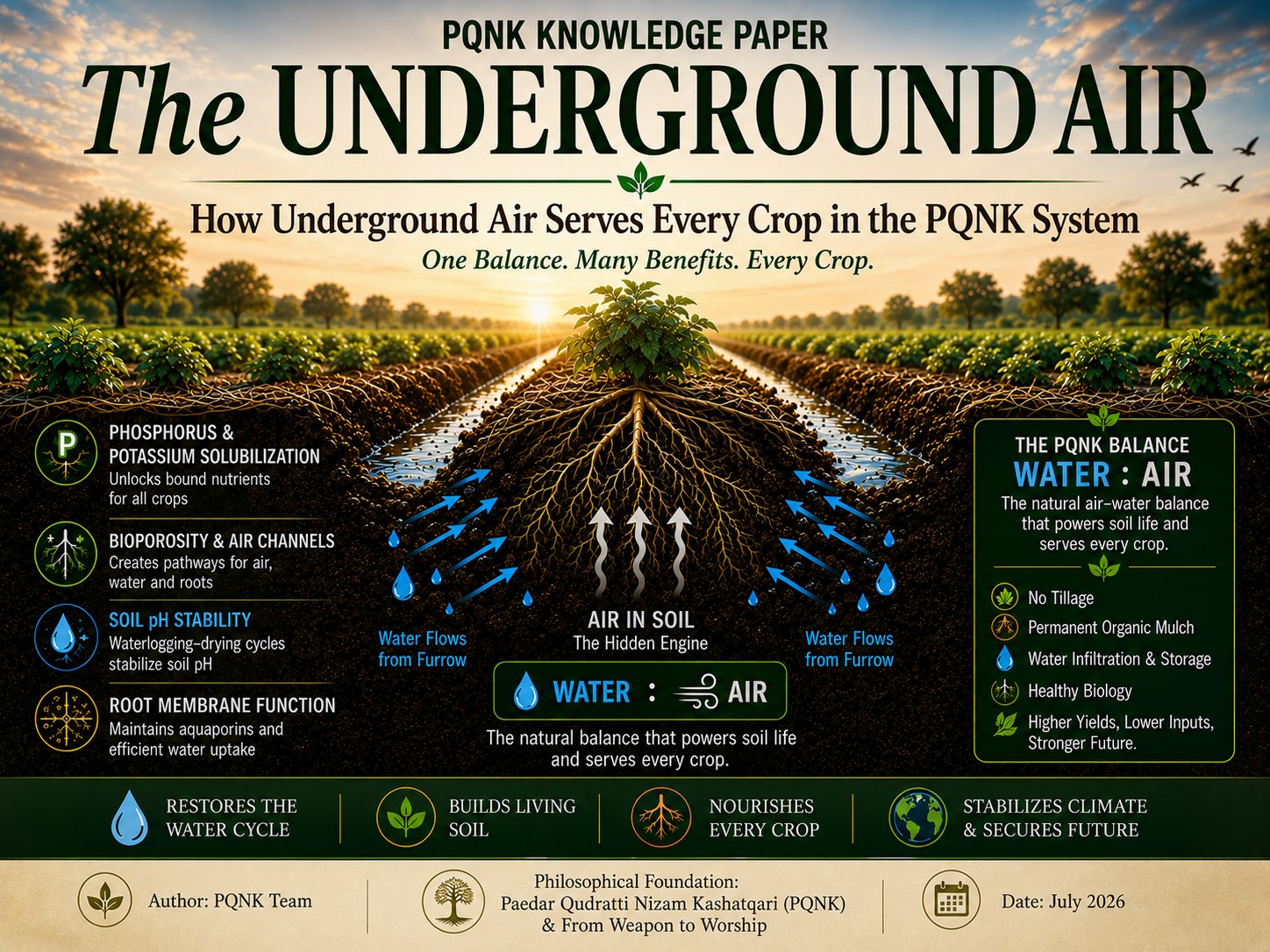
Why Soil's Water : Air Balance Governs Nitrogen Fixation, and Every Other Root Function, in the PQNK System
ABSTRACT
This paper addresses a pivotal observation from a PQNK practitioner regarding Sesbania aculeata (Jantar) grown on raised beds. The observation, that root nodules appeared larger and more numerous than in conventional flat-bed cultivation, led to a profound insight: nitrogen-fixing microbes use “underground air” rather than atmospheric oxygen, making soil aeration paramount for biological nitrogen fixation. PQNK grows Jantar for its deep root system, not for its nodules; the nitrogen of a PQNK field comes from free-living nitrogen-fixing bacteria in the soil. We draw on soil microbiology, plant physiology, and agronomic science to explain the insight, and show that raised-bed architecture, through its superior aeration and moisture balance, the Water : Air ratio, a soil’s position along the continuum from dry, to moist, to saturated, creates an optimized microenvironment for nitrogen-fixing bacteria, free-living and symbiotic alike.
After reading this argument, Professor Norman Uphoff of Cornell University, the researcher most responsible for carrying the System of Rice Intensification to international recognition, posed a further question: does the same Water : Air balance matter for crops that carry no nodule at all? The second half of this paper takes up that question directly, extending the same governing variable to phosphorus and potassium solubilization, soil bioporosity, pH stability, and root membrane permeability, services every crop depends on, legume or not. Together, the two halves show that nitrogen fixation is not simply about the presence of microbes, but about creating the physical conditions, the Water : Air balance, that let their oxygen-sensitive machinery, the plant's own microscopic gatekeeper structures, and the wider soil community all function at peak efficiency.
PART ONE: THE OBSERVATION AND THE NODULE
1. INTRODUCTION: FROM OBSERVATION TO SCIENTIFIC INQUIRY
“Once while looking at our jantar growing on raised beds, I felt, may be wishfully, that the nodes on the roots were bigger in number and size than conventional jantar in plain beds.”
This observation, grounded in the direct experience of a practicing PQNK farmer, represents the essence of the system's philosophy: attentive observation of natural processes leads to deeper ecological understanding. The farmer's intuition that enhanced nodulation was linked to the physical environment of the raised bed, specifically the balance of water and air in the soil, opens a critical scientific inquiry into the conditions that optimize biological nitrogen fixation.
The subsequent insight, that microbes must be using “underground air” rather than atmospheric air for nitrogen fixation, transforms our understanding of what constitutes optimal soil management for biological nitrogen fixation by the free-living bacteria a PQNK field relies on.
“Then a thought came to my mind: The microbes must not be using air in the atmosphere; as we would jump and catch hold of a raw mango! They must be using the underground air around them. Then it becomes more important to have less water and enough air, a Water : Air balance, in the soil.”
This paper aims to:
Explain the farmer's observation with established science
Explain the biochemical and physical mechanisms underlying the “underground air” hypothesis
Demonstrate how PQNK raised bed architecture optimizes these conditions
Introduce the Casparian strip as the microscopic “gatekeeper” that connects soil physical conditions to nodulation success
Extend the same argument, in Part Two, to phosphorus and potassium solubilization, soil bioporosity, pH stability, and root permeability, services every crop depends on regardless of whether it fixes nitrogen
Provide practical implications for regenerative farming systems
2. THE OXYGEN PARADOX OF NITROGEN FIXATION
2.1 The Nitrogenase Enzyme: Oxygen-Intolerant yet Energy-Hungry
At the heart of biological nitrogen fixation lies a fundamental biochemical paradox: the nitrogenase enzyme complex, responsible for breaking the inert triple bond of atmospheric nitrogen (N₂), is irreversibly inactivated by oxygen, yet the process requires enormous energy that can only be generated through oxygen-dependent respiration.
This is the “oxygen paradox” of nitrogen fixation. The nitrogenase complex, encoded by the nif genes, contains iron-sulfur clusters that are highly sensitive to oxygen damage. Even brief exposure to oxygen can irreversibly destroy the enzyme's functionality. Yet the reduction of one molecule of N₂ to two molecules of ammonia requires 16 ATP molecules, energy that must be generated through oxidative phosphorylation, a process that fundamentally requires oxygen.
N₂ + 8H⁺ + 8e⁻ + 16 ATP → 2NH₃ + H₂ + 16ADP + 16Pi
2.2 The Rhizobial Solution: A Delicate Oxygen Balance
Rhizobia, the bacterial partners in legume symbiosis, have evolved sophisticated mechanisms to navigate this paradox. The key to their success lies in creating a microaerobic environment, one with oxygen concentrations orders of magnitude lower than atmospheric levels.
The nodule itself is an architectural masterpiece designed to create precisely this environment. Three primary plant-mediated mechanisms achieve this:
The Oxygen Diffusion Barrier: the nodule cortex contains a barrier that limits oxygen influx, creating internal oxygen concentrations at nanomolar levels, approximately 10,000 times lower than in the atmosphere.
Leghemoglobin: this oxygen-binding protein, unique to nodules, serves a dual function. It binds free oxygen, protecting nitrogenase from damage, while simultaneously maintaining a high concentration of “safe,” bound oxygen that can be released to meet the high respiratory demands of bacteroids. Leghemoglobin binding also facilitates even oxygen distribution throughout the nodule.
Spatial Organization: bacteroids are housed within plant cells in a specific arrangement that optimizes oxygen delivery while maintaining protection.
The net effect is a nodule environment where oxygen levels are maintained at approximately 10 to 50 nanomolar, sufficient for bacteroid respiration but low enough to protect nitrogenase.
2.3 The “Underground Air” Insight Explained
The farmer's insight, that nitrogen-fixing microbes must be using underground air, is explained by this understanding of nodule physiology. In the symbiotic case, the nitrogenase reaction occurs entirely within the nodule, where the microbial partners are never exposed to atmospheric oxygen concentrations. Free-living nitrogen fixers, which form no nodule at all, solve the same problem differently, as the next section explains.
This creates a critical dependency on the soil physical environment. The “underground air” that sustains nodule function is not atmospheric air diffusing freely into soil pores, but rather a carefully managed oxygen gradient that provides just enough oxygen for bacteroid respiration while maintaining the microaerobic conditions essential for nitrogenase activity.
The soil's balance between air-filled and water-filled pore space, the Water : Air ratio, directly influences this delicate balance. Excessive soil saturation reduces oxygen availability below the threshold required for bacteroid respiration. Conversely, an overly dry soil may disrupt the diffusion barrier's ability to maintain protective microaerobic conditions within nodules.
2.4 Free-Living Diazotrophs: The Same Paradox, Solved Differently
The nodule-based mechanism described above answers the oxygen paradox for symbiotic, nodule-forming rhizobia. It does not, on its own, explain how free-living nitrogen-fixing bacteria, organisms with no host plant and no nodule, solve the identical problem. Since Section 3 of this paper draws on research into Azotobacter, a free-living diazotroph, this distinction needs to be made explicit rather than left implied.
Free-living diazotrophs cannot rely on leghemoglobin or a plant-built oxygen diffusion barrier, because neither structure exists without a host plant to build it. Instead, each lineage has evolved its own solution to the same underlying paradox.
Azotobacter, the genus this paper's soil aeration evidence draws on, uses two mechanisms in combination. The first is respiratory protection: Azotobacter sustains one of the highest respiration rates recorded in any organism, and uses this respiration to consume oxygen in the immediate vicinity of the cell faster than it can diffuse in, keeping the local environment around nitrogenase microaerobic even while the bacterium itself lives in aerobic soil (Dalton & Postgate, 1969). The second is conformational protection: under oxidative stress, a redox-sensitive protein called FeSII, commonly known as the Shethna protein, binds directly to nitrogenase and locks it into a large, catalytically inactive, oxygen-tolerant complex. When oxygen levels fall again, the complex releases and the enzyme resumes activity (Maier & Moshiri, 2000).
Heterocystous cyanobacteria, such as Anabaena, take a structural route instead, one that is a closer analogue to the legume nodule. Certain cells along the filament differentiate into heterocysts: thick-walled cells with a specialised glycolipid envelope that sharply restricts oxygen diffusion inward, combined with the shutdown of oxygen-producing photosynthesis within that same cell. Neighbouring vegetative cells continue photosynthesis and supply the heterocyst with carbon through direct cell-to-cell connections, in effect building a self-contained low-oxygen chamber without any host plant at all (Kumar, Mella-Herrera, & Golden, 2010).
Most other free-living soil diazotrophs use neither of these active mechanisms. They simply occupy the microaerobic microsites that already exist within structured soil, the interior of a soil aggregate, the inside of a decomposing residue particle, the water film around a root hair, rather than building or maintaining a barrier of their own. Some genera, such as Azospirillum, are documented to actively swim toward the specific oxygen concentration band their nitrogenase can tolerate, a behaviour known as aerotaxis.
This distinction strengthens rather than weakens the underground air argument. The Water : Air balance this paper describes is not a requirement unique to legume nodules; it is a requirement of the nitrogenase enzyme itself, wherever it is found. Symbiotic rhizobia meet that requirement using a barrier the host plant builds for them. Free-living diazotrophs meet the same requirement using barriers, biochemical switches, or microsite selection they manage entirely on their own. Either way, the soil's own Water : Air balance is what makes biological nitrogen fixation possible, with or without a nodule.
2.5 The Broader Principle: Water : Air Across the Soil Microbiome
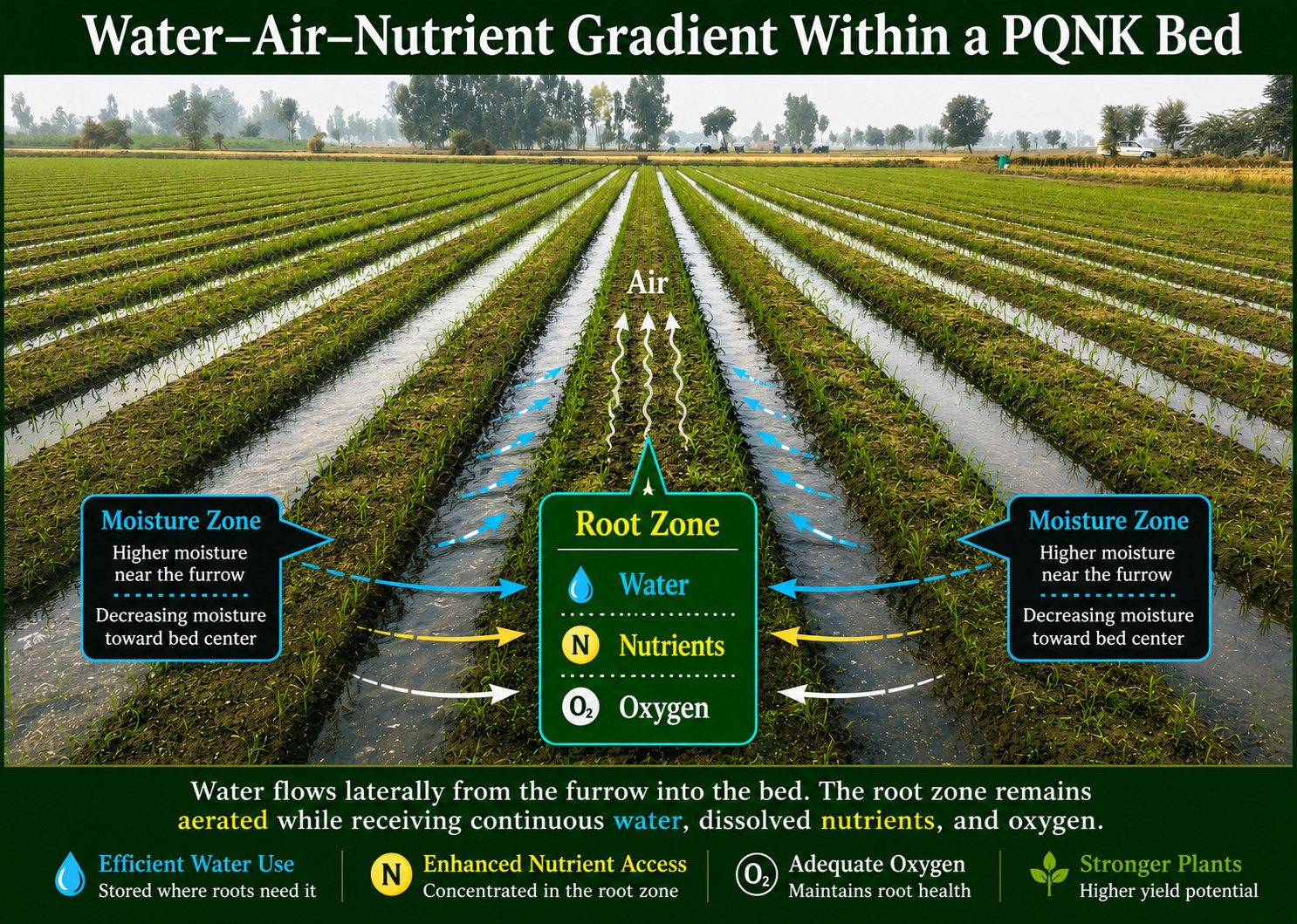
The oxygen paradox described above is not unique to nitrogen-fixing organisms. It is a specific, especially dramatic instance of a much more general rule: the balance of air and water in soil pore space, the Water : Air ratio, is the master variable that determines which microbial guild is active in any given pocket of soil, and how efficiently it works (Tecon & Or, 2017).
Soil is not uniformly aerobic or anaerobic. It is a fine-grained mosaic of both conditions, often within the same soil aggregate. Well-aerated macropores and the outer surface of aggregates favour aerobic decomposers, which break down organic matter and release mineral nutrients, and nitrifying bacteria, which oxidise ammonium to nitrate. A few millimetres away, inside that same aggregate, oxygen diffusion cannot keep pace with microbial consumption, and the interior becomes anoxic. This anoxic core favours an entirely different community, denitrifiers and other anaerobes that use nitrate, manganese oxides, iron oxides, or sulfate as alternative electron acceptors once oxygen is unavailable (Sexstone et al., 1985).
Each guild occupies its own tolerance range along this same air:water gradient. Aerobic decomposers need conditions close to atmospheric. Denitrifiers need close to the opposite, oxygen must be nearly absent before they switch on. Nitrogen-fixing rhizobia and free-living diazotrophs occupy the narrow middle band between these extremes, described in this paper as microaerobic. The Water : Air ratio is therefore not a nitrogen-fixation-specific concept. It is the physical variable that structures the entire soil microbiome, and nitrogenase is simply the most sensitive and consequential example of a much more general rule.
Three conditions along one gradient, tracking a soil's position from dry, to moist, to saturated:
Aerobic (dry to moist soil): oxygen present at or near atmospheric levels, the concentration soil water reaches in full equilibrium with the atmosphere. Supports full aerobic respiration without oxygen limitation. Favoured by most decomposers and nitrifying bacteria.
Microaerobic (moist soil): oxygen present, but at a much lower concentration, typically several orders of magnitude below atmospheric. Low enough to protect oxygen-sensitive enzymes such as nitrogenase, high enough to still fuel oxygen-dependent respiration. Inside a legume nodule this band sits at roughly 10 to 50 nanomolar dissolved oxygen. This is the condition the raised bed's upper shoulder is built to sustain.
Anaerobic (saturated soil): no free oxygen. Microbial metabolism switches to fermentation or to respiration using alternative electron acceptors such as nitrate or sulfate. Favoured by denitrifiers and other anaerobic specialists occupying the interior of saturated soil or larger aggregates.
For PQNK, the practical implication extends beyond nitrogen fixation. The same raised-bed geometry that maintains the microaerobic band nodulation depends on is simultaneously shaping which decomposer, nitrifier, and anaerobic communities are active elsewhere in the same soil profile. Managing the Water : Air ratio is not managing one microbial process. It is managing the physical variable that organises the entire underground community.
3. JANTAR ON RAISED BEDS: GROWN FOR ITS ROOTS
PQNK grows Jantar for its deep, strong root system, which breaks subsoil compaction and leaves biopores for every crop that follows; it is not grown to supply nitrogen. The nitrogen of a PQNK field comes from the free-living nitrogen-fixing bacteria of a living, mulched, well-aerated soil, and the same Water : Air balance that let the farmer see larger, more numerous nodules on Jantar is what lets those free-living bacteria work.
3.2 Factors the Raised Bed Controls
Research has identified several critical factors for nitrogen-fixing bacteria, free-living and symbiotic that are directly influenced by the PQNK raised bed architecture:
Soil Aeration: the raised bed geometry creates optimal aerobic zones in the upper shoulders and central mound, where nitrogen-fixing bacteria establish and multiply.
Moisture Status: the balanced Water : Air condition of the raised bed, created by the combination of permanent raised beds, organic mulch, and lateral seepage irrigation, provides the moisture levels necessary for bacterial proliferation without waterlogging that would limit oxygen availability.
Organic Matter Availability: the permanent organic mulch and retention of root systems provide carbon sources that fuel soil biological activity, including the free-living nitrogen-fixing bacteria.
Nutrient Availability: the engineered nutrient gradients create the balanced nutrient environment that supports both plant and microbial function. Research confirms that nitrogen fertilizer application can actually inhibit biological nitrogen fixation, supporting the PQNK principle of relying on biological rather than synthetic nitrogen sources.
3.3 The Water : Air Condition
The farmer's conceptualization of the optimal soil condition as having “less water and enough air” captures a fundamental principle of nitrogen-fixing bacteria. Research on nitrogen-fixing Azotobacter species found that these bacteria multiply more efficiently at lower oxygen partial pressures and in conditions of adequate but not excessive moisture. Indeed, classic research demonstrated that “in the tillable horizon of soil there are no suitable conditions for growth of Azotobacter (high aeration and low humidity),” suggesting that the optimal environment for nitrogen fixation may exist in deeper, more protected layers.
The PQNK raised bed architecture creates precisely this Water : Air balance through:
Elevated geometry that prevents waterlogging
Permanent mulch that moderates moisture evaporation
Lateral capillary movement that provides consistent moisture without saturation
Pore space preservation through no-till management
4. THE PQNK ARCHITECTURE: ENGINEERING THE UNDERGROUND AIR ENVIRONMENT
4.1 Vertical Gradients in the Raised Bed
The critical vertical architecture of the raised bed follows a consistent pattern:
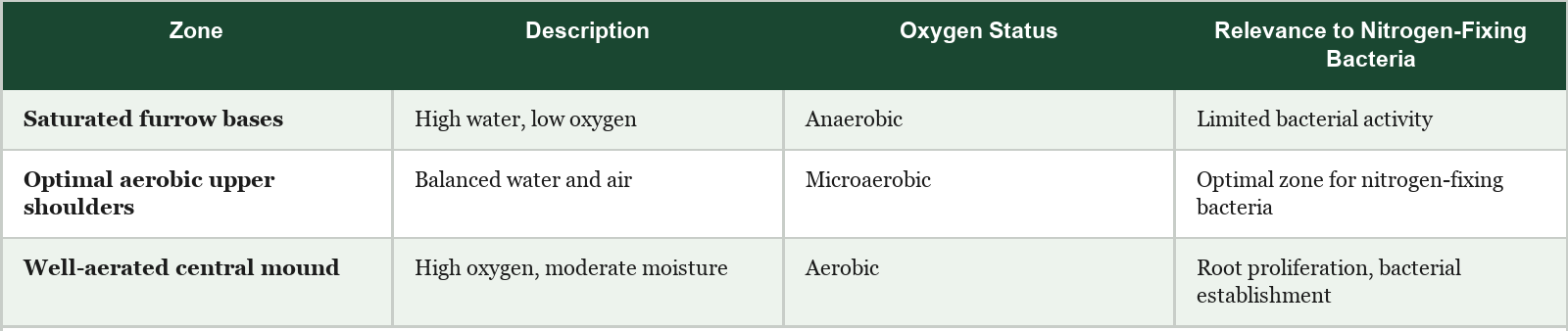
| Zone | Description | Oxygen Status | Relevance to Nitrogen-Fixing Bacteria |
|---|---|---|---|
| Saturated furrow bases | High water, low oxygen | Anaerobic | Limited bacterial activity |
| Optimal aerobic upper shoulders | Balanced water and air | Microaerobic | Optimal zone for nitrogen-fixing bacteria |
| Well-aerated central mound | High oxygen, moderate moisture | Aerobic | Root proliferation, bacterial establishment |
The upper shoulders of the raised bed, the transition zone between the saturated furrow and the well-aerated mound, provide the ideal microaerobic environment for nitrogen-fixing bacteria. This zone combines sufficient moisture for bacterial transport and root infection, adequate oxygen for bacteroid respiration, and protection from both waterlogging and excessive drying.
4.2 Mulch-Mediated Moisture Regulation
The permanent organic mulch, the second non-negotiable pillar of PQNK, plays a critical role in maintaining the Water : Air balance. Research has demonstrated that mulch reduces surface evaporation by 30 to 50 percent, moderates soil temperature fluctuations, feeds soil biological communities that maintain pore structure, and captures atmospheric moisture, dew and humidity, that contributes to the water budget.
This moisture regulation prevents the extreme fluctuations that can disrupt nodule function, while the organic matter provides carbon substrates that support the microbial communities necessary for effective nitrogen fixation.
5. THE CASPARIAN STRIP: THE MICROSCOPIC GATEKEEPER OF SYMBIOTIC TRADE
5.1 What Is the Casparian Strip?
The Casparian strip is a microscopic, waterproof band composed primarily of suberin, a waxy, hydrophobic polymer, that is embedded within the cell walls of the endodermis, the innermost cortical layer surrounding the vascular core of plant roots. First described by the German botanist Robert Caspary in 1865, this structure represents one of the most critical yet often overlooked components of plant physiology.
The Casparian strip forms a continuous, ring-like band around each endodermal cell, effectively creating a sealed “belt” that joins adjacent cells into an impermeable cylinder. This suberized band is deposited early in root development and persists throughout the life of the cell, providing a permanent physical barrier to passive diffusion.
5.2 The Gatekeeper Function: How It Works
The Casparian strip functions as a biological “border control” that fundamentally alters the pathway of water and nutrients moving from the soil into the plant's vascular system.
The Apoplastic Pathway (bypass route): water and dissolved minerals move through the cell walls and intercellular spaces, the “free space” outside the living cell membranes. This pathway is passive, requiring no energy expenditure by the plant, and allows rapid, bulk movement of water and any dissolved substances, including toxins and excess salts.
The Symplastic Pathway (regulated route): water and nutrients must cross the plasma membrane of endodermal cells, entering the living protoplast. This requires selective transport proteins and often consumes metabolic energy (ATP). The plant can selectively admit beneficial nutrients while excluding harmful substances.
The Casparian strip forces the symplastic pathway. Because the suberin band seals the gaps between endodermal cells, water and solutes can no longer slip between the cells. Instead, they are compelled to cross through the living endodermal cell membranes, through channels described fully in Section 11 below.
5.3 The Casparian Strip Connection to Nitrogen Fixation
Research published in Science in March 2025 by a team at the Max Planck Institute for Plant Breeding Research (Shen, Venado, Neumann, et al., 2025), working with the model legume Lotus japonicus, has revealed two previously unknown and crucial functions of apoplastic barriers related to the Casparian strip in legume nitrogen fixation.
Function One — Root-to-Shoot Nitrogen Signaling. Before a nodule ever forms, the plant must first detect that it is nitrogen-deficient in the surrounding soil and permit rhizobial infection to proceed at all. Shen et al. (2025) found that an apoplastic barrier in the root, structurally and developmentally related to the Casparian strip, is essential for this detection step. Without it, the plant cannot properly sense soil nitrogen status and fails to generate the root-to-shoot signal that triggers the shoot-to-root response authorising nodule formation.
Function Two — Regulating the Symbiotic Trade. In legume nodules, a Casparian strip is present in the nodule parenchyma, the tissue layer surrounding the infected cells containing bacteroids. This strip, like its root counterpart, creates an apoplastic barrier that controls the movement of solutes into and out of the infection zone.
The Symbiotic Trade Imbalance Experiment
Researchers conducted a pivotal experiment using mutant legumes that lacked the Casparian strip specifically within their nodules. In mutants lacking the nodule Casparian strip, the plant could no longer regulate the flow of sugars from the plant to the bacteria. The bacteria, receiving abundant sugars without constraint, multiplied and consumed carbohydrates excessively while failing to return adequate fixed nitrogen to the plant. The unbalanced trade led to reduced nitrogenase activity and diminished nitrogen fixation efficiency, and despite possessing functional nitrogenase genes, the mutants suffered from nitrogen deficiency because the cooperation had collapsed.
5.4 Why the Casparian Strip Matters for PQNK
The discovery of the Casparian strip's role in nodule function confirms the farmer's insight about the importance of soil physical conditions. The endodermal cells with their Casparian strips are living, metabolically active tissues that require adequate oxygen for the active transport processes the strip forces, optimal moisture, since water stress impairs membrane function and reduces the energy available for selective transport, balanced nutrients, and absence of toxins, since heavy metals and other soil toxins can damage the endodermal cells and disrupt Casparian strip integrity, a problem prevented by the biological management in the PQNK system.
5.5 Practical Implications for PQNK Farmers
The gatekeeper function of the Casparian strip depends on cellular energy (ATP), which is generated through oxygen-dependent respiration. Soil aeration is therefore directly linked to the plant's ability to regulate nutrient and sugar exchange, including in nodules. The PQNK raised bed, with its lateral seepage irrigation and permanent mulch, creates the optimal Water : Air balance that supports this energy-intensive selective transport.
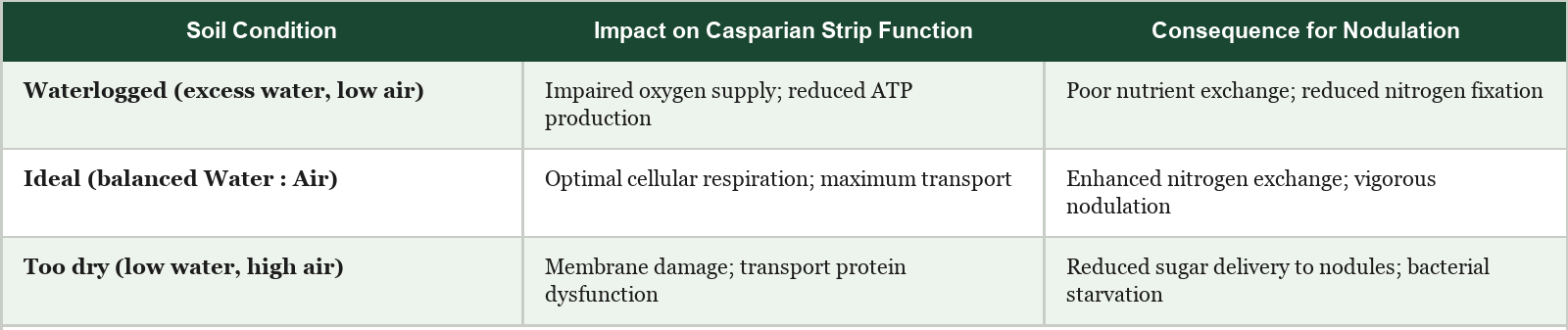
| Soil Condition | Impact on Casparian Strip Function | Consequence for Nodulation |
|---|---|---|
| Waterlogged (excess water, low air) | Impaired oxygen supply; reduced ATP production | Poor nutrient exchange; reduced nitrogen fixation |
| Ideal (balanced Water : Air) | Optimal cellular respiration; maximum transport | Enhanced nitrogen exchange; vigorous nodulation |
| Too dry (low water, high air) | Membrane damage; transport protein dysfunction | Reduced sugar delivery to nodules; bacterial starvation |
5.6 The Casparian Strip: A Unifying Concept
The Casparian strip serves as a powerful unifying concept for the PQNK system, connecting soil physics (the Water : Air condition created by raised beds), plant physiology (the selective transport that enables nutrient management), microbial symbiosis (the regulated trade that sustains nitrogen fixation), and system design (the architecture that optimizes all these processes).
When the PQNK farmer observes enhanced nodulation in Jantar, they are witnessing the outcome of a complex, integrated system where the microscopic Casparian strip, working in concert with soil aeration, moisture balance, and biological activity, enables the plant to manage its relationship with nitrogen-fixing bacteria with precision. This is the “intelligence” at work in the PQNK system: not a conscious mind, but an evolved biological wisdom that responds to physical conditions in predictable, beneficial ways when those conditions are appropriately engineered.
PART TWO: BEYOND THE NODULE
6. A SECOND QUESTION FROM THE SAME INSIGHT
Part One argued that biological nitrogen fixation in Jantar depends on a carefully managed Water : Air balance, because the nitrogenase enzyme is oxygen-sensitive wherever it is found, inside a legume nodule or inside a free-living soil bacterium. After reading that argument, Professor Norman Uphoff of Cornell University offered a specific and constructive response: the argument for legumes is well made, but soil aeration's benefits reach non-leguminous crops by an entirely different route, a more diverse and more active soil biological community that solubilizes phosphorus and potassium, builds air channels through the soil profile, regulates soil pH, and keeps plant roots physically capable of taking up water and nutrients. Part Two takes up that request directly.
“Your presentation nicely explains in scientific terms how soil aeration, active and passive, enhances particularly leguminous crops. I would be glad to see a little more attention to how it boosts non-leguminous crop, but making soil systems inhabited by more and more diverse soil organisms, micro to macro, which provide a lot of services to growing plants — P solubilization, creating air channels up and down and across in the soil, affecting soil pH, making soil more permeable for roots, etc. But this could be added easily.”
The observation is exactly right, and it deserves the same rigour as Part One rather than a footnote. Nitrogenase is the most dramatic example of an oxygen-sensitive soil process, but it is one example among several. Wheat, rice, maize, potato, and every other non-leguminous crop in a PQNK field has no nodule and fixes no nitrogen of its own, yet every one of them depends on a soil community whose other services, unlocking bound phosphorus and potassium, building and maintaining the pore network the root grows through, holding soil pH in a workable range, and keeping the root's own water-uptake machinery switched on, are governed by the identical Water : Air balance introduced in Section 2.5 above.
This section also takes up a parallel Professor Uphoff offered alongside his request: that ragi (finger millet) farmers in Maharashtra had independently discovered, through an ox-drawn inter-row root-cutting implement, the same active-aeration principle his own SRI research established for rice. That a farmer's direct observation of Jantar nodulation and a Cornell professor's decades of rice research converge on the same underlying physical variable is, itself, a small demonstration of this paper's argument: attentive observation of soil, wherever it happens, keeps arriving at the same Water : Air balance.
7. ACTIVE AND PASSIVE AERATION, BEYOND RICE
Professor Uphoff's own research draws a specific distinction between two routes to the same soil condition. Passive soil aeration in the System of Rice Intensification comes from alternate wetting and drying, letting a paddy dry out, sometimes to the point of visible surface cracking, between irrigations rather than keeping it continuously flooded. Active soil aeration comes from the mechanical push-weeder SRI farmers use to control weeds between wide-spaced rows, which physically churns and opens the surface soil around each plant while it works. The mechanism behind the active half is best understood at the level of the root itself rather than the bulk soil. Rice roots carry their own internal oxygen supply, aerenchyma channels running from shoot to root tip, and leak a portion of that oxygen out through the root surface, radial oxygen loss, which oxidises the Fe²⁺, Mn²⁺, sulfide, and organic acids that otherwise accumulate around the root in flooded soil and damage the tissue responsible for water and nutrient uptake (Colmer, 2003). Those organic acids are not a minor irritant: acetic, propionic, and butyric acid, produced as residue decomposes anaerobically in exactly the shallow zone a push-weeder disturbs, cut rice root elongation by forty to fifty percent at realistic paddy concentrations and can stop new root initiation outright at higher concentrations (Rao & Mikkelsen, 1977). Mechanical weeding does not need to aerate soil at depth to matter; it needs only to break up the crust and disrupt this shallow, phytotoxin-saturated zone immediately around the crown, which is exactly where it operates. Field measurement confirms the effect directly: mechanical weeding raised rhizosphere redox potential from -139 to -128 mV in one measured zone and from +176 to +184 mV in another, an effect the researchers attributed both to the immediate physical disturbance and, over time, to the plant's own roots generating more of that oxidising power themselves as they recovered (Jayakumar, Subathra, Velu, & Ramanathan, 2005). Research reviewing SRI's effect on rice-soil rhizospheres adds a further, secondary layer on top of this root-level effect: both aeration routes also raised populations of free-living nitrogen-fixing bacteria and phosphate solubilizers together, in some cases by close to seventy-five percent (Anas, Rupela, Thiyagarajan, & Uphoff, 2011). Rice is not a legume, and this corroborates that aeration's benefit to the wider soil microbial community reaches a non-leguminous crop exactly as it does Jantar, even where root physiology, not microbiology, is doing most of the work.
The Maharashtra ragi farmers Professor Uphoff describes had arrived at the active half of this same principle independently, through field observation rather than laboratory research, using an ox-drawn implement to cut the roots of weeds between eighteen-inch finger millet rows, disturbing the top five to ten centimetres of soil and boosting tillering and yield. Tillering is a crown and shoot response, and the redox study above points to the same root-level explanation for it: the implement's cutting action prunes fine surface roots, and the plant answers root pruning the way most plants do, with vigorous compensatory branching, on top of whatever relief from phytotoxin stress the disturbance itself provides. The parallel to the PQNK farmer's Jantar observation that opened Part One is direct: a working farmer, in a different country, on a different continent, on a crop with no nodule at all, noticed that disturbing the soil around the root zone in a specific, limited way made the crop perform better, years before either observation was connected to a documented physical mechanism.
PQNK's raised-bed geometry already supplies the passive half of this pairing without requiring any separate aeration step. The permanent, undisturbed bed, its upper shoulders balanced between the saturated furrow and the well-aerated mound, is a standing passive-aeration structure rather than an intermittent one achieved through a wetting-drying cycle. PQNK does not add an active-aeration step: after conversion the soil is never disturbed again, and the permanent bed already supplies the aeration the crop needs.
8. PHOSPHORUS AND POTASSIUM SOLUBILIZATION: UNLOCKING WHAT IS ALREADY THERE
Most agricultural soils, including much of the calcareous, alkaline soil common across Punjab, are not actually short of phosphorus or potassium in absolute terms. What they are short of is available phosphorus and potassium: both elements readily form insoluble complexes, phosphorus with calcium, iron, and aluminium, potassium locked within the crystal lattice of clay minerals such as mica and feldspar, in forms a plant root cannot take up regardless of how much total P or K a soil test reports.
Phosphate-solubilizing bacteria and fungi release that locked phosphorus mainly by secreting low-molecular-weight organic acids, gluconic, citric, oxalic, and several others, which lower the local pH and chelate the calcium, iron, or aluminium ions holding the phosphate in place, alongside phosphatase enzymes that mineralize organically bound phosphorus directly (Rodríguez & Fraga, 1999). Potassium-solubilizing bacteria use a closely related toolkit, organic acids and exopolysaccharides that dissolve or chelate the mineral lattice, releasing potassium into soil solution; a potassium-releasing strain of Bacillus edaphicus, for example, has been shown to directly improve potassium uptake and growth in cotton and rape (Sheng, 2005).
The organisms carrying out both processes are predominantly aerobic or facultative heterotrophs. The metabolic pathways that generate their organic acids run most efficiently under oxygen-dependent respiration, the same energetic currency nitrogenase itself depends on, described in Section 2 above. This produces an instructive contrast rather than a contradiction: nitrogenase must be shielded from oxygen, while phosphate- and potassium-solubilizing organisms need enough of it to run their own chemistry, yet both are optimized by the same moderate, well-aerated-but-not-dry point on the Water : Air continuum rather than by opposite extremes. A waterlogged soil starves both processes at once; the Anas et al. (2011) findings on rice already confirm this pattern operating in a single field, since both free-living nitrogen-fixers and phosphate solubilizers rose together under the same aeration regime.
The practical stakes are concrete. Wheat, rice, maize, chickpea, lentil, canola, sesame, potato, tomato, and every other crop named in PQNK's current comparative nutrition testing programme with the Punjab Agriculture, Food and Drug Authority depends on available phosphorus for root development, energy transfer, and seed formation, and on available potassium for water regulation and disease resistance. A soil's Water : Air balance, not its total nutrient reserve, is what decides how much of that already-present phosphorus and potassium each of those crops can actually reach.
PQNK's own field synthesis puts this scarcity-versus-access distinction in concrete, regional terms. For a representative two-tonne-per-acre wheat yield in the subcontinent, the top six inches of soil in a single acre holds an estimated 800 kilograms of total phosphorus, against a crop removal, in grain and straw combined, of only about 4.4 kilograms, a bank-to-withdrawal ratio of roughly 182 to 1. The same accounting for potassium runs closer to 1,167 to 1 (PQNK Knowledge Initiative, 2025). Two further reserves sit beneath the topsoil figure used in that ratio, a larger, slower-moving subsoil and weathered-bedrock tier, and a virtually limitless unweathered parent-rock tier below that, each a further store the topsoil bank draws on as it is depleted. Read alongside the organisms described above, the argument sharpens considerably: phosphate- and potassium-solubilizing bacteria are not manufacturing these elements from nothing, they are drawing down a reserve already present in the soil at a scale one to three orders of magnitude larger than a single season's crop demand. PQNK's own account of this process organizes it into three functional roles that map directly onto the biology already described: primary mineral weathering by lithotrophic bacteria and mycorrhizal fungi acting on parent rock, solubilization of the liberated but still-insoluble compounds by organic-acid-producing bacteria such as Pseudomonas, and transport of the solubilized nutrient to the root by the mycorrhizal hyphal network itself, a sequence triggered and paced by the plant's own root exudates rather than run on a fixed schedule (PQNK Knowledge Initiative, 2025). Every one of those three roles is carried out by an aerobic or facultative organism. The mineral reserve is, by this accounting, rarely the limiting factor; the Water : Air balance that keeps its aerobic workforce active is.
9. AIR CHANNELS AND THE LIVING ARCHITECTURE OF SOIL
Professor Uphoff's phrase, air channels up and down and across in the soil, describes a real and well-documented structure: soil macroporosity, built and maintained largely by the organisms living inside it rather than by any external tillage.
Earthworms are the best-studied of these soil engineers. A single earthworm can construct one to two metres of burrow, and earthworm populations collectively displace more than one hundred kilograms of soil per square metre of ground each year, leaving behind a network of channels that serve as preferential pathways for water infiltration and gas exchange and that are readily reused by growing roots once formed (Blouin et al., 2013). Earthworm activity of this kind has been linked to specific crop yield increases of up to twenty-five percent.
Fungal networks contribute a second, complementary structure. Arbuscular mycorrhizal fungi extend a web of extraradical hyphae far beyond the depletion zone immediately around a root, increasing the effective absorptive surface available for phosphorus and water uptake alike. These same fungi secrete glomalin, a glycoprotein that binds soil particles into stable aggregates, and hyphal length together with glomalin content has been shown to be a strong predictor of soil aggregate stability (Rillig, 2004; Smith & Read, 2008). Stable aggregates, in turn, are what hold macropores open against collapse and support continuous air and water movement between them.
One honest qualification belongs here. Arbuscular mycorrhizal colonization is widespread but not universal: several crop families on PQNK's own representative list, canola and mustard among the Brassicaceae, and spinach among the Chenopodiaceae, are largely non-mycorrhizal and gain little from this specific fungal route. For these crops, the bacterial and bioturbation-based routes described in this paper, phosphate and potassium solubilization, earthworm channels, and pH regulation, remain fully operative and are, if anything, the more important pathway.
PQNK's own no-till, permanent-bed management is what allows all of these channels, earthworm burrows, decayed root channels, and fungal hyphal networks alike, to persist and accumulate from one season to the next rather than being severed and reset by annual ploughing, exactly the mechanism Section 6.4 of this paper's companion manuscript already describes for Jantar's own deep taproots. That description need not be limited to Jantar. Every deep-rooted crop in a PQNK field leaves the same kind of reusable channel behind it, and the raised bed's undisturbed structure is what lets those channels compound from season to season rather than resetting with each crop, which is the literal mechanism behind the Regenerative Amplification Loop described in Section 12 below, now understood to apply to every crop on the bed and not only to Jantar.
10. SOIL PH: THE QUIET VARIABLE EVERY CROP DEPENDS ON
Availability of most essential plant nutrients, phosphorus, iron, zinc, manganese, and boron among them, the same mineral panel PQNK's comparative testing programme measures directly, is tightly bound to soil pH, with each nutrient reaching peak solubility within its own fairly narrow window. Soil pH is not a fixed background property; it is actively set and reset by the same microbial community this paper has been describing. Nitrification, the oxidation of ammonium to nitrate, releases hydrogen ions and acidifies the surrounding soil; organic acid secretion, by roots and by the phosphate- and potassium-solubilizing organisms of Section 8 alike, does the same locally and deliberately; and ordinary aerobic respiration releases carbon dioxide, which forms carbonic acid in soil water.
Waterlogged, oxygen-depleted soil runs a different and less stable chemistry. Once oxygen is exhausted, microbial metabolism shifts to reduction reactions, iron and manganese oxides are reduced, and, at the extreme, sulfate is reduced to sulfide, each of these reactions consuming rather than releasing protons. The result is a soil pH that swings toward neutrality from whatever direction it started, an instability documented directly in oxygen and redox profiling of soil aggregates, where a saturated aggregate's anoxic core supports an entirely different, reduction-driven chemical regime from its aerated exterior only millimetres away (Sexstone, Revsbech, Parkin, & Tiedje, 1985).
A soil held within the aerobic-to-microaerobic band of the Water : Air continuum avoids this redox-driven churn and holds a more stable, moderate pH, one in which the mineral panel above stays within reach of the root. This is not a nitrogen-fixation-specific benefit; it applies equally to a wheat field, a tomato bed, or a stand of okra, and it is the same underlying reason PQNK's raised-bed architecture is designed to prevent waterlogging in the first place.
PQNK's own field measurements show this stabilizing effect directly, and at a scale worth stating in full. On a matured PQNK bed, a soil sample drawn twelve inches from a plant measures a bulk pH of roughly 8, typical of Punjab's calcareous, alkaline soils; a sample drawn from inside that same plant's own root net, on the same bed, measures roughly 7, a full unit lower. This is not an anomaly requiring a special explanation. Root-induced pH change of exactly this kind is a well-documented rhizosphere effect, driven by the mechanisms already described above: the release of protons to balance an uptake of more cations than anions, sharpest where nitrogen is taken up as ammonium rather than nitrate, organic acid exudation by roots and their associated microbial community, and root and microbial respiration (Hinsinger, Plassard, Tang, & Jaillard, 2003). The magnitude PQNK measures is, if anything, conservative against the published literature. A controlled study of peach and nectarine grown in calcareous and alkaline soils under ammonium-based nitrogen supply measured rhizosphere pH running two to three full units below bulk soil pH, in the same direction and for the same underlying reason (Tagliavini, Masia, & Quartieri, 1995). A matured PQNK bed builds exactly the conditions that study's ammonium treatment did by design: permanent roots, an active associated microbial community, and nitrogen released through organic decomposition and biological fixation rather than nitrate-based fertigation. The one-unit swing PQNK measures from furrow-adjacent bulk soil to root net is the expected, and comparatively modest, signature of that same process.
11. ROOT PERMEABILITY: AQUAPORINS AND THE WATER-NUTRIENT GATEWAY FOR EVERY ROOT
Section 5 described the Casparian strip as the gatekeeper that forces water and solutes out of the passive apoplastic pathway and through the living membrane of each endodermal cell. That description leaves one question open: once water is forced to cross the membrane, what does it actually cross through? The answer is aquaporins, water-channel proteins of the plasma-membrane intrinsic protein family, and they turn out to be governed by the same Water : Air balance as everything else in this paper.
Research on plant water transport under low-oxygen conditions has shown that oxygen deprivation triggers cytosolic acidosis inside root cells, and that this drop in internal pH directly gates aquaporins shut, cutting a root's hydraulic conductivity within minutes of the onset of waterlogging (Tournaire-Roux et al., 2003). Because aquaporins, not the Casparian strip itself, are the specific channel through which water crosses the endodermal membrane, this closure acts downstream of the gatekeeper described in Section 5: even a fully intact, well-functioning Casparian strip cannot deliver water to the plant if the aquaporins on the other side of it have shut. The effect has since been confirmed across a range of crop species, from sunflower to pearl millet, and applies to any plant root, legume or otherwise.
The practical consequence follows the same logic as every other section of this paper. A waterlogged soil does not just drown roots of oxygen; it actively switches off the specific molecular gate those roots use to take up water and, with it, whatever nutrients are moving in that water stream. A well-balanced raised bed keeps roots aerated enough that this gate stays open, in Jantar exactly as in wheat, maize, or any vegetable crop growing beside it.
12. IMPLICATIONS FOR PQNK PRACTICE: LEGUME AND NON-LEGUME ALIKE
The scientific evidence assembled across both parts of this paper supports the farmer's original observation, and Professor Uphoff's extension of it, with a consistent set of design principles.
Bed Geometry: the trapezoidal raised bed should be designed to maximize the area of the upper shoulder zone, where the optimal Water : Air balance is achieved.
Lateral Seepage Management: the controlled lateral movement of water from furrows through capillary action ensures that moisture is delivered to the root zone without creating anaerobic conditions.
Mulch Application: permanent organic mulch should be maintained at a depth that provides moisture regulation while allowing gas exchange.
Avoid Tillage: tillage disrupts the pore structure that maintains soil aeration. No-till practices preserve the continuous air-filled pores necessary for oxygen diffusion to endodermal cells throughout the root zone, including within nodules, and preserve the earthworm and fungal channels described in Section 9.
Avoiding Nitrogen Fertilizer: nitrogen fertilizer application inhibits biological nitrogen fixation. A starter dose of 4 kg N/ac may be recommended during the transition, but larger doses interfere with the fixation process. The PQNK principle of avoiding synthetic inputs is therefore confirmed by the science: to maximize biological nitrogen fixation, and to keep the aerobic phosphate- and potassium-solubilizing community described in Section 8 active, the system must rely on the geological abundance and biological partnership rather than external nitrogen sources.
Sesbania as a Keystone: the deep taproots of Jantar break subsoil compaction, create biopores for future root growth, access deeper soil moisture and nutrients, and provide abundant biomass for mulch, functions for which PQNK grows it, rather than for nitrogen, and that, per Section 9, benefit every crop planted into those channels afterward, not only Jantar itself.
PQNK's raised-bed Water : Air architecture was not designed as a nitrogen-fixation technology, and this paper's argument is that it should not be understood as one. It is a general soil-biology and plant-physiology platform, and every crop grown on PQNK beds, and every crop named on the sixteen-item representative list now entering PAFDA-authenticated testing, wheat, rice, maize, chickpea, mung bean, lentil, canola, sesame, cottonseed, potato, tomato, spinach, okra, kinnow, mango, and guava, draws on the same underlying mechanism, whether or not that crop carries a single nodule.
13. THE REGENERATIVE AMPLIFICATION LOOP: UNDERGROUND AIR EDITION
The farmer's observation and the science presented in this paper reveal how the underground air concept integrates into the PQNK Regenerative Amplification Loop:
Step 1, PQNK Design → raised beds create optimal Water : Air balance.
Step 2, Plant Adaptation → endodermal Casparian strip functions optimally; nitrogen-fixing bacteria thrive in the microaerobic upper shoulders; phosphate- and potassium-solubilizers, earthworms, and fungal networks establish throughout the bed; deep root development occurs.
Step 3, Enhanced Performance → superior biological nitrogen fixation and mineral solubilization; vigorous growth and biomass production across every crop on the bed; soil organic matter increases through root turnover.
Step 4, Regenerative Amplification → improved soil structure enhances aeration; more pore space creates more underground air; future crops, legume and non-legume alike, benefit from improved conditions.
The loop continues, amplifying each cycle, and spans every crop on the bed. This loop systematically replaces dependence on synthetic nitrogen and purchased phosphorus and potassium with a biological process that becomes increasingly efficient as soil physical conditions improve. The underground air is not a fixed resource but a renewable one that increases with each cycle of regenerative management.
14. CONCLUSION: THE UNDERGROUND AIR, EVERY ROOT
The PQNK practitioner's observation and insight, explained by established science, reveals a fundamental principle: nitrogen fixation is not simply a biological process, but a physical one, dependent on the soil's Water : Air balance in ways that traditional agriculture has overlooked. The farmer's intuitive understanding that “microbes must be using the underground air around them” captures a truth that soil microbiology has confirmed: the nitrogenase enzyme functions in a microaerobic environment, and the physical architecture of the soil, its pore space, moisture content, and gas exchange, directly determines the success of biological nitrogen fixation. The discovery of the Casparian strip's role in regulating symbiotic trade reveals that this physical dependency extends beyond the bacteria to the plant itself, and the discovery of aquaporins as the gate behind that gate extends it further still.
A Cornell professor, reading the paper that grew from that farmer's wondering, pointed out that the same underground air is doing comparable work for every other crop in the field, through phosphate and potassium solubilizers, earthworms and fungal hyphae, the chemistry that sets soil pH, and the molecular gates that let any root drink at all. Neither insight came from a laboratory first. Both came from close, patient attention to a working field, which is where this paper ultimately rests its case: underground air was never only about nitrogen. It is the condition every root in a PQNK field depends on, whether or not that root ever forms a nodule.
The PQNK raised bed system, with its engineered architecture, permanent mulch, and lateral seepage irrigation, creates the Water : Air condition that optimizes this underground air environment for every crop it supports, wheat and rice as much as Jantar. This explains the enhanced nodulation observed in Jantar, not as a wishful thought, but as a measurable biological response to superior soil physical conditions, and it explains, by the same mechanism, why every other crop sharing that bed benefits too.
KEY TAKEAWAYS
The Oxygen Paradox: nitrogenase requires microaerobic conditions to function, yet biological nitrogen fixation demands high energy from oxygen-dependent respiration.
Water : Air Governs Many Guilds, Not One: the balance of air and water in soil pore space, a soil's position from dry to moist to saturated, is the master variable behind nitrogen fixation, phosphorus and potassium solubilization, soil bioporosity, pH stability, and root water uptake alike; nitrogenase is simply its most sensitive example.
The Casparian Strip Connection: this microscopic waterproof band in plant roots and nodules is a gatekeeper twice over, first determining whether nitrogen deficiency is sensed and nodulation is permitted to begin (Shen et al., 2025), and second regulating the sugar-for-nitrogen trade once the nodule is established; aquaporins are the specific channel it hands water off to.
PQNK Architecture Creates Optimal Conditions: raised bed geometry, permanent mulch, and lateral seepage irrigation produce the microaerobic environment that supports the free-living nitrogen-fixing bacteria and, for every crop on the bed, maximum mineral access, bioporosity, and root function.
Jantar Is Grown for Its Roots: its deep taproots break subsoil compaction and leave biopores for every crop that follows; the nitrogen of a PQNK field comes from free-living nitrogen-fixing bacteria, served by the same Water : Air balance that gave the farmer larger, more numerous nodules on Jantar.
Active and Passive Aeration Apply Beyond Rice: both routes work chiefly through root physiology, relieving shallow phytotoxin stress and stimulating pruning-driven regrowth, a mechanism measured directly as a redox potential shift in rice, with microbial population gains a secondary, corroborating effect; Maharashtra ragi farmers arrived at the active half of this independently.
Phosphorus and Potassium Are Usually Present, Not Absent: most soils hold ample total P and K locked in insoluble forms; aerobic and facultative solubilizing bacteria, not fertiliser, are what make them available.
Soil Structure Is Biologically Built: earthworm burrows and mycorrhizal hyphal networks, not machinery, construct and maintain the macropores through which air, water, and roots move; PQNK's no-till management is what lets these structures persist and compound season over season.
The Regenerative Amplification Loop: as soil physical conditions improve through PQNK management, the capacity for biological nitrogen fixation and mineral access increases across every crop on the bed, creating a self-reinforcing cycle of soil building and fertility enhancement.
Laboratory Validation: for marketing, PQNK field validation is supported by laboratory tests, run with the Punjab Agriculture, Food and Drug Authority, that compare PQNK produce with conventionally grown produce for nutrition density and diversity.
REFERENCES
Anas, I., Rupela, O. P., Thiyagarajan, T. M., & Uphoff, N. (2011). A review of studies on SRI effects on beneficial organisms in rice soil rhizospheres. Paddy and Water Environment, 9, 53–64.
Bais, H. P., Weir, T. L., Perry, L. G., Gilroy, S., & Vivanco, J. M. (2006). The role of root exudates in rhizosphere interactions with plants and other organisms. Annual Review of Plant Biology, 57, 233–266.
Baranski, M., Średnicka-Tober, D., Volakakis, N., Seal, C., Sanderson, R., Stewart, G. B., et al., & Leifert, C. (2014). Higher antioxidant and lower cadmium concentrations and lower incidence of pesticide residues in organically grown crops: a systematic literature review and meta-analyses. British Journal of Nutrition, 112(5), 794–811.
Blouin, M., Hodson, M. E., Delgado, E. A., Baker, G., Brussaard, L., Butt, K. R., Dai, J., Dendooven, L., Peres, G., Tondoh, J. E., Cluzeau, D., & Brun, J.-J. (2013). A review of earthworm impact on soil function and ecosystem services. European Journal of Soil Science, 64(2), 161–182.
Caspary, R. (1865). Remarks on the root and bark of the Dioscorea. Botanical Gazette, 1–4.
Colmer, T. D. (2003). Long-distance transport of gases in plants: A perspective on internal aeration and radial oxygen loss from roots. Plant, Cell & Environment, 26(1), 17-36.
Crowley, D. E. (2006). Microbial siderophores in the plant rhizosphere. In Iron Nutrition in Plants and Rhizospheric Microorganisms (pp. 169–198). Springer, Dordrecht.
Dalton, H., & Postgate, J. R. (1969). Effect of oxygen on growth of Azotobacter chroococcum in batch and continuous cultures. Journal of General Microbiology, 54, 463–473.
Geldner, N. (2013). The endodermis. Annual Review of Plant Biology, 64, 531–558.
Hinsinger, P., Plassard, C., Tang, C., & Jaillard, B. (2003). Origins of root-mediated pH changes in the rhizosphere and their responses to environmental constraints: A review. Plant and Soil, 248, 43-59.
Jayakumar, B., Subathra, C., Velu, V., & Ramanathan, S. (2005). Effect of integrated crop management practices on rice (Oryza sativa L.) root volume and rhizosphere redox potential. Journal of Agronomy, 4(4), 311-314.
Jones, D. L. (1998). Organic acids in the rhizosphere — a critical review. Plant and Soil, 205(1), 25–44.
Kumar, K., Mella-Herrera, R. A., & Golden, J. W. (2010). Cyanobacterial heterocysts. Cold Spring Harbor Perspectives in Biology, 2(4), a000315.
Ladha, J. K., Kirk, G. J. D., Bennett, J., Peng, S., Reddy, C. K., Reddy, P. M., & Singh, U. (1997). Opportunities for increased nitrogen-use efficiency from improved lowland rice germplasm. Field Crops Research, 56(1–2), 41–71.
Mahiwal, S., Andersen, T. G., & Shen, D. (2025). Establishment and functions of the Casparian strip. Molecular Plant, 18(8), 1249–1252.
Maier, R. J., & Moshiri, F. (2000). Role of the Azotobacter vinelandii nitrogenase-protective Shethna protein in preventing oxygen-mediated cell death. Journal of Bacteriology, 182(13), 3854–3857.
Marchal, K., & Vanderleyden, J. (2000). The “oxygen paradox” of dinitrogen-fixing bacteria. Agris/FAO.
Marschner’s Mineral Nutrition of Higher Plants (3rd ed.).
Naseer, S., et al. (2012). Casparian strip diffusion barrier in Arabidopsis is made of a lignin polymer without suberin. Proceedings of the National Academy of Sciences.
Nitrogen fixation of Azotobacter in soil — its inhibition by oxygen. Springer, 1955.
Oxygen regulatory mechanisms of nitrogen fixation in rhizobia. ScienceDirect.
PQNK Knowledge Initiative. (2025). Knowledge Paper: The Perpetual Abundance Principle - Reconnecting Agriculture to the Geological Bank Through the PQNK System.
PQNK Team. (2026). Engineering a Perpetual Abundance Machine.
Rao, D. N., & Mikkelsen, D. S. (1977). Effects of acetic, propionic, and butyric acids on rice seedling growth and nutrition. Plant and Soil, 47(2), 323-334.
Rillig, M. C. (2004). Arbuscular mycorrhizae, glomalin, and soil aggregation. Canadian Journal of Soil Science, 84(4), 355–363.
Robinson, D. G. (1985). The Casparian strip: a permeable barrier? Nature, 317, 16–17.
Rodríguez, H., & Fraga, R. (1999). Phosphate solubilizing bacteria and their role in plant growth promotion. Biotechnology Advances, 17(4–5), 319–339.
Schreiber, L. (2010). Transport barriers made of cutin, suberin and associated waxes. Plant Physiology, 154(3), 547–554.
Sexstone, A. J., Revsbech, N. P., Parkin, T. B., & Tiedje, J. M. (1985). Direct measurement of oxygen profiles and denitrification rates in soil aggregates. Soil Science Society of America Journal, 49(3), 645–651.
Shen, D., Venado, R. E., Neumann, U., et al. (2025). Apoplastic barriers are essential for nodule formation and nitrogen fixation in Lotus japonicus. Science, 387(6740). https://doi.org/10.1126/science.ado8680
Sheng, X. F. (2005). Growth promotion and increased potassium uptake of cotton and rape by a potassium releasing strain of Bacillus edaphicus. Soil Biology and Biochemistry, 37(10), 1918–1922.
Smith, S. E., & Read, D. J. (2008). Mycorrhizal Symbiosis (3rd ed.). Academic Press.
Tagliavini, M., Masia, A., & Quartieri, M. (1995). Bulk soil pH and rhizosphere pH of peach trees in calcareous and alkaline soils as affected by the form of nitrogen fertilizers. Plant and Soil, 176, 263-271.
Tecon, R., & Or, D. (2017). Biophysical processes supporting the diversity of microbial life in soil. FEMS Microbiology Reviews, 41(5), 599–623.
Tournaire-Roux, C., Sutka, M., Javot, H., Gout, E., Gerbeau, P., Luu, D.-T., Bligny, R., & Maurel, C. (2003). Cytosolic pH regulates root water transport during anoxic stress through gating of aquaporins. Nature, 425, 393–397.
———————————
PQNK — Paedar Qudratti Nizam Kashatqari
Connect & Resources
Facebook: www.Facebook.Com/Pedaver
YouTube (PQNK): https://www.youtube.com/@pedaverpqnk3167/videos
YouTube: http://www.youtube.com/@aasifsharif
PDF Knowledge Papers: https://drive.google.com/drive/folders/1iadwV6mdUPyrUIpB3oRfNv6DLiackaUL?usp=sharing
Email: pedaver@gmail.com
WhatsApp: +92 320 677 6666
About This Paper
- Crop
- Rice · Ragi (Finger Millet)
- Problem
- Weak Below-Ground Symbiosis (Mycorrhizae/Nitrogen-Fixers) · Weak / Shallow Root Establishment
- Science
- Soil · Plants · Water
- Evidence
- Scientific Mechanism
- Authority
- Current / Approved PQNK Knowledge
Related PQNK Science
Key Takeaways
- Explains a farmer's field insight, that nitrogen-fixing microbes use 'underground air' rather than atmospheric oxygen, through the biochemistry of the oxygen-sensitive nitrogenase enzyme.
- PQNK grows Jantar for its deep roots, not for nitrogen; the nitrogen of a PQNK field comes from free-living nitrogen-fixing bacteria, served by the same Water:Air balance.
- Frames the soil's Water:Air ratio, its position along a dry-to-moist-to-saturated gradient, as the master variable governing not just nitrogen fixation but which entire microbial guild is active in any given soil pocket.
- Free-living nitrogen fixers with no host-plant nodule, such as Azotobacter and heterocyst-forming cyanobacteria, solve the identical oxygen paradox through their own respiratory, biochemical, or structural adaptations.
- The Casparian strip, a microscopic suberin band in root and nodule tissue, is identified as a literal gatekeeper regulating both nodulation onset and the sugar-for-nitrogen trade, and it too depends on adequate oxygen to function.
- At a Cornell researcher's prompting, Part Two extends the same Water:Air principle to non-leguminous crops via phosphate/potassium solubilizers and root water uptake, while explicitly flagging that this half is a literature synthesis awaiting direct PQNK field-trial confirmation.
Related Crops
Related Knowledge
same problem
The Underground Network We Have Been Farming Against
New 3D synchrotron imaging (Braunmiller et al., New Phytologist 2026) shows mycorrhizal hyphae spanning air-filled pores, bridging soil particles and growing along roots in intact soil. This paper separates what the research shows from what it means for PQNK: soil architecture is part of the root-fungal partnership, conventional farming dismantles it after every harvest, and a moist but aerated, undisturbed root zone protects it.
same problem
Deeper Understanding of PQNK: A Dialogue on Tillage, Soil Physics, and Biology with SRI Co-Founder Norman Uphoff
An email exchange between Asif Sharif and System of Rice Intensification co-originator Norman Uphoff that works through why disturbed soil is not actually better for root growth than undisturbed soil, reframing weeds as ecological repair agents and arguing that agriculture's overemphasis on soil chemistry has obscured the physics and biology that actually govern nutrient flow.
same problem
Knowledge Paper: The Plant as CEO — A PQNK Perspective on Biological Agency in Rhizobial Partnerships
Reading a 2018 transcriptomic study that found rhizobia activate over 2,400 rice genes, this paper argues the standard framing has the causality backwards: the plant is not colonized, it is informed, and it makes the decision. It develops a full 'plant as CEO' recruitment-interview analogy for how legumes and rice actively select, test, and hire their bacterial partners.
same problem
Soil Water Dynamics, Microclimate Feedback, and Plant Vigor in Raised Bed Systems
Field observation shows plants in the center of PQNK raised beds are consistently more vigorous than those on the shoulders; this paper traces that gradient to a 'nutrient harvesting' concentrating-flow mechanism in furrow-irrigated water, then extends the same soil physics to argue that hardpan-breaking can meaningfully influence local rainfall patterns.