

KP-143 · Workforce & Practice Advisories
The PQNK Kitchen Garden: A Regenerative Ecosystem for Household Abundance and Sovereignty
A compact guidebook applying PQNK principles to household-scale food production, showing how a single 4-foot by 20-foot bed, planned like a household budget around daily, weekly, and seasonal produce needs, can supply the bulk of fresh vegetables for a family of ten, with a parallel rooftop/container method built around a novel underground 'soil life conduit.'
Read or listen to the full paper ↓Abstract
The guide's central claim is that a strategically managed 4-foot by 20-foot plot (80 sq ft) can serve as the primary source of fresh produce for a family of ten, turning a household kitchen garden from a hobby vegetable patch into what the paper calls a 'household bio-system.' It sets out two parallel pathways: grounded soil-based growing for households with yard space, and rooftop or window planter production for households without it, treating both as capable of the same underlying regenerative logic.
The grounded pathway follows familiar PQNK fundamentals scaled down: break the hardpan, clear debris, build permanent raised beds oriented north-south for even light (or staircase-planted where orientation isn't possible), and fill with a native topsoil, compost, and aged manure mix. Circular, perennial planting is emphasized over annual replanting, deep-rooted plants like Daikon radish or comfrey act as natural subsoil plows, self-mulching plants like squash or sweet potato vines shade and protect the soil, and dwarf fruit trees (citrus, guava, apple) are interplanted for continuous, layered production.
The rooftop and container pathway introduces a specific PQNK innovation: a 'soil life conduit,' a perforated 2-4 inch pipe buried 1-2 feet into native ground soil and connected to each planter, allowing earthworms, beneficial nematodes, bacteria, and mycorrhizal fungi to migrate up into container soil that would otherwise be biologically isolated. Where a conduit is impossible, the paper's fallback is filling the bottom 10-15% of the planter with native soil as a foundational inoculation, and wrapping clay or plastic pots in crop-residue insulation to stabilize root-zone temperature.
Garden planning follows a 'household food budget' logic: a one-week kitchen audit tracks what the family actually eats, sorting produce into daily use (coriander, mint, chillies, green onions, salad greens), weekly use (tomatoes, cucumbers, okra, beans, spinach), and seasonal/yearly use (lemons, guavas, garlic, ginger, seasonal gourds), with garden space allocated by that demand rather than by what's easiest to grow, and grains or oil seeds explicitly excluded as a poor use of limited household plot space. Companion planting (basil with tomatoes), vertical trellising for vining crops, and height-tiered layout (tall crops center, shade-tolerant crops at the edges) round out the spatial design, with the paper closing on a strict soil-moisture-management note that over-watering, not under-watering, is the most common cause of weak, pest-attracting over-vegetation in home gardens.
Full Paper
If you use “Listen”, the text of the page may be sent to your browser or operating system’s speech provider, such as Apple, Google or Microsoft, depending on the voice your device uses. Pedaver does not process, transmit or store any audio.
Executive Summary
A kitchen garden, through the lens of Paedar Qudratti Nizam Kashatqari (PQNK), transforms from a simple vegetable patch into a strategic household bio-system. This knowledge paper outlines the precise methodology for establishing a productive, self-sustaining garden that provides year-round, nutrient-dense food. By working in harmony with natural principles, a PQNK garden eliminates dependency on external chemical inputs and creates a resilient ecosystem in your backyard, on your rooftop, or in your window. We demonstrate that a strategically managed space of just 4 feet by 20 feet can serve as the primary source of fresh produce for a family of ten, turning your household from a consumer into a sovereign producer.
1. The PQNK Philosophy for Household Sovereignty
PQNK, the Pristine Organic Farming System, is the science of production agriculture based on the natural principles of vegetation. When applied to a kitchen garden, it means creating a miniature, managed ecosystem that mimics the resilience and abundance of a forest. The core of this approach is a paradigm shift: manage your garden like a home budget. Just as you allocate funds for daily, weekly, and monthly expenses, you will allocate garden space for your daily herbs, weekly vegetables, and seasonal fruits. This ensures maximum efficiency, yield, and relevance to your family’s diet.
2. The Two Pathways of PQNK Kitchen Gardening
Pathway A: Grounded Soil-Based Growing (The Ideal Standard)
This method creates a permanent, self-improving garden bed that becomes more fertile each year.
Break the Hardpan: The first action is to break the compacted layer of soil beneath the surface. This allows for deep water infiltration and root penetration, essential for plant health and drought resilience.
Clear Debris: Remove any stones, construction waste, or perennial weeds from the area.
Create Permanent Raised Beds: Form raised beds that you will never walk on or till again. This prevents re-compaction.
Orientation is Key: Always align beds in a North-South direction. This ensures that sunlight reaches all plants evenly throughout the day. In case this is not workable, do staircase planting, with higher plants towards the back.
Soil Structure: Fill your beds with a mix of native topsoil, well-decomposed compost, and aged manure to create a loose, fertile growing medium.
Implement Circular & Perennial Planting:
Integrate deep-rooted plants like Daikon radish or Comfrey. Their roots act as natural plows, creating pores in the subsoil.
Use self-mulching plants like squash or sweet potato vines. Their broad leaves shade the soil, conserving moisture and suppressing weeds.
Plan for continuous production by interplanting annuals with perennial herbs, and dedicating space for dwarf fruit trees like citrus, guava, or apple.
Pathway B: Rooftop & Window Planter Production (The Urban Solution)
When grounded space is unavailable, you can create an equally productive ecosystem in containers.
The Insulated Planter:
Wooden planters are ideal for their insulating properties.
If using clay or plastic pots, it is mandatory to wrap them with a layer of crop residues—such as maize stalks, rice straw, or bamboo mats. This buffer maintains a stable root-zone temperature.
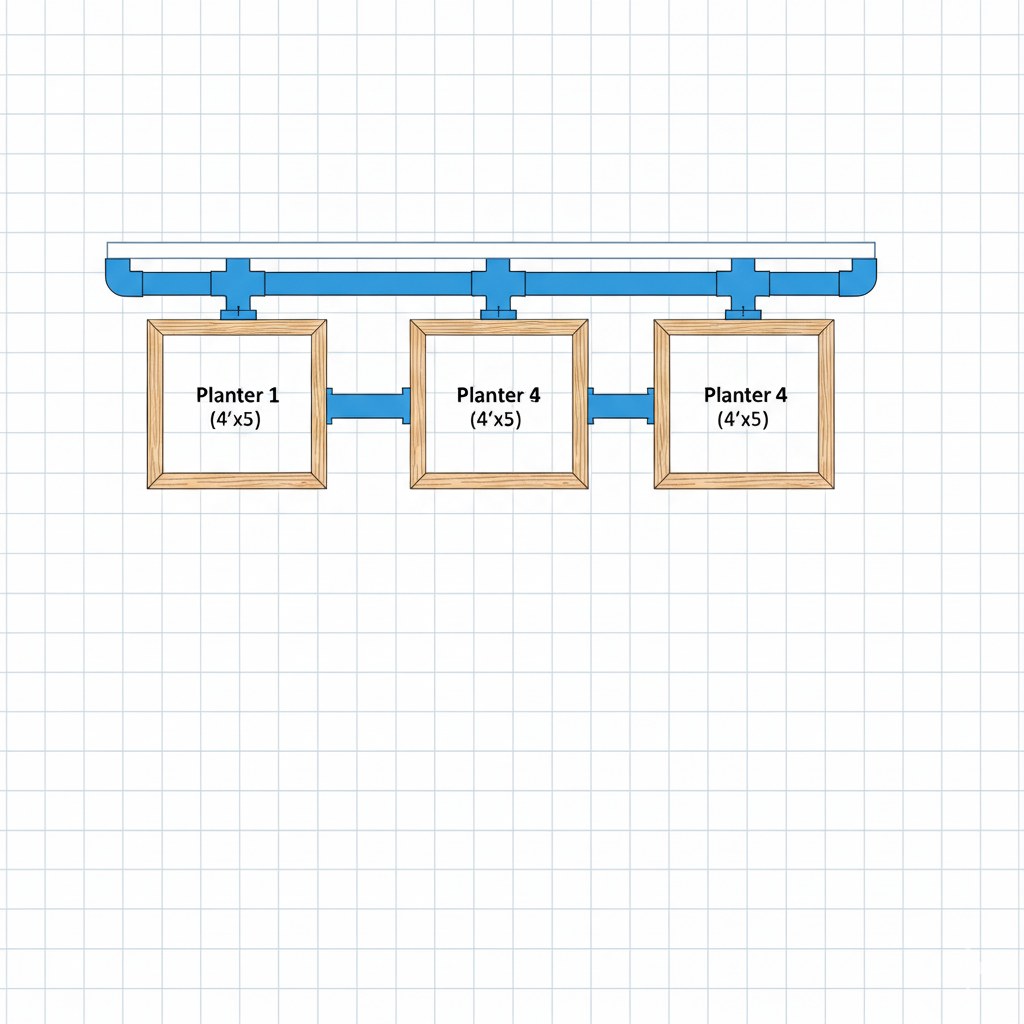
The Critical Soil-Ground Connection (The PQNK Innovation): This step transforms isolated planters into integrated components of a living, ground-connected ecosystem.
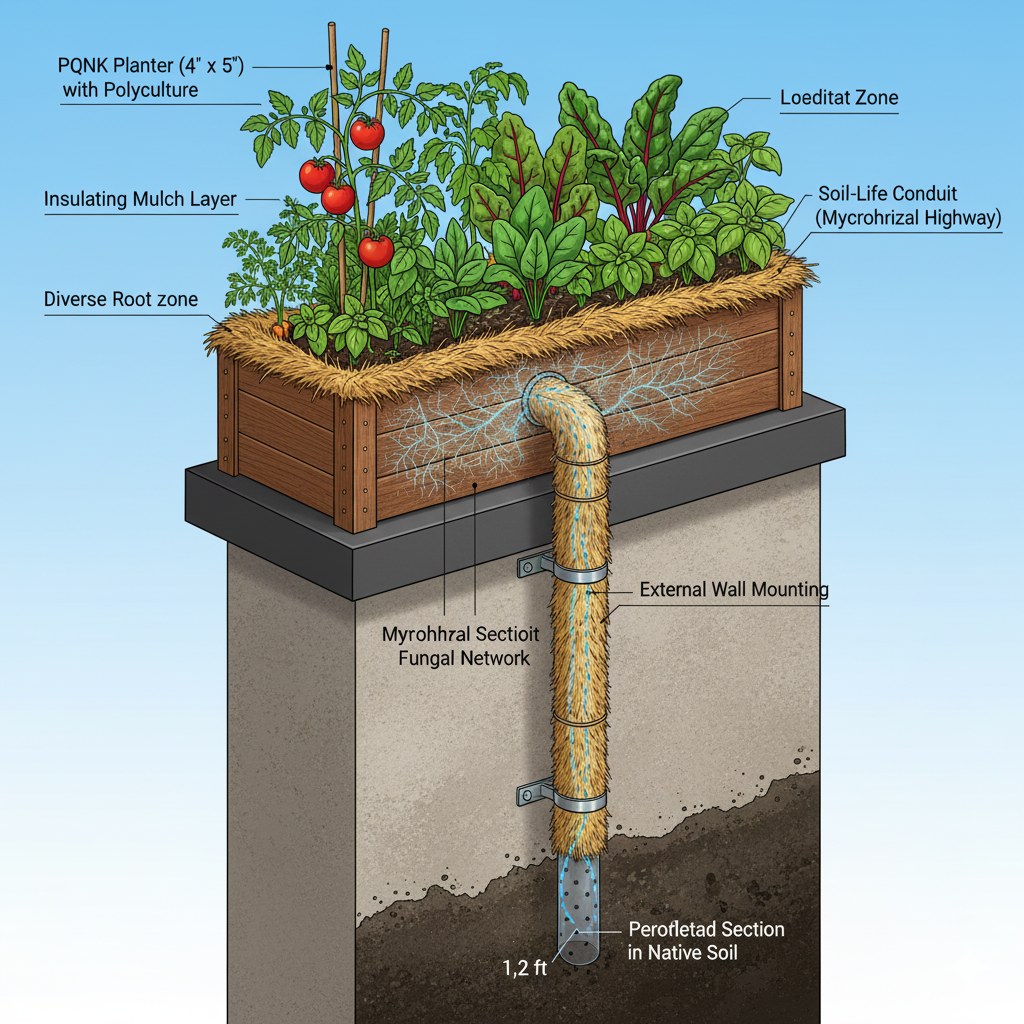
The Concept: The "Soil Life Conduit": Think of this as a vital supply line for your garden's microbiome, allowing for the natural migration of earthworms, beneficial nematodes, bacteria, and most importantly, Mycorrhizal fungi.
Construction:
The Pipe: Use a hollow pipe, 2 to 4 inches in diameter (e.g., bamboo, PVC). Drill small holes all around the lower section.
Installation: Bury the perforated end a minimum of 1 to 2 feet deep into native ground soil. Connect the upper end to your planter. On rooftops, create an interconnected network between all planters.
Filling & Insulation: Fill the pipe with a native soil/compost mix and wrap the above-ground section with mulch for insulation.
Contingency Plan: If the conduit is impossible, fill the bottom 10-15% of the planter with native soil as a foundational inoculation.
3. The "Household Food Budget" Garden Planning System
Conduct a Kitchen Audit: For one week, track the fresh produce your family uses.
Daily Use: Coriander, Mint, Chillies, Green Onions, Salad Greens.
Weekly Use: Tomatoes, Cucumbers, Okra, Beans, Spinach.
Seasonal/Yearly: Lemons, Guavas, Garlic, Ginger, Seasonal Gourds.
Allocate Space by Demand:
Plant Daily Use herbs and greens in the most accessible spots.
Allocate larger sections for high-yield Weekly Use crops.
Designate permanent spots for dwarf fruit trees and perennial spices.
Crucially, avoid allocating precious space for grains (wheat, rice) and oil seeds.
Strategic Plant Grouping & Layout:
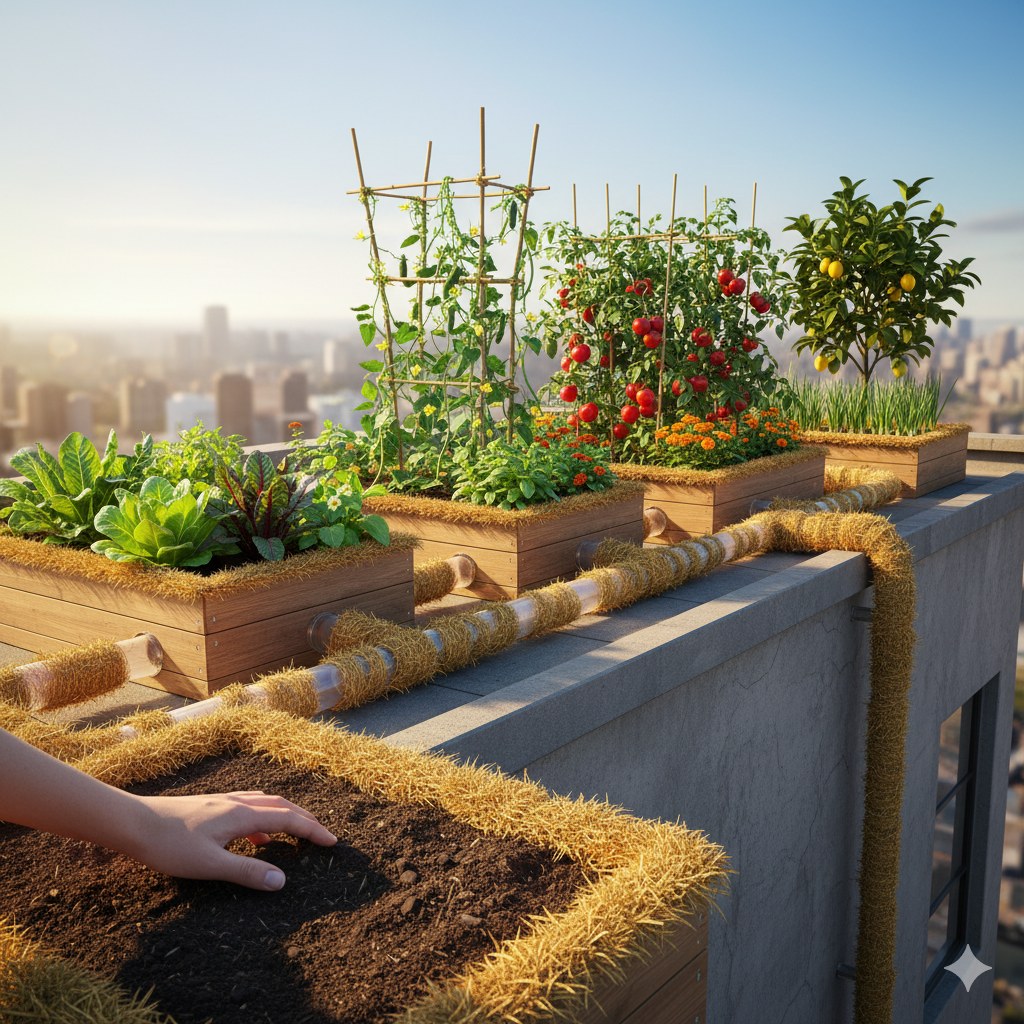
Companion Planting: Grow Basil with Tomatoes to enhance flavor and repel pests.
Vertical Growing: Use trellises for vertical vines like bottle gourds, cucumbers, and passionfruit.
Layering: Plant tall, sun-loving crops in the center, with medium-height plants around them, and low-lying, shade-tolerant crops at the edges.
A 4ft x 20ft (80 sq ft) plot, meticulously planned using this "food budget" system, can provide the bulk of vegetables for a family of ten.
4. Conclusion: From Kitchen Garden to Household Sovereignty
The PQNK Kitchen Garden is a powerful step toward personal and community empowerment. It is a practical application of deep ecological science that results in tangible benefits: health, savings, security, and connection. By starting small, observing deeply, and following these principles, you cultivate not just food, but a legacy of abundance and sovereignty for your household. Begin your journey today.
Crucial Management Note: Raised beds and planters must let excess water escape freely to prevent water inundation, especially during rain. Soil Moisture Management (SMM) is fundamental. Over-watering dilutes the natural nutrient solution, encouraging weak, pest-attracting over-vegetation. Water only when plant leaves show slight wilting in the afternoon. If pest levels exceed 10% threshold, use only natural repellents. In a properly managed PQNK system, no external inputs should be required. Prune plants strategically to stimulate higher production; refer to the dedicated PQNK advisory on pruning techniques.
About This Paper
- Crop
- Radish · Squash · Sweet Potato · Citrus (Kinnow) · Guava · Apple · Tomato · Cucumber · Okra · Common Bean · Spinach · Coriander · Mint · Chilli
- Problem
- Space / Infrastructure Constraint · Soil Biology / Microbiome Decline · Over-Irrigation
- Science
- Soil · Biodiversity · Production Architecture
- Evidence
- Demonstration
- Authority
- Current / Approved PQNK Knowledge
Related PQNK Science
Key Takeaways
- A single 80 sq ft bed (4ft x 20ft), planned around actual household consumption, is presented as capable of supplying the bulk of fresh vegetables for a family of ten.
- Two parallel pathways are given: grounded permanent raised beds (north-south oriented) for households with yard space, and rooftop/container growing for households without it.
- The rooftop method's key innovation is a 'soil life conduit,' a perforated pipe buried 1-2 feet into ground soil and connected to each planter, letting soil microbes and mycorrhizal fungi migrate up into container soil.
- Garden layout follows a 'household food budget' model: a one-week kitchen audit sorts produce into daily, weekly, and seasonal use categories, and space is allocated by that demand rather than by ease of cultivation.
- Grains and oil seeds are explicitly excluded from kitchen-garden planning as a poor use of limited household plot space.
- The paper's central caution is that over-watering, not under-watering, is the most common cause of weak, pest-attracting over-vegetation; visible wilting is a useful prompt to go check the soil, but it's the root-zone ball test, not the wilting itself, that confirms whether the soil actually needs water.
Related Crops
Related Knowledge
same crop
Advisory for One Acre Prosperity (OAP) in Vegetable Production: A PQNK Guide for the Smallholder
A hands-on smallholder guide built around one core discipline, using every square inch of soil for every passing minute of the year, that details a specific 36-block nursery system for raising transplants without seed waste or transplant shock, alongside a homemade 'dribble board' tool for direct seeding through mulch.
same crop
Open Field Vertical Farming Under PQNK: Stacking Biology Instead of Expanding Land
Translates a field lecture into a structured framework for growing tunnel-style vining crops in open fields without tunnels, greenhouses, or chemical inputs, arguing that vertical canopy management and time-based crop replacement can turn one acre into a resilient, year-round livelihood unit.
same crop
The PQNK Strawberry Production System: Achieving Commercial Abundance Through Ecosystem Logic
A full production system for open-field commercial strawberries under PQNK, covering ultra-high-density planting (19,600 plants/acre, nearly double the conventional standard), a mulch-hydration system that eliminates irrigation, a three-layer pest defense, and a post-harvest cold-chain protocol, plus a winter-crop rotation that keeps the same permanent bed productive year-round.
same crop
Channeling Plant Energy: A PQNK Guide to Managing Vegetative Growth for Regenerative Production
With no grazing animals left to signal plants that their surplus foliage is being used, PQNK farmers must manually replicate that missing pressure. This guide sets out four directives, stamping, grazing, pruning and pinching, and bruising, with a crop-by-crop protocol for redirecting a plant's vegetative surplus into reproductive yield.