

KP-193 · PQNK Philosophy, Framework & Economics
The Global Wheat Crisis Is a Warning: Food Security Cannot Depend on a Production System That Is Failing
The renewed wheat-exporting crisis is usually explained by heat, war, energy costs and disrupted shipping, but this paper argues it exposes a deeper, fourth dependency few are naming: a production model whose own functioning requires stable climate, cheap energy, manufactured fertiliser and uninterrupted supply chains. It argues Pakistan's food security depends less on securing the next shipment of wheat than on rebuilding the biological productive capacity of its own soil.
Read or listen to the full paper ↓Abstract
The renewed instability across the world's major wheat-exporting regions is usually explained by heat, drought, war, disrupted shipping and rising energy costs. This paper accepts those factors as real but argues they expose a deeper, less-discussed problem: global food security has come to depend not only on a small number of exporting countries, but on a production model whose own functioning requires a relatively stable climate, cheap energy, manufactured fertiliser and pesticides, and uninterrupted supply chains. Citing food-systems researcher Evan Fraser's observation that the current food system rests on three assumptions, seamless trade, cheap energy, stable climate, the paper adds a fourth that deserves far more attention: that biological production can keep being sustained through an endless supply of external inputs whenever the natural functioning of the agricultural ecosystem proves insufficient.
The paper distinguishes two layers of vulnerability. The first is geographical concentration: a small number of regions supply most internationally traded wheat, so several breadbaskets struggling at once leaves importing countries exposed. The second and more fundamental vulnerability sits inside the production system itself, where soils whose biological functions have been displaced by tillage, inundation, chemical nutrient supply and bare-soil exposure require ever-greater external intervention to keep producing as climate and economic conditions worsen. A country that can buy food is food-secure only while food remains available to purchase at an affordable price; a country that retains the biological capacity to produce its own food possesses a different, deeper kind of security.
Drought and heat are reframed as management questions as much as meteorological ones: two fields receiving identical rainfall can experience very different crop stress, because a crop does not experience rainfall as a number but as the water that actually reaches its roots, and that depends on soil structure, surface cover and root depth. PQNK Soil Moisture Management applies water through permanent furrows according to the root zone's actual moisture condition rather than an irrigation calendar, aiming to keep roots moist and aerated together rather than cycling between flooding and drying; permanent organic cover similarly moderates soil temperature and reduces evaporation, so that climate adaptation, in the paper's words, begins below the crop canopy as much as above it.
Fertiliser dependency is treated as a food-security risk in its own right, since nitrogen supply tracks energy markets while phosphorus and potassium depend on geographically concentrated, imported mineral reserves. The paper draws the same lesson from pest management that its companion Knowledge Paper on GMO maize develops in depth: a genetically engineered insect-resistance trait, like Bt cotton before pink bollworm resistance emerged, protects the plant without necessarily repairing the surrounding degraded ecosystem, which is why PQNK pursues ecological pest regulation rather than dependence on any single mechanism. From here the paper reframes productivity itself: agricultural output should be measured as nourishment per hectare, not tonnes per hectare, since a smaller quantity of nutritionally denser, more diverse food can meet the same nutritional need, while more tonnes of nutritionally diluted grain can inflate output statistics without increasing what people are actually nourished by.
The paper closes by proposing that living soil be treated as a renewable strategic reserve, distinct from stored grain, which is consumed once and gone: a biologically functioning hectare can produce this year's harvest and next year's, improving rather than depleting with correct use. For Pakistan specifically, it argues that severe water pressure, expensive energy and fertiliser, and narrow farmer margins mean the country already possesses most of the resources biological production requires, sunlight, land, irrigation infrastructure, mineral-rich soils, generations of farming knowledge, and that the task is reorganising them rather than importing another input. Its proposed reframing of agricultural policy: not how to make the crop yield more, but how to produce abundant, nutritious food with the least possible dependence on scarce water, external energy and manufactured inputs while leaving the land more productive for the next harvest.
Full Paper
If you use “Listen”, the text of the page may be sent to your browser or operating system’s speech provider, such as Apple, Google or Microsoft, depending on the voice your device uses. Pedaver does not process, transmit or store any audio.
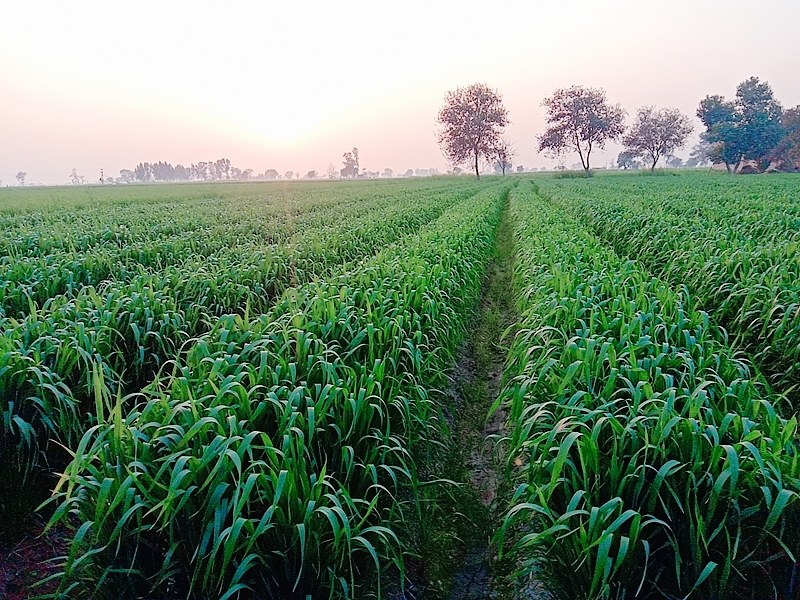
1. The Wheat Problem Is Larger Than Wheat
Wheat occupies an exceptional place in the modern food system. Bread, chapati, noodles, pasta and numerous other foods make it a daily source of calories for billions of people. A disruption in wheat production therefore travels rapidly beyond the farm. Reduced production in one region can increase international prices; higher international prices can increase the fiscal burden of food subsidies; expensive energy can raise both production and transportation costs; and disruption at a distant port can eventually affect the price paid by a household thousands of kilometres away.
The New York Times article that prompted this paper describes an unusual convergence of stresses across several important wheat-producing and exporting regions. Heat and drought have affected harvests, while the Russia-Ukraine war continues to threaten Black Sea grain movements. Energy and fertiliser costs are affecting production decisions elsewhere, and countries dependent on imported wheat remain exposed to developments over which they have little control.
The article quotes food-systems researcher Evan Fraser as observing that the existing food system depends upon three assumptions: seamless trade, cheap energy and stable climate. This is an important diagnosis, but from the perspective of production agriculture a fourth assumption should be added. The system also assumes that biological production can continue to be maintained through a continuous supply of external inputs whenever the natural functioning of the agricultural ecosystem becomes insufficient.
That fourth dependency deserves much greater attention.
The emerging wheat problem is therefore not simply a question of whether Russia, Ukraine, Europe, Australia, Canada or the United States will produce enough grain in a particular year. It raises a more fundamental question about whether humanity has constructed a food-production architecture capable of remaining stable when climate, energy, water and international trade are simultaneously becoming less predictable.
2. Efficiency Has Gradually Replaced Resilience
The modern food system developed during a historical period in which several favourable conditions existed simultaneously. Fossil energy was relatively inexpensive, synthetic fertilisers became widely available, mechanisation expanded rapidly, irrigation infrastructure increased, international shipping became extraordinarily efficient and agricultural commodities could be transported across continents at costs that made geographical specialisation economically attractive.
This produced enormous benefits. Regions with favourable soils, climates and infrastructure could specialise in particular commodities and supply consumers far beyond their borders. Countries could import crops that were expensive or difficult to produce domestically. International agricultural trade became an important component of global food availability.
The weakness of this architecture is that efficiency and resilience are not the same thing.
A highly specialised system can be extremely efficient when all of its supporting conditions remain stable. The same specialisation can become a vulnerability when several of those conditions deteriorate simultaneously. If wheat production is concentrated geographically, international markets can normally compensate for a drought in one region by drawing additional supplies from another. If several major regions experience heat, drought, conflict or high production costs at the same time, the system has much less redundancy.
The danger is amplified when importing countries have progressively reduced their own capacity to produce essential foods because purchasing those foods internationally appeared cheaper or easier. Such countries may possess purchasing power without possessing adequate productive capacity. That distinction matters enormously during periods of global disruption.
A country that can buy food is food-secure only while food remains available for purchase at a price it can afford.
A country that retains the biological, physical and human capacity to produce a substantial proportion of its essential food possesses a different and deeper form of security.
3. The Breadbasket Model Has Created Concentrated Risk
International agricultural trade will remain necessary and beneficial. The problem is not trade itself. The problem arises when international trade becomes a substitute for domestic productive capacity rather than a complement to it.
The world's wheat trade illustrates this vulnerability particularly clearly. A limited number of countries and regions account for a large share of internationally traded wheat. When conditions are favourable, this concentration allows enormous volumes of grain to move efficiently from surplus-producing areas to deficit regions. When several major exporters are affected simultaneously, however, the same concentration becomes a systemic risk.
War provides an obvious example. The Russia-Ukraine conflict demonstrated how quickly disruption in a geographically limited area could affect international grain prices and food-security concerns far beyond the battlefield. Drought provides another. A rainfall deficit in a major exporting region does not remain a local agronomic event when millions of consumers elsewhere depend upon its surplus.
Energy introduces another layer of interdependence. Modern wheat production requires energy not only for tractors and irrigation but also indirectly through fertiliser manufacture, pesticide manufacture, transportation, drying, processing and storage. An energy shock can therefore enter the food system at numerous points simultaneously.
The global food system has consequently developed a chain of dependencies in which climate affects production, energy affects production cost, geopolitics affects inputs and transportation, shipping affects availability, exchange rates affect affordability, and government finances determine whether imported food can continue to be subsidised.
The question for policymakers should therefore not be how to eliminate international trade. It should be how to prevent international trade from becoming a country's only defence against domestic production failure.
4. There Is a Production-System Crisis Beneath the Climate Crisis
Climate change is rightly recognised as an increasing threat to agriculture. Heat waves, irregular rainfall, droughts, floods and changing pest pressures can all reduce crop productivity. Yet climate is only part of the explanation for agricultural vulnerability.
The condition in which agriculture receives climatic stress matters enormously.
A healthy, biologically structured, covered and aerated soil does not respond to heat and drought in the same way as a compacted, repeatedly disturbed and exposed soil. A plant growing within a biologically active root zone does not interact with water and nutrients in the same way as a plant whose nutrition depends heavily on repeated applications of highly soluble fertilisers.
Industrial agriculture has gradually modified the environment in which crops must survive. Repeated tillage disrupts soil structure and biological habitat. Heavy machinery can create compaction. Bare soil receives direct solar radiation and loses water rapidly through evaporation. Flood irrigation temporarily replaces soil air with water. Simplified rotations reduce biological diversity. Crop residues are frequently removed, burnt or incorporated through disturbance rather than retained as permanent surface protection. Chemical interventions progressively substitute for ecological nutrient cycling and pest regulation.
Each practice may appear individually manageable. Collectively they change the production ecosystem.
Agriculture then encounters drought with soils whose water-management capacity has been weakened. It encounters extreme heat with exposed soil surfaces. It encounters expensive fertiliser with crops dependent upon manufactured nutrient supply. It encounters energy shortages with systems requiring repeated mechanical operations and irrigation pumping.
These problems are subsequently treated as separate crises. In reality, many are connected expressions of the same production architecture.
5. Agriculture Has Been Replacing Biological Functions With Purchased Functions
The central scientific proposition behind PQNK is not that agriculture should abandon technology. It is that technology should stop replacing biological functions that the ecosystem can perform more efficiently when the necessary habitat is maintained.
Natural terrestrial ecosystems produced biomass for hundreds of millions of years before industrial agriculture existed. They did so without ploughing, synthetic fertiliser, pesticide programmes or flood irrigation. This does not mean that a natural ecosystem and a commercial wheat field are identical. It means that the biological processes upon which plant production depends existed long before agriculture and remain fundamental to crop production.
Plants capture solar energy through photosynthesis. Atmospheric carbon becomes plant biomass. Roots release compounds that support microbial communities. Microorganisms interact with organic matter and geological minerals. Mycorrhizal fungi extend the functional reach of plant roots. Soil organisms contribute to aggregation and pore development. Surface residues moderate temperature and evaporation. Predators, parasitoids, pathogens and other organisms participate in regulating herbivorous insects. Dead roots and residues become resources for subsequent biological activity.
Agriculture cannot manufacture an equivalent integrated ecosystem through a collection of purchased inputs. It can either maintain conditions in which biological processes function or continually compensate for their loss.
PQNK is based upon restoring those conditions.
6. PQNK Changes the Production Environment Rather Than Continuously Treating Its Symptoms
PQNK is governed by four interconnected principles: no soil disturbance, no inundation, permanent biological cover and maximum biodiversity. These are sometimes misunderstood when considered individually. PQNK is not simply no-till agriculture, mulching, reduced irrigation or diversified cropping. Its function emerges from implementing these principles together as an integrated production system.
When soil disturbance stops, the physical and biological architecture created by roots, fungi and soil organisms is allowed to persist. When inundation stops, water management can maintain moisture while preserving the air required by roots and aerobic soil organisms. When organic cover remains permanently on the soil surface, it moderates temperature, reduces direct evaporation and protects the soil from the physical impact of rain and sunlight. When biodiversity is encouraged, the production system supports a wider network of organisms performing complementary ecological functions.
Permanent raised beds provide the physical architecture for applying these principles in mechanised production. The productive bed remains protected while tractor wheels and irrigation water are confined to permanent furrows. Roots remain in the soil after harvest and crop residues remain within the biological system. Crop follows crop, preferably with crop-in-crop establishment where appropriate, so that the biological engine is not repeatedly stopped and restarted.
The purpose is not to reproduce a forest on agricultural land. It is to apply the operating principles of a functioning natural ecosystem to the organised production of crops.
That distinction is essential.
7. Drought Is Not Determined by Rainfall Alone
The present concern about wheat and drought illustrates why production-system thinking is necessary.
Rainfall is measured in millimetres, but the crop does not experience rainfall as a number. It experiences the water that ultimately remains accessible to its roots.
Two neighbouring fields receiving identical rainfall can therefore experience substantially different degrees of crop stress. Water falling on poorly structured soil may run off, pond, evaporate or remain inaccessible to shallow roots. Water entering a biologically structured soil protected by organic cover can behave very differently.
Soil structure determines infiltration and movement. Surface cover affects evaporation and temperature. Root depth determines the volume of soil available to the crop. Biological channels influence water movement. Soil aeration affects root function. Organic matter and aggregation influence the physical environment in which water is retained.
Consequently, drought resilience cannot be separated from soil management.
This does not mean that healthy soil eliminates meteorological drought. No production system can manufacture rainfall. It means that agricultural management determines how effectively the rainfall and irrigation water that are available are captured, retained and used.
That difference becomes increasingly important as freshwater scarcity intensifies.
8. Water Security Begins With the Root Zone
Conventional irrigation planning commonly begins with the quantity of water to be delivered. PQNK begins with the condition that must be maintained around the roots.
Roots require both moisture and oxygen.
When the soil is inundated, pore spaces that previously contained air become filled with water. As the excess water subsequently soaks down or evaporates, the balance changes again. The crop therefore passes through repeated cycles of excessive water followed by progressive drying.
PQNK Soil Moisture Management seeks instead to maintain a moist and aerated root zone. Water is applied through the permanent furrows according to soil moisture condition rather than simply according to conventional irrigation schedules. The objective is not maximum wetness. It is an appropriate relationship between water and air.
This distinction has enormous implications for countries facing water scarcity.
The first national response to water shortage is usually to find additional water: another reservoir, another canal, deeper groundwater extraction or more efficient pumps. Infrastructure remains important, but the more fundamental agricultural question is how much useful biological production is being obtained from the water already reaching the farm.
If production architecture can substantially reduce the amount of irrigation required for a crop, then water conservation becomes a consequence of correcting the production system rather than merely improving the efficiency with which an excessive irrigation requirement is supplied.
9. Agricultural Heat Is Partly a Management Problem
The same principle applies to temperature.
A farmer cannot control a regional heatwave, but agricultural management profoundly affects the thermal environment experienced by the soil and roots.
Bare soil exposed directly to intense sunlight can reach temperatures far above the surrounding air temperature. Such heating accelerates evaporation and creates hostile conditions for many biological processes near the surface. Permanent organic cover intercepts solar radiation, moderates soil temperature and reduces direct evaporative loss.
This distinction matters because crop heat stress is not simply an atmospheric phenomenon. It occurs within a soil-plant-atmosphere system.
When policymakers discuss climate adaptation, therefore, agricultural land management must be recognised as part of the climate environment experienced by the crop. Protecting the soil surface, maintaining moisture, developing deeper root systems and restoring biological structure cannot prevent regional heatwaves, but they can substantially change the conditions under which crops encounter them.
Climate adaptation begins below the crop canopy as much as above it.
10. Fertiliser Dependency Is a National Food-Security Risk
Modern agriculture has also created an extraordinary dependence on industrial nutrient supply. Nitrogen fertiliser production is closely connected to energy markets, while phosphorus and potassium depend upon geographically concentrated mineral resources, mining, processing and international transportation.
When fertiliser prices rise, farmers either absorb higher production costs, reduce application rates, reduce planted area or require government support. The consequences eventually enter food prices and national budgets.
This should not be regarded merely as a farm-input problem. It is a food-security vulnerability.
Plants require nutrients, but the presence of nutrients in a bag and their availability to a plant are not the same scientific question. Natural ecosystems developed biological mechanisms through which roots, microorganisms, fungi, organic matter, water and geological mineral reserves interact. The plant participates actively in this system rather than functioning simply as a passive recipient of soluble fertiliser.
PQNK seeks to rebuild that biological nutrient economy.
During transition from chemically dependent agriculture, the biological system requires time to recover. This is why PQNK transition management recognises the possibility of limited corrective intervention when genuine crop deficiency appears. The objective, however, is fundamentally different from conventional fertiliser programmes. Transitional support is not intended to become the permanent nutrient-delivery mechanism. It protects the crop while the biological production system re-establishes itself.
This distinction between feeding the crop externally and restoring the system that feeds the crop biologically is central to PQNK.
11. Pest Protection Reveals the Same Structural Error
Pest management provides another example of the difference between treating a symptom and restoring a system.
Modern agriculture frequently approaches an insect problem by identifying the damaging organism and then finding a chemical or genetic mechanism capable of killing or suppressing it. This can provide effective short-term protection, but it treats the pest largely in isolation from the ecological network in which both crop and pest exist.
Natural pest regulation is considerably more complex. Bacteria, fungi, entomopathogens, predators, parasitoids, spiders, birds and numerous other organisms interact directly or indirectly with herbivorous insects.
Bacillus thuringiensis (Bt) belongs within this larger biological community. Bt itself is not one uniform insect-control organism. Different strains produce different insecticidal proteins with different target ranges. In nature, these occur within a diverse ecological system rather than as one permanently expressed toxin imposed across vast areas of a single crop.
This distinction is especially important when considering genetically engineered Bt crops. A Bt crop expresses one or several selected insecticidal proteins. Repeated exposure creates selection pressure on susceptible pest populations, and resistance can evolve if resistance-management systems are inadequate. The history of pink bollworm resistance to Bt cotton is an important warning against assuming that a genetic trait constitutes permanent ecological protection.
The lesson is not that Bt biology is inherently undesirable. Bt is itself part of nature.
The lesson is that one biological mechanism should not be confused with the biological system.
PQNK therefore seeks to restore habitat in which the wider pest-regulation community can function. Its objective is ecological regulation rather than dependence on any single pesticide, organism, toxin or inserted genetic trait.
12. Genetic Improvement Cannot Repair a Degraded Production Ecosystem
Plant breeding has contributed enormously to agricultural productivity and will continue to be important. Improved varieties can provide desirable yield potential, maturity, quality, disease resistance and adaptation to particular environments.
The problem begins when genetics is expected to compensate continuously for deterioration of the production environment.
A drought-tolerant plant still requires water.
A heat-tolerant plant still functions within a soil-root environment.
A nutrient-efficient plant still depends upon nutrient cycling.
An insect-resistant plant still exists within an evolving ecological community.
Genetics can improve the crop. It cannot replace the ecosystem in which the crop must function.
This distinction is particularly important when evaluating new technologies for maize. The policy question should not be reduced to whether a particular genetically modified maize hybrid produces a yield advantage or provides protection against a particular insect. Those are legitimate agronomic measurements, but they are incomplete.
The larger question is whether the production constraint being addressed originates primarily in the plant's genetics or in the degraded production environment surrounding the plant.
If soil structure, moisture management, nutrient cycling, biological diversity and ecological pest regulation are dysfunctional, modifying the seed may allow the plant to tolerate one consequence without correcting the underlying system.
Pakistan should therefore evaluate genetic technologies within a much larger production-system framework rather than allowing the seed to become the centre of agricultural policy.
13. Tonnes per Hectare Do Not Measure How Many People We Can Nourish
Consider two wheat fields producing the same grain yield. One requires repeated tillage, a high seed rate, substantial fertiliser, pesticide applications, multiple irrigations and numerous tractor operations. The second produces the same quantity with substantially less water, fuel, seed, fertiliser, pesticide and expenditure while improving rather than degrading its productive soil environment. Even this comparison remains incomplete if it measures only the weight of grain harvested. Food is produced to nourish people, not merely to accumulate tonnes.
The nutritional density and diversity of the harvested grain must therefore become part of the productivity equation. PQNK restores the biological relationships through which plants obtain nutrients from the soil ecosystem rather than relying predominantly on a limited range of soluble nutrients supplied through fertiliser. The objective is consequently not only greater or more economical biomass production, but produce containing a denser and more diverse nutritional profile.
This has an important consequence that conventional yield accounting largely ignores. If a smaller quantity of nutritionally denser and more diverse food can satisfy the body's nutritional requirements, the effective food-producing capacity of the same hectare increases even without an increase in harvested weight. Conversely, producing more tonnes of nutritionally diluted food may increase agricultural output statistics without increasing human nourishment proportionately.
Agricultural productivity should therefore no longer be measured simply as kilograms or tonnes per hectare. It should consider the amount of human nourishment produced per hectare, together with the water, energy, seed, external inputs and financial resources required to produce it, and whether the production process improves or degrades the biological capital of the land.
This distinction is especially important in a discussion about global wheat security. The objective should not merely be to ensure that enough tonnes of wheat move through international markets. The real objective is to provide adequate nourishment to people. Higher nutritional density and diversity can reduce the quantity of food required to meet nutritional needs, meaning that food security is partly a question of food quality, not merely food volume.
14. Pakistan's Wheat Security Cannot Depend on Producing Wheat More Expensively
This issue is especially important for Pakistan.
Wheat is not merely another commodity in Pakistan. It is deeply connected to household food security, government policy, agricultural land use and political stability. When domestic wheat production becomes expensive or insufficient, the consequences extend quickly through flour prices, government procurement decisions, imports, subsidies and household expenditure.
The conventional response has repeatedly centred on increasing production through higher-yielding varieties, fertiliser, irrigation, procurement incentives and other interventions. These measures have contributed to production, but they have also left the country dependent on an expensive production architecture.
Pakistan faces severe water pressure. Energy is expensive. Fertiliser imposes a major cost on farmers and the national economy. Agricultural machinery consumes fuel. Soil degradation affects productive capacity. Climate variability is increasing. Many farmers operate with narrow financial margins.
Under these circumstances, simply asking how Pakistan can obtain another increment of wheat yield is insufficient.
The more important question is:
How can Pakistan produce abundant wheat while dramatically reducing the amount of water, energy, external inputs and farmer capital required to produce it?
That is the food-security question PQNK addresses.
15. Pakistan Already Possesses the Resources Required for Biological Production
One of the greatest misconceptions in agricultural development is that a country lacking sufficient financial resources must wait for new technology, new investment or new imported inputs before it can transform production.
Pakistan already possesses many of the most important resources.
It possesses sunlight.
It possesses agricultural land.
It possesses extensive irrigation infrastructure, even if that water must be used far more intelligently.
It possesses enormous geological mineral reserves within its soils.
It possesses atmospheric carbon dioxide and nitrogen available to biological systems.
It possesses microorganisms, fungi, insects and other organisms capable of performing ecological functions.
It possesses crop residues that are currently underused, removed or sometimes burnt.
Most importantly, it possesses millions of farmers and agricultural workers with generations of practical knowledge.
The transformation required is therefore not primarily the importation of another input.
It is the reorganisation of these existing resources into a functioning production ecosystem.
16. Soil Must Be Recognised as National Infrastructure
Governments readily recognise dams, canals, roads, ports, electricity networks and grain-storage facilities as strategic infrastructure. Agricultural soil is rarely treated with the same seriousness.
Yet every tonne of domestically produced food ultimately depends upon functioning soil.
A country's agricultural soil possesses physical architecture, biological communities, water-storage capacity, mineral reserves and accumulated organic resources. When these are degraded, future food production becomes increasingly dependent upon external correction. When they are restored, the soil itself performs functions that otherwise have to be purchased.
This suggests a fundamentally different concept of agricultural infrastructure.
Soil aggregation is infrastructure.
Root channels are infrastructure.
Biological nutrient cycling is infrastructure.
Water infiltration is infrastructure.
Organic surface cover is infrastructure.
Mycorrhizal networks are infrastructure.
Ecological pest-regulation networks are infrastructure.
The difference is that this infrastructure is alive.
Unlike concrete infrastructure, biological infrastructure can become more functional through correct use and less functional through incorrect use.
National agricultural accounting should recognise that distinction.
17. Food Resilience Requires Distributed Production
The current wheat warning also exposes the danger of excessive geographical concentration.
The solution is not autarky. Pakistan cannot and should not attempt to produce every agricultural commodity it consumes, nor should other countries. International trade allows ecological and economic specialisation and will remain an important component of food systems.
But essential food-producing capacity should be distributed much more widely than it is today.
Countries capable of producing their staple foods should protect and strengthen that capacity. Regions suitable for grains should maintain broad-acre grain production. Perishable crops should increasingly be produced close to consumption centres where feasible. Fruit production should be organised within appropriate ecological belts. Production planning should use the year as a biological continuum rather than viewing crops as isolated seasonal events.
This is the logic underlying the broader PQNK Food Power System.
The objective is not merely to produce commodities. It is to organise production, processing, distribution, retail and consumption around resilient production clusters capable of supplying populations while maintaining the biological resource from which the food originates.
International trade then becomes a strengthening layer above national and regional productive capacity rather than the foundation upon which survival depends.
18. The Strategic Reserve Beneath Our Feet
Governments maintain strategic grain reserves for good reason. Stored wheat can bridge temporary shortages and moderate the effects of market disruption.
But grain reserves have an obvious limitation: they are consumed.
There is another strategic reserve capable of renewing itself after every harvest.
That reserve is productive living soil.
A biologically functioning hectare can produce food this year and again the following year. If managed correctly, its physical and biological condition need not deteriorate with every production cycle. It can progressively improve.
National food-security assessments should therefore look beyond the tonnes of wheat stored in silos. They should ask how much water is required to produce each tonne, how much external energy is consumed, how dependent production is on imported or industrial inputs, whether soil productive capacity is improving or declining, whether farmers remain economically viable, and how effectively the production system can continue functioning under climatic stress.
A nation with large grain stocks but rapidly degrading productive resources possesses temporary security.
A nation with healthy productive land possesses regenerative security.
It can produce the next harvest.
19. Climate Adaptation and Agricultural Restoration Are the Same Programme
Climate policy and agricultural policy are often separated institutionally. Agriculture is asked to adapt to climate change while climate programmes separately seek reductions in emissions and greater carbon storage.
A biologically functioning production system demonstrates why these objectives can converge.
Permanent soil cover reduces direct heating and evaporation. Improved soil structure enhances infiltration and root development. Reduced soil disturbance protects biological architecture. Lower dependence on fertiliser, pesticides and repeated machinery operations reduces external energy requirements. Better soil-water management reduces irrigation demand and therefore pumping requirements. Continuous biological production increases the period during which solar energy is being captured and transformed into biomass.
These are not independent environmental benefits attached to an agricultural programme.
They are consequences of the same production-system correction.
This is why PQNK should not be treated simply as another category of "sustainable farming." Its significance is larger. It reconnects food production, water management, soil restoration, farm economics, biodiversity and climate resilience within one biological system.
20. Policy Must Move From Supporting Inputs to Supporting Biological Function
For decades, agricultural policy has largely operated by supporting the components required by the prevailing production model. Governments subsidise fertiliser, develop irrigation systems, support credit, regulate pesticides, promote improved seed and intervene in commodity markets.
These policies address genuine needs, but they rarely ask why the production system requires progressively greater external support.
A PQNK-oriented agricultural policy would begin from a different objective: progressively reduce the amount of external intervention required to maintain high biological production.
This does not require governments to abandon existing agricultural institutions overnight. It requires changing the direction in which those institutions are moving.
Water policy should reward production per unit of water rather than simply expansion of irrigation supply. Research should study whole production ecosystems rather than isolating inputs from their biological context. Mechanisation policy should support controlled traffic, permanent beds and no-disturbance crop establishment. Extension should teach soil moisture management, residue retention and biological function. Agricultural economics should measure cost of production and farmer profitability alongside yield. Food policy should recognise geographically distributed productive capacity as a component of national security.
Most importantly, policymakers must stop treating soil restoration as an environmental activity separate from food production.
Restoring the production ecosystem is food-production policy.
21. PQNK Does Not Need to Wait for Nature to Prove Its Principles
The required direction should not be framed as a theoretical proposition awaiting another trial before action can begin.
The ecological principles on which PQNK is based are not recent inventions. Undisturbed soil, biological cover, biodiversity, living roots, nutrient cycling and the coexistence of water and air within functioning soil ecosystems are products of hundreds of millions of years of terrestrial biological evolution.
PQNK translates those principles into production agriculture.
The practical adaptation of these principles has also not remained confined to theory. Over more than two decades, PQNK practices and their constituent principles have been adopted and adapted across farming situations, including broad-acre production, demonstrating that agricultural production can be reorganised around biological function rather than continuous soil disturbance and escalating external inputs.
The appropriate policy response is therefore not to postpone change while asking whether biology works.
Biology already produces the world's vegetation.
The relevant task is to reorganise agricultural production so that farming stops systematically disabling the biological processes upon which production itself depends.
They should not, however, become an excuse for indefinitely postponing correction of practices whose ecological consequences are already evident.
22. The Question Agriculture Must Now Ask
The twentieth century asked agriculture an enormously productive question:
How can we make the crop yield more?
That question produced remarkable achievements in plant breeding, machinery, irrigation and agricultural chemistry.
The conditions of the twenty-first century require a larger question:
How can we produce abundant and nutritious food with the least possible dependence on scarce water, external energy, manufactured inputs and ecological degradation while improving the productive resource for the next crop?
Once that question changes, agricultural priorities also change.
Instead of asking only which fertiliser should be applied, we ask why biological nutrient cycling is not supplying the crop.
Instead of asking only which pesticide will kill an insect, we ask what happened to the ecological community that once regulated pest populations.
Instead of asking only how much irrigation water should be supplied, we ask how much water the root zone actually requires while remaining aerated.
Instead of asking only which heat- or drought-tolerant gene should be introduced, we ask whether the crop's production environment has itself been made unnecessarily hot, dry, compacted and biologically dysfunctional.
Instead of asking which country will supply wheat when the next breadbasket fails, we ask why countries capable of producing food have allowed their domestic biological productive capacity to become so vulnerable.
That is the conceptual transition required.
Conclusion
The World Does Not Only Need Another Source of Wheat. It Needs a Different Production Architecture.
The difficulties now appearing across the world's breadbaskets should not be dismissed as another temporary commodity cycle. Heat may ease. Rain may return. Ports may reopen. Energy prices may decline. Wheat prices may stabilise.
But none of these developments would remove the structural vulnerability that the present situation has exposed.
Humanity has built a food system in which a relatively small number of regions supply a substantial share of internationally traded staple foods, while the agricultural production within those regions has itself become increasingly dependent upon external energy, manufactured fertilisers, pesticides, irrigation, specialised supply chains and a relatively stable climate.
That architecture was extraordinarily productive under the conditions in which it developed.
Those conditions can no longer be assumed.
The response must therefore extend beyond securing another shipment, opening another trade corridor, subsidising another input or developing another crop trait. These measures may sometimes be useful and necessary, but they do not answer the underlying question.
The enduring source of food security is the continuing ability of land to produce the next crop.
PQNK places that capacity at the centre of agriculture. By ending routine soil disturbance, eliminating inundation, maintaining permanent biological cover and encouraging maximum biodiversity, it seeks to restore the physical and biological environment in which plants, roots, microorganisms, fungi, water, minerals and the wider ecological community function together.
For Pakistan, this represents more than an alternative cultivation method. It offers a different conception of national food security.
Pakistan should certainly maintain strategic grain reserves. It should trade internationally. It should continue plant breeding, agricultural research, mechanisation and technological development. But none of these should substitute for rebuilding the biological productive capacity of its agricultural land.
A country that depends upon another country's surplus remains exposed to that country's climate, politics, infrastructure and priorities.
A country whose agriculture depends excessively upon purchased inputs remains exposed to energy markets, international suppliers, exchange rates and government subsidies.
A country that degrades its soil while increasing today's production is borrowing food security from its own future.
The alternative begins by recognising that the most important agricultural infrastructure is already beneath our feet.
Living soil is not merely the medium in which wheat grows. It is the productive capital from which future harvests are created.
The present wheat crisis is therefore a warning, but it is also an opportunity. It gives policymakers a reason to move beyond the question of where the next shipment of wheat will come from and confront the question that matters much more:
How do we ensure that our land can continue producing the next harvest, and the harvest after that, with progressively less dependence on resources we cannot guarantee?
PQNK provides an answer by returning agricultural production to the biological principles through which terrestrial ecosystems have sustained plant production for hundreds of millions of years, and adapting those principles to organised, mechanised and economically viable food production.
The strategic objective is not isolation from the world.
It is resilience within it.
International trade should complement national food-producing capacity, not replace it.
And the strongest food reserve a nation can possess is not only the wheat stored in its silos.
It is living, biologically functional land capable of producing the next harvest.
——————————
Applying PQNK without understanding nature’s operating system will not deliver abundance, stability, or nutrient density.
PQNK (pronounced “picnic”)—the regenerative & sustainable Pristine Organic Farming System—is grounded in Natural Ecosystem Science. This science employs perennial biodiversity, protects soil with organic mulch, and avoids practices such as water inundation, tillage disturbance, and leaving soil bare.
It is the process that matters most. PQNK is a pristine production system designed not merely for yield, but for optimal, balanced output—where quality, sustainability, and ecological harmony emerge from a self‑regulated, zero‑external‑input methodology.
Connect & Resources
Pedaver.Com Facebook: www.Facebook.Com/Pedaver YouTube (PQNK): https://www.youtube.com/@pedaverpqnk3167/videos YouTube: http://www.youtube.com/@aasifsharif PDF Knowledge Papers: https://drive.google.com/drive/folders/1iadwV6mdUPyrUIpB3oRfNv6DLiackaUL?usp=sharing Email: pedaver@gmail.com WhatsApp: +92 320 677 6666
About This Paper
- Crop
- Wheat
- Problem
- Drought / Water Scarcity · Heat Stress on Crop · External Input Dependency
- Science
- Water · Climate · Soil · Nutrition · Economics
- Evidence
- Philosophical/Framework Argument
- Authority
- Current / Approved PQNK Knowledge
Related PQNK Science
Key Takeaways
- The paper names a fourth, under-discussed assumption beneath the usual wheat-crisis narrative (seamless trade, cheap energy, stable climate): that biological production can keep being propped up by ever-greater external inputs when the ecosystem's own function has been degraded.
- Two fields receiving identical rainfall can face very different drought stress — a crop experiences the water that reaches its roots, not the millimetres that fell, so drought resilience is inseparable from soil structure and surface cover.
- PQNK Soil Moisture Management targets a moist, aerated root zone through the permanent furrows rather than following an irrigation calendar — reducing irrigation demand becomes a consequence of correcting the production system, not just delivering water more efficiently.
- Fertiliser dependency is a food-security risk, not merely a farm-input cost: nitrogen supply tracks energy markets, while phosphorus and potassium depend on geographically concentrated, imported mineral reserves.
- Agricultural productivity should be measured as nourishment per hectare, not tonnes per hectare — nutritionally denser food can meet the same nutritional need with less harvested weight, while more tonnes of diluted food can inflate output statistics without increasing what people are actually nourished by.
- Living soil is proposed as a renewable strategic reserve unlike a grain stockpile: a biologically functioning hectare can produce this year's harvest and next year's, improving rather than depleting with correct use.
- The paper's central policy reframe: not "how do we make the crop yield more" but "how do we produce abundant, nutritious food with the least dependence on scarce water, energy and external inputs while leaving the land better for the next crop."
Related Crops
Related Knowledge
same problem
Farming Beyond the Calendar
Explains why changing weather has made the fixed sowing calendar unreliable and why PQNK does not depend on weather forecasts. Permanent raised beds under continuous organic mulch hold soil temperature and the moisture-air balance, so healthy plants withstand heat, cold, drought, intense and excessive rainfall and an erratic monsoon; a 1-2% ethanol foliar spray relieves ambient temperature stress, and the sowing decision is made from the condition of the field.
same problem
Knowledge Paper: The Looming Convergence of Oil and Food Crises — The Imperative for a Paradigm Shift toward PQNK
Written against the backdrop of an escalating Middle East conflict and its spillover into global oil markets, this paper maps how deeply Pakistan's and India's food systems are structurally dependent on fossil fuel, from Haber-Bosch fertilizer to diesel-pumped irrigation, and argues PQNK is the only de-risking strategy that breaks the link entirely rather than subsidizing around it.
same problem
PQNK Foundational Document, Topic 13: The Autonomous Cycle — Planting and Harvesting in the Perfected System
This paper describes the end-state of a matured PQNK farm as a one-time ecological engineering project rather than an ongoing method, in which the only permitted human interventions become planting and harvesting, and lists the specific evidence, including a claimed zero yield response to added fertilizer, that proves a farm has reached this autonomous state.
same problem
The Earth Has Not Stopped Working: A Production-Agriculture Response to Environmental Fatalism, and What PQNK Restores
A widely shared social-media message, built on Lovelock's Gaia Hypothesis, ends in resignation: the planet will correct a stressed system with floods and extinctions, and all we can do is await nature's revenge. This paper accepts that we are not separate from nature but rejects the fatalism. Drawing on more than fifty years in production agriculture, it argues the core error was redesigning natural systems before understanding them, that agriculture is the clearest case, and that a degraded field is a suppressed system rather than an extinguished one, so the answer is not to fear nature's revenge but to stop fighting nature and learn again to produce with it.