

KP-008 · Crop-Specific Guides
Restoring Prosperity in Citrus and Mango Orchards Through the PQNK Regenerative System
Decades of industrial orchard management have driven a 60% decline in Kinnow nutrition density and widespread orchard abandonment. This paper presents field data from a Toba Tek Singh comparison and the Sujjahabad Mango Research Station showing how PQNK reverses that decline, lifting A-grade fruit yield by up to 80%.
Read or listen to the full paper ↓Abstract
Citrus and mango orchards have been in steady decline for over 30 years under industrial management. Input costs have risen sharply even as yields fall, nutrition density in key varieties such as Kinnow has declined by as much as 60%, affecting taste, market value, and health benefit, and mounting farmer distress has led to widespread orchard abandonment and uprooting. The paper traces this crisis to specific, identifiable practices: excessive irrigation that destroys soil structure and depletes oxygen, tillage implements such as spring tine cultivators that create a compacted hardpan restricting root growth and water infiltration, and bare, chemically dependent soil that erodes biodiversity and destroys the soil microbiome.
PQNK is presented not as a theoretical alternative but as a field-validated recovery method, anchored by two documented cases. At the Sujjahabad Mango Research Station, an orchard facing imminent collapse was converted to PQNK management and showed remarkable recovery within a few months. A more systematic comparison from Toba Tek Singh set conventional and PQNK Kinnow orchards side by side, generating the paper's core quantitative evidence.
That comparison shows PQNK orchards operating at significantly lower annual cost per acre than the conventional PKR 80,000-200,000 range, with markedly lower disease pressure requiring far less chemical intervention. A-grade fruit yield rises from 40-50% under conventional management to 70-80% under PQNK, and net return per acre climbs from PKR 300,000-400,000 conventionally to a substantially higher PKR 500,000-800,000 under PQNK. Fruit quality metrics follow the same pattern: longer shelf life, dark green and healthy canopies versus stressed, prematurely ripening ones, and more uniform fruit maturity with better internal seed development.
On pest and soil management, the Toba Tek Singh data show near-zero fruit fly damage under PQNK versus severe infestations conventionally, with mealybugs controlled by robust natural predator populations such as ants rather than costly, low-result chemical sprays. PQNK orchards also show visible mycorrhizal fungi activity — mushrooms appearing after rain — as a direct sign of the biological soil health driving nutrient cycling and disease resistance. Rehabilitated orchards are reported recovering fully, while 5-year-old high-density PQNK orchards are on track to outperform conventional orchards 'by several multiples' once they reach full production in year six.
The paper concludes that the citrus and mango crisis is a direct consequence of broken agricultural ecosystems, not an inevitable feature of the crops themselves, and that the Sujjahabad and Toba Tek Singh evidence together make the case for widespread PQNK adoption as the path to environmental sustainability, economic prosperity through drastically lower costs and higher-value yield, and market leadership through nutrition-dense, long-shelf-life produce that surpasses organic standards.
Full Paper
If you use “Listen”, the text of the page may be sent to your browser or operating system’s speech provider, such as Apple, Google or Microsoft, depending on the voice your device uses. Pedaver does not process, transmit or store any audio.
Subject: A Data-Backed Analysis of the Systemic Decline and the Proven Pathway to Recovery via the PQNK Method - Date: 15 November 2025
Executive Summary
Citrus and Mango orchards are in a state of systemic crisis after decades of industrial agriculture. This has resulted in soaring production costs, plummeting yields, and a dramatic 60% decline in the nutrition density of key varieties like Kinnow. Farmer distress has led to widespread orchard abandonment.
This paper presents the Paedar Qudratti Nizam Kashatqari (PQNK) system as a proven, regenerative solution. Grounded in restoring soil ecology, PQNK reverses this decline rapidly. A new comparative report from Toba Tek Singh provides quantifiable evidence: PQNK orchards drastically reduce costs, increase A-grade fruit yield by up to 80%, achieve near-zero pest pressure naturally, and build profound ecological resilience. The method is not a theoretical concept but a field-validated strategy that significantly enhances farmer profitability and produces nutrition-dense fruit for high-value export markets, securing a sustainable future for the sector.
1. Introduction: The Looming Crisis in Fruit Orchards
For over 30 years, Citrus and Mango orchards have been on a path of steady decline. The symptoms are unmistakable and devastating:
Economic Unsustainability: A substantial increase in the cost of inputs, coupled with low yield, has severely eroded profit margins.
Qualitative Degradation: The nutrition density of key varieties, such as Kinnow, has declined by as much as 60%, affecting taste, market value, and health benefits.
Orchard Collapse: Widespread farmer distress has led to the uprooting of orchards, as once-productive land becomes a source of loss.
This crisis is a direct consequence of specific, unsustainable farming practices that have broken the natural ecosystem.
2. Root Causes of Orchard Degradation
The primary driver is the degradation of soil health, the very foundation of agriculture. Key detrimental practices include:
Soil Inundation and Poor Water Management: Excessive irrigation destroys soil structure and depletes oxygen.
Excessive Tillage and Hardpan Formation: Implements like the spring tine cultivator create a compacted hardpan that restricts water infiltration and severely hampers root growth.
Bare Soil and Chemical Dependency: Leaving soil bare and reliant on synthetic inputs erodes biodiversity and destroys the soil microbiome, creating a vicious cycle of dependence and decline.
3. The PQNK Solution: A Regenerative Paradigm
PQNK, pronounced "picnic," stands for Paedar Qudratti Nizam Kashatqari—a regenerative and sustainable Pristine Organic Farming System. Its core philosophy is to collaborate with nature to restore the farm's ecosystem.
Documented Success: Case Studies
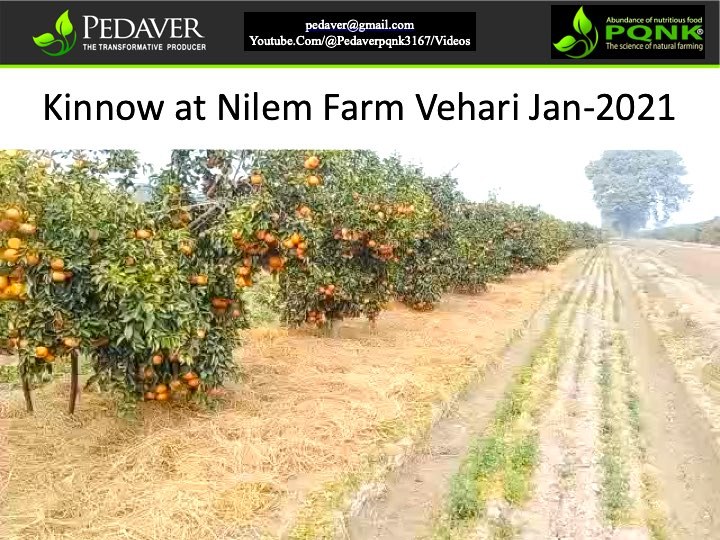
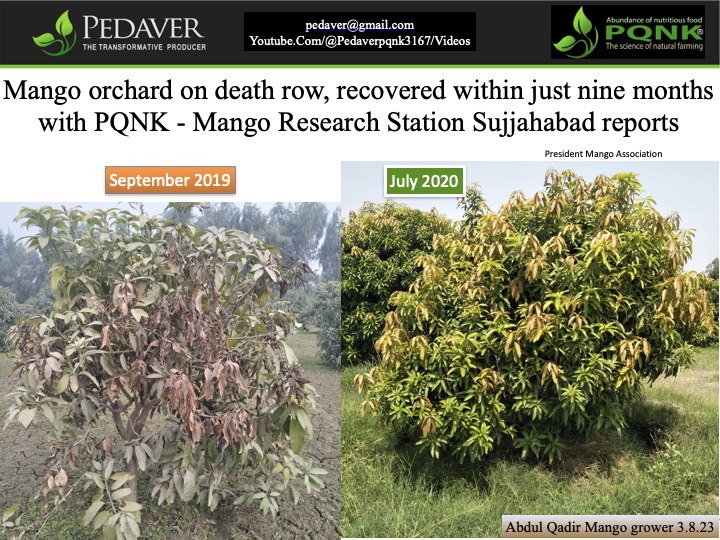
The Sujjahabad Mango Research Station: Facing imminent collapse, the orchard was converted to the PQNK method and showed remarkable recovery within a few months.
The Toba Tek Singh Citrus Report: A side-by-side comparison provides irrefutable data on PQNK's superiority, detailed in the following section.
4. Quantifiable Outcomes: Evidence from the Field (Toba Tek Singh Report)
A recent comparative study of Kinnow orchards in Toba Tek Singh offers a stark, data-driven contrast between conventional and PQNK systems.
4.1 Production Economics & Profitability
4.2 Fruit Quality and Marketability
4.3 Pest, Disease, and Soil Management
Pest Control:
Conventional: Severe fruit fly and mealybug infestations; high-cost, low-result chemical sprays.
PQNK: Near-zero fruit fly damage; mealybugs controlled by robust natural predator populations (e.g., ants), as confirmed by field experiments.
Soil Health:

| Aspect | Conventional Orchards | PQNK Orchards |
|---|---|---|
| Annual Cost/Acre | PKR 80,000 - 200,000 | Significantly Lower (Minimal fertilizer cost) |
| Disease Pressure | High, requiring constant chemical intervention | Significantly Lower |
| A-Grade Fruit Yield | 40-50% | 70-80% |
| Net Return/Acre | PKR 300,000 - 400,000 | Substantially Higher - PKR 500,000 to 800,000 |

| Parameter | Conventional Orchards | PQNK Orchards |
|---|---|---|
| Shelf Life | Short; deteriorates quickly | Long; stays fresh for many days |
| Canopy Health | Stressed, prone to premature ripening | Dark green, healthy |
| Maturity & Development | Irregular | Uniform maturity, better internal seed development |
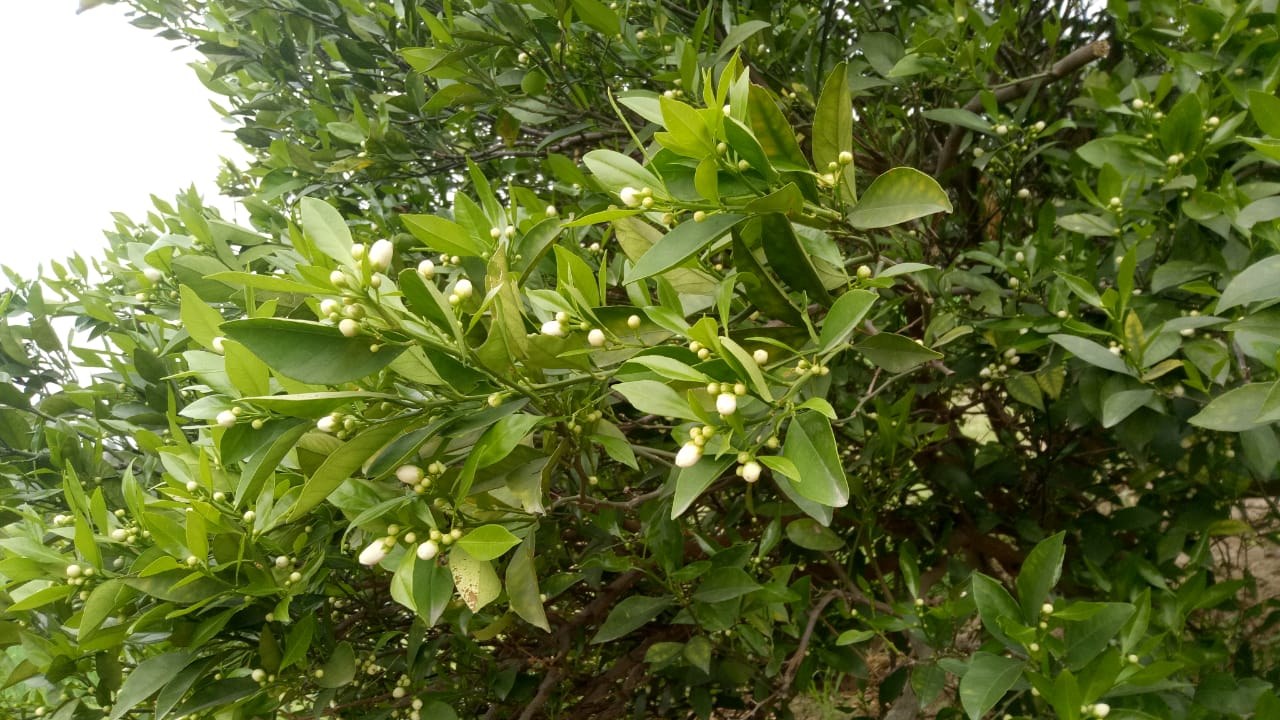
PQNK orchards maintain mulch and compost, leading to visible mycorrhizal fungi activity (e.g., mushrooms post-rain), indicating strong biological health that enhances nutrient cycling and disease resistance.
4.4 Orchard Development Trajectory
Rehabilitated Orchards: Previously stressed orchards have recovered fully and are expected to reach full production.
High-Density Orchards: 5-year-old PQNK orchards are on track to outperform conventional orchards "by several multiples" upon reaching full production in year 6.
5. Conclusion and the Path Forward
The crisis in Citrus and Mango is a direct result of broken agricultural ecosystems. The evidence from Sujjahabad and the quantifiable data from Toba Tek Singh make it clear that continuing conventional practices will only deepen the crisis.
The PQNK method is a field-validated pathway to:
Environmental Sustainability: Regenerating soil and restoring natural pest-predator balances.
Economic Prosperity: Drastically reducing input costs while increasing the yield of high-value, A-grade fruit, leading to significantly higher net returns for farmers.
Market Leadership: Producing nutrition-dense, long-shelf-life produce that surpasses organic standards and meets strong global demand.
The 2025 production results are anticipated, as good as many years since conversion to PQNK to further cement the significant performance advantage of the PQNK system. Widespread adoption is the most critical step toward securing a profitable and sustainable future for the citrus and mango industries.
For Further Evidence: Video and text testimonials, including detailed reports from practicing farmers, are available on our official YouTube channel and Facebook page.
—————————
Footnote: Any Production Process That Inundates Soil With Water, Disturbs Soil Through Tillage, Or Leaves Soil Bare Without Organic Mulch Cover Does Not Qualify As Natural Ecosystem Science For Production Agriculture.
PQNK, to be pronounced as 'picnic', which stands for Paedar Qudratti Nizam Kashatqari, and means: the regenerative & sustainable Pristine Organic Farming System.
www.Facebook.Com/Pedaver
https://www.youtube.com/@pedaverpqnk3167/videos
pedaver@gmail.com
WhatsApp +92 320 677 6666
About This Paper
- Crop
- Citrus (Kinnow) · Mango
- Problem
- Declining Nutrient Density in Food · Yield Stagnation / Decline · Hardpan · Over-Irrigation · Named Pest Infestation (Bollworm, Fruit Fly, Nematode, etc.) · Sucking Insect Pressure (Aphid/Whitefly/Jassid) · High Input / Production Cost
- Science
- Soil · Biodiversity · Crop Protection · Nutrition · Economics
- Evidence
- Measured Field Result
- Authority
- Current / Approved PQNK Knowledge
Related PQNK Science
Key Takeaways
- Industrial orchard management has driven a 60% decline in Kinnow nutrition density and widespread orchard abandonment over the past 30 years.
- A Toba Tek Singh field comparison shows PQNK lifting A-grade fruit yield from 40-50% to 70-80%.
- Net return per acre rises from PKR 300,000-400,000 conventionally to PKR 500,000-800,000 under PQNK.
- PQNK orchards show near-zero fruit fly damage and natural mealybug control via predator populations like ants, replacing costly chemical spraying.
- The Sujjahabad Mango Research Station orchard, facing imminent collapse, showed remarkable recovery within a few months of PQNK conversion.
- Five-year-old high-density PQNK orchards are projected to outperform conventional orchards by several multiples once mature.
Related Crops
Related Knowledge
same problem
Transforming Wheat Production through the Paedar Qudratti Nizam Kashatqari (PQNK)
Conventional wheat farming is locked into a cycle of high input costs and stagnant yields around 30 maunds per acre. This paper lays out the PQNK cost and revenue model for wheat, comparing it head-to-head against the conventional system and projecting the foreign exchange impact of national-scale adoption.
same problem
PQNK Advisory: Understanding Nematode Damage in ACI Systems and the Path to Recovery with PQNK
A citrus grower on hot, sandy, drip-irrigated dunes was seeing classic nematode damage and assumed it meant waterlogged, anaerobic soil, the opposite of his actual conditions. This advisory explains how heat- and drought-stressed root tips create the same localized decay zone nematodes exploit, and prescribes live mulch as the direct, three-part fix.
same problem
Knowledge Paper: Olive Under PQNK — Pakistan's Underdeveloped Potential
Pakistan imports all of its olive oil, roughly 15,000–20,000 tonnes a year, despite holding climate-suitable land in the Potohar plateau, the KP hills, and the Balochistan highlands. This paper sets out PQNK's curved furrow and borehole system for rainfed olive establishment, and the biological management that growers report cuts establishment cost by 40–50% versus conventional orchards.
same problem
The Pest-Free Revolution: Eliminating Agrochemicals by Unleashing Soil Biology with the PQNK System
A knowledge paper arguing that a properly implemented PQNK system leaves crops 98-99% free of pest and disease pressure through native Bt bacteria and a conserved predator population, and that the system's single greatest failure point is not input scarcity but over-irrigation.