

KP-076 · PQNK Philosophy, Framework & Economics
Knowledge Paper: Liberating Pakistan's Economy — The Unforgivable Neglect of the PQNK Revolution
An economic manifesto arguing that four decades of IMF- and World Bank-prescribed austerity have failed Pakistan because they address fiscal symptoms while ignoring the one lever that actually creates new value: farm productivity. It positions PQNK as the productivity shock capable of turning Pakistan's underused agricultural workforce into its greatest economic asset.
Read or listen to the full paper ↓Abstract
The paper opens by naming what it calls one of the modern world's great economic paradoxes: Pakistan holds all four classical pillars of agricultural wealth, vast farmland, ample water, a large workforce, and favorable climates, yet struggles to feed itself. It attributes this not to circumstance but to a specific failure of vision and governance, arguing that over 40-plus years of debt and austerity prescribed by international financial institutions has produced stagnation rather than progress.
Its central economic argument is that traditional economists can devalue currency, impose taxes, cut subsidies, and shift resources between sectors, but cannot create productivity, since that requires a technological and managerial revolution at the level of the farm itself. The paper compares reliance on IMF/World Bank prescriptions to asking an accountant to perform heart surgery: they can diagnose the bleeding but hold no tools to heal the wound.
PQNK is then presented as the missing productivity lever, framed through four claimed structural effects: eliminating the cost of cultivation and breaking farmers' debt cycle by working with natural systems rather than purchased inputs; eliminating agrochemicals entirely, positioning Pakistan as a premium organic supplier; cutting irrigation demand by up to 90%, framed as a national security imperative in a water-scarce country rather than a mere efficiency gain; and building soil regeneration in place of short-term extraction. The paper argues PQNK does not require reallocating scarce resources but instead creates abundance from within, converting the country's large, currently undertrained agricultural workforce into what it calls the world's most efficient, low-cost producers of premium organic food.
A section on 'unseen chains' argues that Pakistan's agricultural potential remains deliberately locked rather than accidentally neglected: the absence of any dedicated national system of agricultural training schools despite 70% of the population depending on agriculture is characterized as a policy choice that maintains the status quo, compounded by legal, social, and cultural burdens on farmers and a resulting 'psychology of hopelessness' that the paper identifies as the greatest barrier to progress.
The paper closes as a direct call to action addressed separately to policymakers, the general public, and economists, urging each to reject continued austerity in favor of prioritizing nationwide PQNK adoption as the central pillar of national economic policy, framing the choice as one between managed decline and a proven, tangible productivity shock available now.
Full Paper
If you use “Listen”, the text of the page may be sent to your browser or operating system’s speech provider, such as Apple, Google or Microsoft, depending on the voice your device uses. Pedaver does not process, transmit or store any audio.
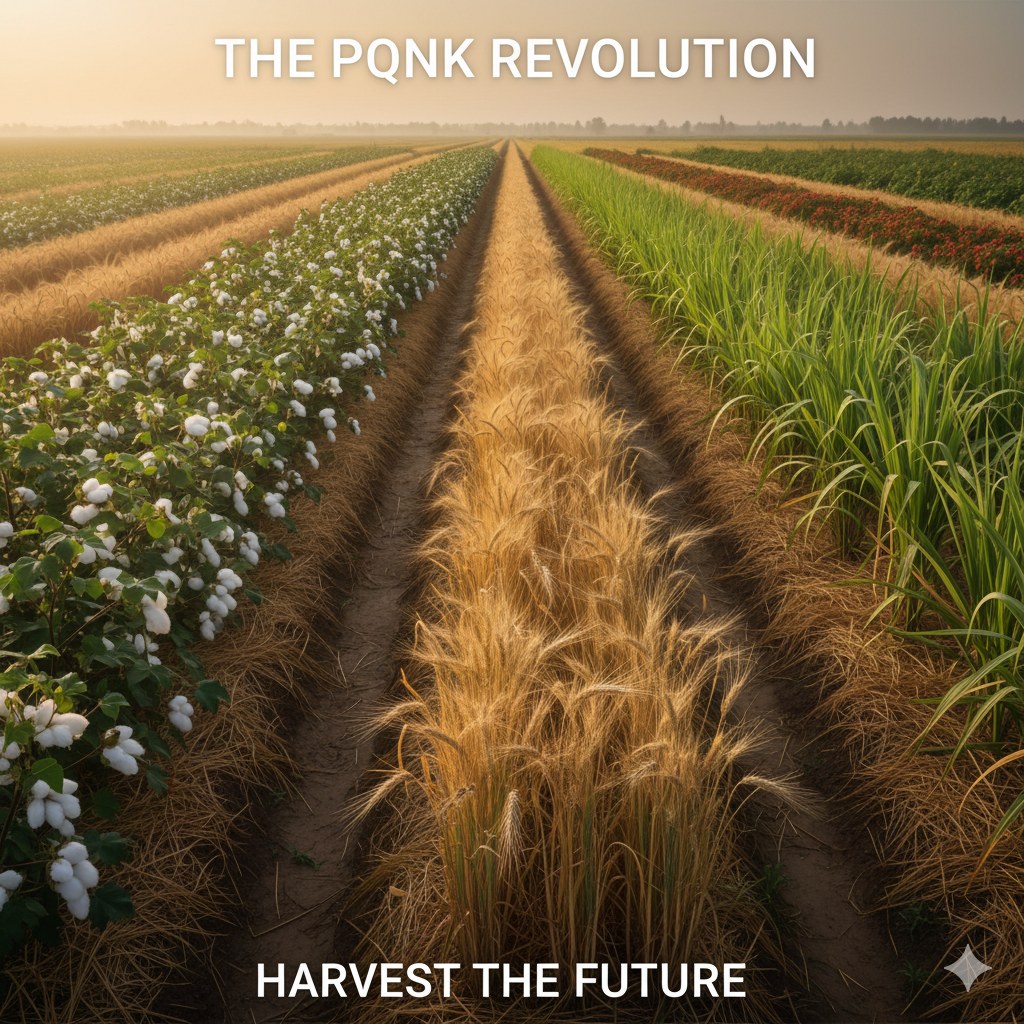
Subject: An urgent call to abandon failed economic models and embrace the PQNK (Pristine Organic Farming System) – the only viable path to national salvation.
Preamble: The Paradox of Scarcity Amidst Plenty
Pakistan stands as a testament to one of the modern world's greatest economic paradoxes. We are a nation blessed with the four fundamental pillars of agricultural wealth:
Vast Productive Farmland
Ample Water Sources
A Large Workforce
Favorable Climates
Yet, this nation, built on an agrarian potential that could feed continents, struggles to meet its own food requirements. This is not an act of God; it is a failure of vision, governance, and will. For over four decades, we have been trapped in a cycle of debt and austerity prescribed by international financial institutions, overseen by economists who tinker at the edges of a broken system. They have proven incapable of creating growth because they focus on moving existing resources around, not on creating new value. The result is a demoralized populace, forced to sacrifice food, medication, education, and human dignity.
The Great Divergence: Why Traditional Economics Has Failed
The support of the IMF and World Bank for 40+ years has yielded stagnation, not progress. The reason is simple: their models address fiscal deficits and monetary stability but are impotent against the core problem—chronically low productivity.
Economists can:
Devalue the currency.
Impose new taxes.
Cut energy subsidies.
Recommend shifting resources from one sector to another.
But they cannot create productivity. This requires a technological and managerial revolution at the most fundamental level of the economy: the farm. Our reliance on their prescriptions has been like asking an accountant to perform heart surgery. They can tell us we are bleeding, but they have no tools to heal the wound.
The Solution is Not a Picnic... It's a PQNK.
In this landscape of failure, a solution exists that is so elegant, so transformative, and so perfectly suited to our context that its acronym is the very word for a simple, abundant feast: PQNK.
PQNK - Paedar Qudratti Nizam Kashatqari: The Regenerative & Sustainable Pristine Organic Farming System.
PQNK is not a minor adjustment. It is a fundamental re-alignment with nature's logic, offering a decisive break from the costly, chemical-dependent farming that enslaves our farmers. Through this lens, we see the path to liberation:
Eliminates the Cost of Cultivation: It breaks the debt cycle for farmers by working with natural systems, not against them.
Eliminates Agrochemicals: It produces the highest quality, pristine organic food, positioning Pakistan as a premium supplier to the world.
Cuts Irrigation by 90%: In a water-scarce country, this is not an efficiency gain; it is a national security imperative that solves our most critical resource constraint.
Builds Soil Regeneration: It heals the land, ensuring long-term sustainability instead of short-term extraction.
PQNK does not ask for a reallocation of scarce resources; it creates abundance from within. It transforms our greatest liability—a vast, untrained agricultural workforce—into our greatest asset: the world's most efficient, low-cost producers of premium, organic food.
The Unseen Chains: Deliberate Neglect of Our PQNK Potential
The reason our agricultural potential remains locked is not a mystery. It is a deliberate outcome of a system that benefits from keeping the masses dependent and disempowered.
Systemic Neglect: That 70% of our population depends on agriculture, yet there is not a single dedicated, widespread system of agricultural training schools for farmers, is not an oversight. It is a policy designed to maintain the status quo.
Imposed Burdens: The farmer is crushed under a weight of legal, social, and cultural burdens—from exploitative structures and water disputes to a lack of access to justice and capital. This system is designed to extract from the producer, not to empower him with a system like PQNK.
The Psychology of Hopelessness: This constant struggle has bred a national hopelessness. Our people have been forced to lower their expectations, to survive rather than thrive. This broken spirit is the greatest barrier to progress.
A Call to Action: From a Simple "Picnic" to a National Feast
This is not just an agricultural policy. It is a national economic liberation strategy. We must stop begging for loans and start building wealth.
To the Policymakers, Decision-Makers, and Implementers: Your legacy is being written. Will it be one of managing decline, or of unleashing a PQNK-driven abundance? The choice is no longer between different economic theories. It is between continued failure and a proven, tangible solution. Prioritize the nationwide adoption of the PQNK System as the central pillar of our national economic policy.
To the General Public: You have been told you are the problem. You are not. You are the solution. The resources are yours, the labor is yours. Demand that your leaders provide you with the tools—the education in systems like PQNK—to become the masters of your own destiny. The world is hungry for what you can produce.
To the Economists: Your models have failed. It is time to look beyond the spreadsheet and into the soil. Champion this agricultural revolution. Recalibrate your models to account for the explosive growth that comes from a PQNK-powered productivity breakthrough, not from fiscal adjustments.
Conclusion: The Time for a PQNK is Now
Pakistan does not need another loan. It does not need another austerity budget. It needs a productivity shock. That shock is PQNK.
The system exists. The resources exist. The workforce exists. All that is missing is the will to break the chains.
Let us choose liberation over servitude, abundance over scarcity, and a future where our national economy is as fruitful and abundant as a PQNK for all.
—————————
Footnote: Any Production Process That Inundates Soil With Water, Disturbs Soil Through Tillage, Or Leaves Soil Bare Without Organic Mulch Cover Does Not Qualify As Natural Ecosystem Science For Production Agriculture.
PQNK, to be pronounced as 'picnic', which stands for Paedar Qudratti Nizam Kashatqari, and means: the regenerative & sustainable Pristine Organic Farming System.
www.Facebook.Com/Pedaver
https://www.youtube.com/@pedaverpqnk3167/videos
pedaver@gmail.com
WhatsApp +92 320 677 6666
About This Paper
- Problem
- High Input / Production Cost · Farmer Income Instability / Debt · High Irrigation Cost / Dependency · Macro / Policy-Level Externalities
- Science
- Economics · Water · Production Architecture
- Evidence
- Economic Model/Projection
- Authority
- Current / Approved PQNK Knowledge
Related PQNK Science
Key Takeaways
- Argues that 40-plus years of IMF/World Bank-prescribed austerity has failed Pakistan because it addresses fiscal symptoms (currency, taxes, subsidies) while ignoring the actual lever for growth: farm-level productivity.
- Frames Pakistan's inability to feed itself despite holding all four classical pillars of agricultural wealth (land, water, workforce, climate) as a failure of vision and policy, not resource scarcity.
- Positions PQNK's claimed effects, near-zero cultivation cost, elimination of agrochemicals, up to 90% lower irrigation demand, and soil regeneration, as a national productivity shock rather than an incremental farming improvement.
- Characterizes the absence of any dedicated national agricultural training system, despite 70% of the population depending on agriculture, as deliberate policy neglect rather than oversight.
- Identifies a 'psychology of hopelessness' bred by chronic agricultural underperformance as the deepest barrier to adopting a proven alternative.
- Closes as a direct call to action to policymakers, the public, and economists to make nationwide PQNK adoption the central pillar of national economic policy.
Related Knowledge
same problem
The Purchased-Input Treadmill: Why Rising Agricultural Production Does Not Necessarily Create Farmer Prosperity
Rising yield does not automatically mean a farmer keeps more of what the farm produces. This paper names the Purchased-Input Treadmill, the pattern in which functions the farm ecosystem once performed for itself are progressively replaced by recurring purchases of fertilizer, pesticide, seed, fuel and irrigation energy, and argues that PQNK's real economic proposition is not cheaper inputs but the structural return of those functions to the farm itself.
same problem
Open Field Vertical Farming Under PQNK: Stacking Biology Instead of Expanding Land
Translates a field lecture into a structured framework for growing tunnel-style vining crops in open fields without tunnels, greenhouses, or chemical inputs, arguing that vertical canopy management and time-based crop replacement can turn one acre into a resilient, year-round livelihood unit.
same problem
Transforming Wheat Production through the Paedar Qudratti Nizam Kashatqari (PQNK)
Conventional wheat farming is locked into a cycle of high input costs and stagnant yields around 30 maunds per acre. This paper lays out the PQNK cost and revenue model for wheat, comparing it head-to-head against the conventional system and projecting the foreign exchange impact of national-scale adoption.
same problem
Restoring Earth's Operating System: The PQNK Framework for Regenerative Agriculture
A comprehensive policy and investment brief that models global agriculture's degenerative trajectory against a PQNK-led alternative, laying out true-cost economics, a five-year implementation roadmap with quarterly KPIs, and specific financial instruments, from transition bonds to farmer cooperative financing, meant to move PQNK from pilot to planetary scale.