

KP-173 · Plant Physiology & Production Systems
Reading Roots, Sap, and Pest Risk: A Field Diagnostic Guide Through the PQNK Lens
A no-tools field guide for comparing PQNK-grown wheat roots against chemical-farmed roots, and for reading that difference forward into a pest-pressure forecast, on the premise that pests are scavengers of weak plants rather than indiscriminate attackers.
Read or listen to the full paper ↓Abstract
This guide sets out a comparative root architecture test a farmer can run in the field without equipment. PQNK wheat roots are described as dense, fibrous, and highly branched, exploring deeper and wider than chemical-farmed roots, which are sparse, thick, and largely confined to the fertilizer zone. The root tips themselves differ: numerous, active, and soft in PQNK roots versus burnt, blunt, or swollen tips where roots have waited passively for placed salts rather than searched the soil.
The most decisive field test is soil adhesion. On a PQNK root, soil clings naturally in aggregated crumbs and smells earthy and sweet; on a chemical root, soil falls away immediately, leaving powdery or hard clods with a sour or ammonia-like smell. The guide states this as a rule: if soil does not cling to the root, the biology that would normally hold it there is absent.
The paper's central claim concerns sap chemistry rather than visible plant condition, on the basis that pests respond to sap composition, not leaf color. PQNK wheat is described as maintaining stable Brix, low free amino acids, balanced simple sugars, and strong cell walls, while chemical-farmed wheat shows unstable Brix, high free amino acids, excessive simple sugars, and weaker cell walls, the combination that makes a plant digestible and energetically worthwhile prey for insects.
From this sap profile the guide builds a pest-pressure table for a PQNK wheat field: aphids and termites rated very low risk (no free amino acids to feed on, moist fungal soil), armyworm and shoot fly rated low (strong silica and lignin, balanced nitrogen), and rust rated low (stable sap and plant immunity). By contrast, chemical-farmed wheat is associated with aphid explosions after urea top-dressing, rust following humid nights, and worm damage after irrigation combined with nitrogen application, framed as a structural dependency on pesticides rather than a run of bad luck.
The guide closes with a five-step farmer field test requiring no tools: uproot one plant, smell the roots, shake gently, and read the result, soil clinging with an earthy smell signaling pest resistance, clean roots with a sharp smell signaling pest invitation. Its summary law is that where nutrition is artificial, protection must also be artificial, positioning healthy soil and stable sap as a form of pest management that operates before any pest ever arrives.
Full Paper
If you use “Listen”, the text of the page may be sent to your browser or operating system’s speech provider, such as Apple, Google or Microsoft, depending on the voice your device uses. Pedaver does not process, transmit or store any audio.
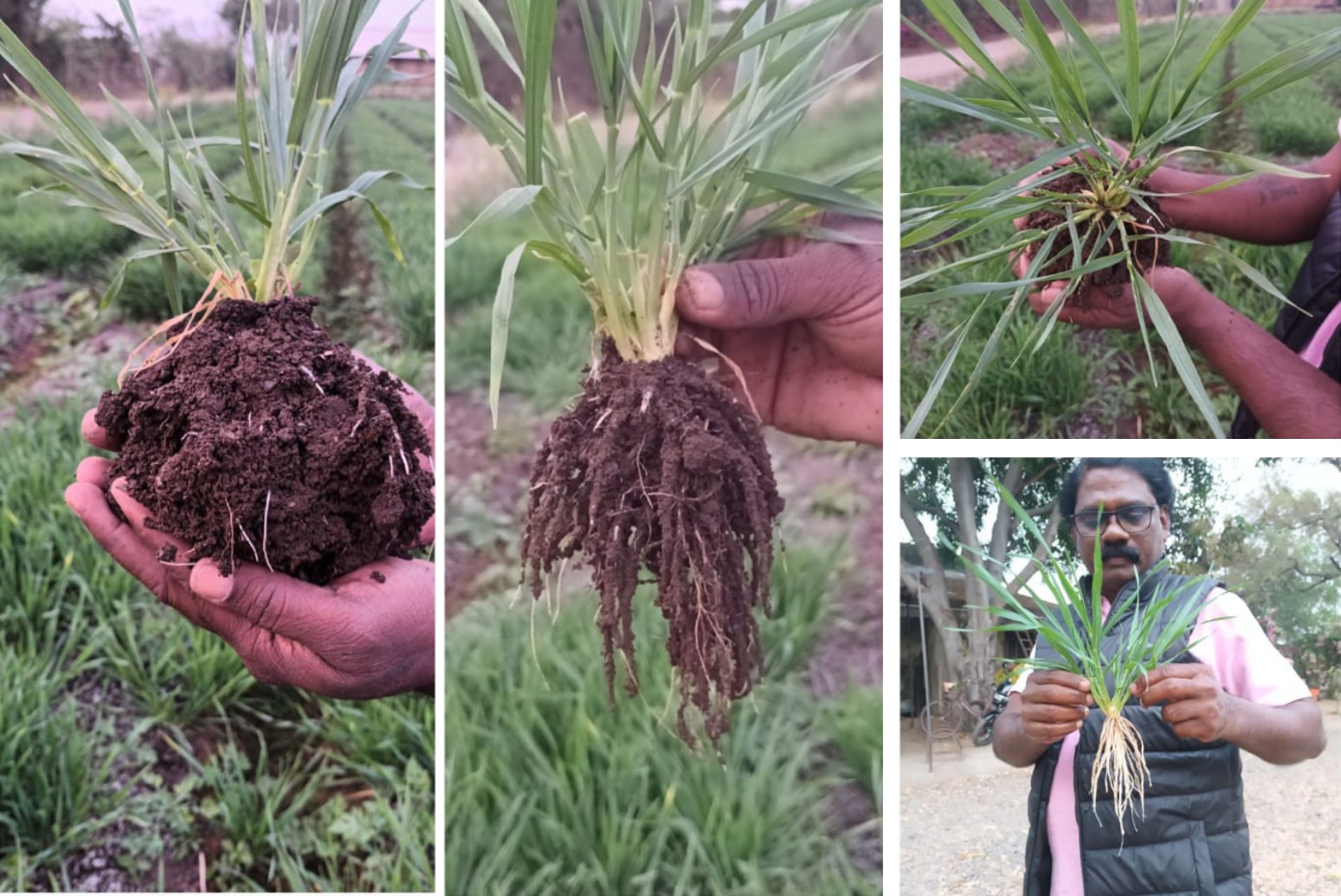
A. Root System Architecture

| Aspect | PQNK (Pristine Organic) | Chemical-Farmed |
|---|---|---|
| Root density | Dense, fibrous, highly branched | Sparse, thick, fewer laterals |
| Root length | Deeper + wider exploration | Shallow, fertilizer-zone bound |
| Root tips | Numerous, active, soft | Burnt, blunt, or swollen |
| Root breakage | Minimal | Frequent, brittle |
PQNK Meaning: Roots search and cooperate with soil life. Chemical Meaning: Roots wait for salts to be placed nearby.
B. Soil Adhesion (The Most Critical Difference)
PQNK Root
Soil sticks naturally
Aggregated crumbs
Smell is earthy, sweet
Chemical Root
Soil falls off immediately
Powdery or hard clods
Often sour or ammonia smell
📌 PQNK Rule:
If soil does not cling to roots, biology is absent.
C. Crown & Tillering Behavior

| Factor | PQNK Wheat | Chemical Wheat |
|---|---|---|
| Tillers | Natural, proportional | Excessive or very few |
| Crown health | Thick, resilient | Soft, watery |
| Lodging risk | Low | High |
Interpretation: Chemical nitrogen creates fake growth, not strength.
D. Sap Quality (Invisible but Decisive)

| Parameter | PQNK | Chemical |
|---|---|---|
| Brix stability | Stable | Unstable |
| Free amino acids | Low | High |
| Simple sugars | Balanced | Excessive |
| Cell wall strength | Strong | Weak |
📌 Pests read sap chemistry, not leaf color.
2. Pest Pressure Prediction from This Root Structure 🐛
Based on the observed PQNK wheat roots:
A. Likely Pest Scenario
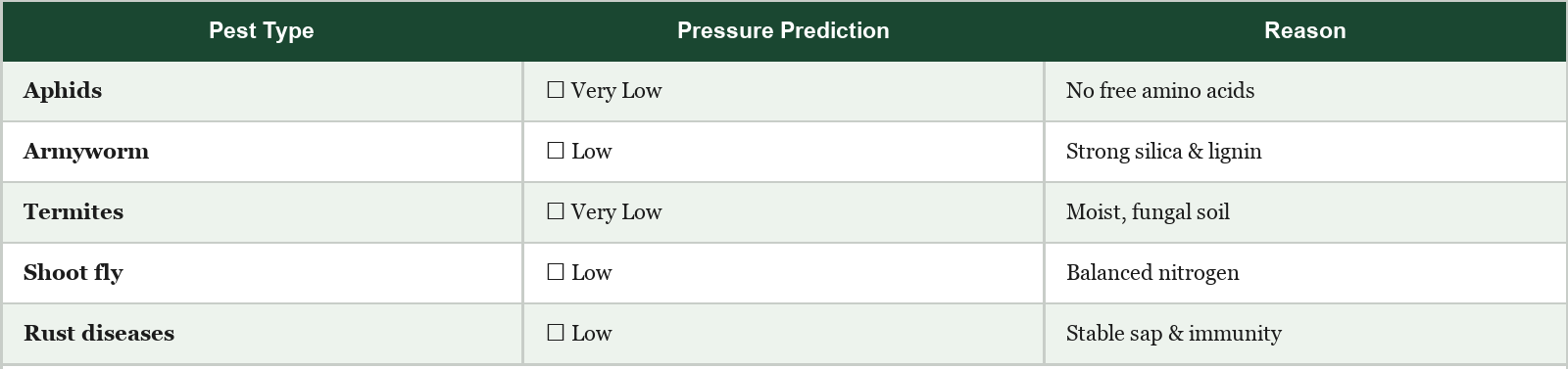
| Pest Type | Pressure Prediction | Reason |
|---|---|---|
| Aphids | ❌ Very Low | No free amino acids |
| Armyworm | ❌ Low | Strong silica & lignin |
| Termites | ❌ Very Low | Moist, fungal soil |
| Shoot fly | ❌ Low | Balanced nitrogen |
| Rust diseases | ❌ Low | Stable sap & immunity |
📌 Pests are scavengers of weak plants — not attackers.
B. Why Pests Will Avoid This Plant
This root structure tells us:
Nitrogen is protein-bound, not free
Sugars are complex, not simple
Calcium & silica transport is active
Cell walls are thick and elastic
👉 For insects:
Food is hard to digest
Energy spent > energy gained
They move elsewhere
C. What Chemical Farming Invites
In contrast, chemical-farmed wheat typically shows:
Aphid explosions after urea top-dressing
Rust following cloudy, humid nights
Worm damage after irrigation + nitrogen
Dependence on pesticides by design
📌 PQNK Law:
Where nutrition is artificial, protection must also be artificial.
3. Simple Farmer Field Test (No Tools Needed)
Ask the farmer to do this:
Uproot one wheat plant
Smell the roots
Shake gently
Soil clings + earthy smell = pest resistance
Clean roots + sharp smell = pest invitation
Final PQNK (“Picnic”) Message
This wheat root system is already acting as pest management.
Healthy soil → stable sap → pest confusion → no outbreak
—————————
Footnote: PQNK (pronounced 'picnic')—the regenerative & sustainable Pristine Organic Farming System—is grounded in Natural Ecosystem Science. This science employs perennial biodiversity, protects soil with organic mulch, and avoids practices like water inundation, tillage disturbance, and leaving soil bare.
It is the process that matters most. PQNK is a pristine production system designed not merely for yield, but for optimal, balanced output—where quality, sustainability, and ecological harmony emerge from a self-regulated, zero-external-input methodology.
www.Facebook.Com/Pedaver
https://www.youtube.com/@pedaverpqnk3167/videos
http://www.youtube.com/@aasifsharif
PDF Knowledge papers: https://drive.google.com/drive/folders/1iadwV6mdUPyrUIpB3oRfNv6DLiackaUL?usp=sharing
pedaver@gmail.com
WhatsApp +92 320 677 6666
About This Paper
- Crop
- Wheat
- Problem
- Sucking Insect Pressure (Aphid/Whitefly/Jassid) · Fungal / Bacterial Disease · Farmer Uncertainty / Diagnostic Skill Gap
- Science
- Soil · Plants · Crop Protection
- Evidence
- Demonstration
- Authority
- Current / Approved PQNK Knowledge
Related PQNK Science
Key Takeaways
- Soil adhesion is presented as the single most decisive field test: soil that clings to roots in aggregated, earthy-smelling crumbs indicates active biology, while soil that falls away in powdery or sour-smelling clods indicates its absence.
- Pests are framed as reading sap chemistry, not leaf color, with stable Brix, low free amino acids, and strong cell walls making a plant energetically costly for insects to exploit.
- A five-pest pressure table for PQNK-grown wheat rates aphids and termites as very low risk, armyworm and shoot fly as low risk, and rust as low risk, each tied to a specific sap or soil mechanism.
- Chemical-farmed wheat is linked to specific recurring outbreak patterns: aphid explosions after urea top-dressing, rust after humid nights, and worm damage following irrigation plus nitrogen application.
- A five-step, no-tools farmer field test (uproot, smell, shake) is offered as a practical diagnostic any farmer can run immediately in the field.
- States the guide's operating law plainly: where nutrition is artificial, protection must also be artificial, positioning stable sap chemistry as a pest-management strategy in itself.
Related Crops
Related Knowledge
same problem
Monitoring Soil Life in the PQNK System: A Farmer's Guide
This farmer's guide sets out five simple, tool-free field tests for judging whether PQNK soil biology is actually taking hold: an earthworm census, a soil smell test, a water infiltration test, a mulch decomposition check, and a root architecture inspection. Each comes with concrete benchmarks separating degraded, good, and thriving soil, turning soil health from a guess into a measurement.
same problem
What This Uprooted Wheat Plant Is Telling Us — Through the PQNK ("picnic") Lens
A single stray wheat plant, pulled from the ground and photographed, becomes a full diagnostic reading of soil health in this short field note. Root structure, tillering, leaf color, and soil cling are each read as evidence the plant is in energy surplus rather than survival mode.
same problem
Smog, Haze, and the Unshakable Resilience of the PQNK Farm
Answering a Punjab farmer worried that weeks of smog and fog will starve his citrus, wheat, and rapeseed of light, this paper reframes low winter sunlight as a normal, non-threatening part of the plant's yearly rhythm rather than a crisis requiring intervention. It argues the correct response to smog is not a new input but strict adherence to the mulch-covered, closed-loop PQNK system already in place.
same problem
What Is This White and Green Growth Seen After Irrigation? A Farmer Q&A
Answers a farmer's question about white and green growth appearing on a Khapli wheat plot after a second irrigation, identifying it as beneficial fungal mycelium and early microbial/algal activity, not disease, and advising the farmer to leave it alone entirely.