

KP-050 · Water & Climate
PQNK: The Wholesale Four-Step System to Reconnect the Water Cycle and End Water Scarcity
Iran's collapsing rivers, sinking cities, and vanishing aquifers are presented as a preview of what awaits any nation that keeps farming on hardpan-sealed, bare soil. This paper argues the crisis is not a rainfall shortage but a blocked water cycle, and lays out PQNK's four-step protocol for reopening it.
Read or listen to the full paper ↓Abstract
The paper opens with a detailed account of Iran's water emergency: rivers reduced to dead trenches, fifteen of thirty-one provinces without a drop of rain for months, the Karaj and Latian dams near Tehran at record lows, and researchers estimating the country is losing roughly sixteen cubic kilometers of water a year, some 370 cubic kilometers over the past two decades. Land around Tehran is documented sinking several centimeters annually as groundwater is mined faster than it can recharge. The paper is explicit that this is framed as a warning, not a foreign curiosity: 'what Iran is facing today, tomorrow it could be us.'
Its diagnosis is that this is a failure of infiltration, not a lack of rain. A farmer testimonial included in the paper describes how repeated tillage and rotavator passes create a compacted hardpan that stops rainwater from recharging groundwater, inundating the surface instead and drowning soil life. Iran's own agricultural sector, which uses 80-90% of the country's water, is identified as compounding the crisis through ancient flood-irrigation methods that accelerate this compaction and runoff rather than causing it outright.
PQNK's response is presented as a sequential, four-step protocol for irrigated land, not a menu of options: precisely level the field for uniform water distribution; shatter the hardpan (typically found 7-20 inches down) with a subsoiler to reopen infiltration pathways; establish permanent raised beds and irrigate once to found a cover crop, after which all future crops go in no-till; and finally maintain a permanent 3-4 inch organic mulch layer while never uprooting plants, cutting them at the surface instead so their root channels remain as permanent water and air highways.
Applied to Iran's specific numbers, the paper argues PQNK would recharge aquifers by forcing every drop of rain to infiltrate rather than run off, cut agricultural water demand by over 70% by eliminating evaporation through mulch, reverse the land subsidence sinking Tehran, and eliminate the destructive flooding that comes from soil that can no longer absorb heavy rain.
The paper closes with a policy prescription for any nation on the brink: declare a 'National Soil Infiltration Emergency,' stand up a coordinating authority to mobilize subsoilers, bed-shapers, mulchers, and no-till planters at scale, launch a 'Shatter the Hardpan' campaign starting in the most depleted regions, and redirect agricultural subsidies toward this one-time transition rather than toward chemical inputs.
Full Paper
If you use “Listen”, the text of the page may be sent to your browser or operating system’s speech provider, such as Apple, Google or Microsoft, depending on the voice your device uses. Pedaver does not process, transmit or store any audio.
Knowledge Paper: The PQNK Solution to Water Crisis & Agricultural Regeneration
The Governments and Agricultural Communities of Water-Stressed Nations (Iran, Pakistan, Afghanistan, and other affected regions.
PQNK: The Wholesale Four-Step System to Reconnect the Water Cycle and End Water Scarcity.
PQNK: Cultivating Sustainable Tomorrow Through Regenerative Agriculture. 1
Water crises in Iran and elsewhere
Translation: The rivers that once gave life have now turned into dead

trenches. In fifteen out of the country’s thirty-one provinces, not a single drop of rain has fallen. Iran is losing nearly sixteen cubic kilometers of water every year. Water has now become gold for Iran. Newspapers in Tehran are openly writing that institutional incompetence is the real cause of this devastation. What Iran is suffering today could be our turn tomorrow. You are watching The Untold Story with Dr. Aqam Soomro. This is not a film, nor a story of the future. This is today’s Iran—the same Iran that once took pride in its rivers, gardens, and civilizational heritage. The same land that gave the world metaphors of love in poetry, depth in philosophy, and leadership in culture. Once, life blossomed along the banks of the Tigris and Euphrates. But today, Iran’s soil has cracked open, rivers have turned into sand, and the skies seem unwilling to rain. This is not the fertile Iran of the past—this is an Iran crying out in thirst. These scenes are not from a science fiction movie; they are the reality of our time—a reality in which humans have suffocated the Earth with their own hands. Climate change is no longer a theoretical debate; it has become today’s war for food, water, and survival. And its latest victim is Iran. Half of Iran has been deprived of rain for several months. The heat has sucked all moisture from the land. Temperatures have climbed close to fifty degrees. The rivers that once breathed life are now nothing but dead ravines. Official figures reveal that fifteen provinces have not seen a single drop of rain since September 23. This is not a seasonal coincidence—it is an environmental tragedy. The Earth is heating up while rainfall continues to decline. This is the tragedy of climate change: the balance has broken. Where it once rained, there is now drought. Where snow once melted gradually, there are now destructive floods. Iran has become the clearest
Tehran, the nation’s largest city, is suffering the most. A city of more than ten million people is now receiving water the way rations are distributed. Pipelines are decayed, pressure is low, and reservoirs have dried. People are installing pumps in their homes to suck out the last remaining drops from the Earth. The demand for storage tanks has skyrocketed. In every street, people store water in pots and containers as if preparing for war. The Karaj and Latian dams near Tehran have fallen to their lowest levels. For the sixth year in a row, Iran is trapped in the grip of drought. Heat has drained all colors from life—gardens have withered, fields are turning barren, and people must stand in lines for water. This is not the crisis of a single city; it is the collapse of an entire system. And at the root of this collapse is none other than humans themselves. This is the moment when nature is asking humanity for an answer. Global temperatures are rising, carbon emissions remain uncontrolled, forests are being cut down, and irrigation systems are outdated. These are the chains that have strangled Iran. Climate change is no longer an imagined scenario—it is a reality seen in every breath, every sip of water, and every barren field. According to UN climate reports, the Middle East is warming at twice the global average. This means that countries like Iran will become even drier, hotter, and more unstable in the years to come. If immediate action is not taken, the day is not far when historic cities like Tehran, Isfahan, and Shiraz may no longer remain habitable. Iran uses 80–90% of its water in agriculture. The issue is not agriculture itself—but the ancient flood irrigation methods still used today, the same techniques used thousands of years ago. Groundwater is being extracted so rapidly that entire regions are sinking. Scientists report that land around Tehran is subsiding several centimeters each year. This is not just drought—it's geological collapse. Environmental researchers warn that the groundwater being extracted today may take centuries to replenish. This means the water being used now belongs to future generations—and we are stealing it.
According to researcher Mohammad Javad Torabi from Germany’s Estcard University, Iran loses around sixteen cubic kilometers of water every year—equivalent to an entire large lake. In the last twenty-three years, Iran has lost 370 cubic kilometers of water—an unprecedented loss in human history. This is not just data; it is a national tragedy. Water has become gold—and even that gold turns to dust before it can be touched. For years, experts have warned the government that this environmental crisis has become dangerous. But unfortunately, policymakers prioritize political loyalty over science. Experts were removed from decision-making and replaced with individuals who only follow orders. The result is today’s Iran. Tehran’s newspapers now openly state that institutional incompetence is the real cause of this disaster. Environmental plans have been sacrificed for political convenience. The historic Zayandeh Rood was allowed to dry. Under the slogan of “agricultural self-sufficiency,” the land was mercilessly exploited. Iran’s problem is not just lack of rain—it is political mismanagement. The situation has deteriorated so much that Iran’s president has admitted that if conditions continue, parts of Tehran may need to be evacuated. Global media is filled with these reports, and headlines repeatedly warn that Iran is facing a catastrophic crisis. And surely, global institutions must help Iran in this climate-induced disaster. Imagine: Tehran—a city that has been a center of knowledge, politics, and culture for centuries—may have to be abandoned due to lack of water. This is nothing short of doomsday. If we ask what the government’s plan is, the answer is silence. No alternatives, no long-term strategy—only prayers, speeches, and temporary measures. Iran, Pakistan, Afghanistan, Africa, Latin America—all these countries contributed least to global carbon emissions, but their lands are burning first. This is what experts call “climate justice.” The rich nations warmed the Earth through industrial power, but the suffering falls on those who have the fewest resources to protect themselves. Iran is a living example of this injustice.
Persian civilization has always revolved around water. The elegance of Persian gardens, the music of flowing streams, the fountains of Shiraz—these defined Iran’s identity. Water was not just life—it was culture. But when water disappeared, the beauty of civilization faded. Iran’s dry earth is now not only an environmental disaster—but also a symbol of cultural decline. When rivers die, cultures die with them. Experts say that Iran can still regain control—if serious action begins now. Drinking water must be prioritized over industrial or recreational use. The agricultural system must be redesigned with drought-resistant crops. Most importantly, water management must become transparent. Experts recommend using satellite technology to measure water flow, loss, and storage accurately. This data can shape long-term policies. But for this, political will, institutional reform, and public participation are essential. Iran’s crisis teaches us that humanity’s relationship with Earth has broken. We treated the Earth as a resource—not a relationship. We took everything and gave nothing. Now the Earth is silently responding. Climate change tells us that nature’s laws are unchangeable: If you cut forests, the air will burn. If you waste water, the land will weep. And if you do not correct your direction in time, the Earth will leave you behind. Iran’s dry land is not the story of one country—it is a mirror for all humanity. It tells us that if we do not restrain our greed, insensitivity, and blind development, the next turn will be ours—whether it’s Karachi, Delhi, Cairo, or Los Angeles. The wounds of the Earth are the same everywhere. What Iran is facing today—tomorrow it could be us. This is the time to apologize to the Earth, change our behavior, and rekindle our friendship with nature. Because the Earth does not need us—we need the Earth.
Another dimension of this crisis is migration. Water scarcity has forced thousands of families to leave their ancestral lands. Rural populations are migrating to cities, but even there, jobs and water are scarce. Experts warn that within ten years, Iran may face a wave of environmental refugees—people displaced within their own country due to climate collapse. This is not limited to Iran. Many parts of the Middle East, North Africa, and South Asia are heading towards the same future. If global powers and regional governments do not wake up now, water wars will not remain fiction—they will become reality. Iran is the first glimpse of this coming crisis—a warning the world must take seriously. Iran stands at a crossroads. If the government does not change its policies fundamentally—if water management is not modernized—cities like Tehran may become unlivable within decades. The country now needs more than water—it needs insight. Harmony with nature, modern technology, guidance from local experts, and above all political will—these are the elements that can save Iran. For the rest of the world, Iran’s story is a lesson. Climate change respects no borders. Today Iran is thirsty, tomorrow it could be any of us. The balance between industrial progress, environmental stability, and human survival is the only path to saving future generations. And Iran’s dry land gives us one final, bitter but essential lesson: Water does not disappear. We make it disappear. Today Iran is thirsty—tomorrow, we might be. If we do not change our path now, civilization will be buried in books—and only dust will remain on the Earth.
“And only dust will remain upon the Earth. The Earth is weeping, and its tears may become the destiny of our future generations. Allow me, Dr. Aqam Soomro, to take your leave. Allah Hafiz.”
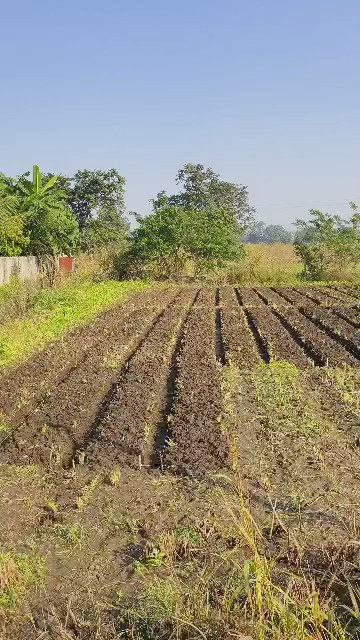
Farmer shares the advantages of the PQNK system
“Namaste. I am Yogesh Rajput. In this video, I want to show you the real benefits of breaking the hardpan in farmland. Take a look at our field. Here, we first broke the hardpan, then prepared raised beds, and finally planted the crop. You can clearly see the improvement in soil condition and soil health. Now compare this with fields where farmers still follow the conventional method. By running the rotavator again and again, and by ploughing multiple times, a solid, compacted layer—known as the hardpan—forms beneath the soil. This layer acts like a barrier. It stops rainwater from going deep into the ground, prevents groundwater recharge while inundating the soil for a long time that prevents plantations and drowns to death the soil life. Breaking the hardpan restores the soil’s natural structure, improves water absorption, and strengthens the entire crop system.”
The PQNK Solution to Water Crisis & Agricultural Regeneration
1. Preamble: Diagnosing the True Blockage The environmental tragedy unfolding in Iran—the dead rivers, sinking cities, and desiccated aquifers—is a direct result of a blocked water cycle. The problem is not a lack of rain, but a failure of infiltration. As the report states, we are losing water we already have. The conventional farming system, reliant on repeated tillage and heavy machinery, has created an impermeable "hardpan" beneath the soil surface. This concrete-like layer, as farmer Yogesh Rajput demonstrates, is the root cause of the crisis: it prevents rainwater from recharging groundwater and causes destructive runoff. The solution is not more complex engineering, but a systematic removal of this blockage. The Regenerative Pristine Organic Farming System (Paedar Qudratti Nizam Kashatqari - PQNK) is not one of many solutions; it is the total solution. It requires no separate water management interventions because it is the process of reconnecting the natural water cycle. 2. The PQNK Doctrine: Work with the Soil, Not Against It PQNK is a precise, four-step system that transforms soil from a compacted slab into a living, breathing, water-harvesting sponge. It operates on the principle that the soil itself is our most vast and efficient water reservoir. The following steps are a sequential, non-negotiable protocol for irrigated land. (For rolling, rain-fed land, we refer you to our specific guide: “A Universal Guide to Establishing a Prosperous Olive Orchard: The PQNK Way”).
The PQNK Solution to Water Crisis & Agricultural Regeneration
The PQNK Four-Step Formula for Irrigated Land Step 1: Land Leveling (Where Applicable)
• Action: Precisely level the field. This ensures uniform water distribution during the initial critical irrigation, preventing waterlogging in some areas and drought in others.
• PQNK Rationale: This is a one-time foundational step for irrigated perennials and annuals to establish the perfect conditions for Step 2. It is not required for rolling land or purely rain-fed systems.
Step 2: Shatter the Hardpan
• Action: Use a subsoiler to shatter the hardpan created by farm machinery, typically found between the 7 to 20-inch layer below the soil surface.
• PQNK Rationale: This is the most critical surgical intervention. As Yogesh Rajput's video shows, this breaks the concrete floor that blocks water infiltration and root growth. Shattering the hardpan opens the floodgates for water to penetrate deep into the earth, recharging aquifers instead of becoming runoff.
Step 3: Establish Permanent Raised Beds & Cover Crops
• Action: Form permanent raised beds. Irrigate the field once to establish a vigorous cover crop on these beds. All future crops will be planted on these same permanent beds using no-till precision planters.
• PQNK Rationale: Permanent raised beds prevent the reformation of the hardpan by eliminating the need for future tillage. The cover crop's root system begins the immediate work of building soil organic matter and creating biological channels. The no-till principle preserves this fragile, newly created ecosystem for all subsequent seasons.
The PQNK Solution to Water Crisis & Agricultural Regeneration
Step 4: Permanent Soil Armor and Root Residence
• Action: Keep the soil covered at all times with a 3-4 inch layer of organic mulch and/or the
residing biomass of cover crops. The cardinal rule: Never uproot plants. Cut them at the surface, leaving the roots to decay in the soil.
• PQNK Rationale: This step is the engine of perpetual regeneration.
• Mulch: Stops evaporation, absorbs dew and atmospheric humidity, suppresses weeds, and feeds
soil life.
• Resident Roots: The old root channels left in the soil become permanent highways for water
infiltration and soil aeration. As they decompose, they become food for microorganisms, which in turn unlock the geological abundance of nutrients for the new plants, eliminating the need for synthetic fertilizers.
The PQNK Solution to Water Crisis & Agricultural Regeneration
3. How PQNK Solves the Iranian Crisis (and Others Like It)
• Recharges Aquifers: By shattering the hardpan (Step 2) and maintaining open root channels (Step 4), every raindrop is forced to infiltrate deep into the ground, directly recharging the groundwater that Iran is losing at a rate of 16 cubic kilometers per year.
• Reduces Water Demand by Over 70%: The mulch (Step 4) eliminates evaporation, the primary source of water loss in agriculture. The healthy, spongy soil has such high Water Holding Capacity that irrigation needs are dramatically reduced.
• Ends Geological Collapse: By recharging aquifers, PQNK reverses the process of land subsidence that is currently sinking Tehran.
• Eliminates Destructive Floods: The soil's massive infiltration capacity means heavy rains are absorbed, not shed as destructive floods.
• Builds Climate-Resilient Food Systems: This system creates buffered, moist, and fertile soils that can withstand heatwaves and unpredictable rainfall, ensuring food security.
4. The Path Forward: A National PQNK Implementation
For Iran and nations on the brink, we prescribe:
A. Declare a "National Soil Infiltration Emergency." The focus must shift from seeking new water to unlocking the hydrological potential of your existing land.
B. Establish a "PQNK Command Authority" tasked with mobilizing subsoilers, raised-beds shaper, mulcher and no-till planters at a national scale.
C. Launch a "Shatter the Hardpan" Campaign, prioritizing the most critically water-depleted regions first.
D. Redirect all agricultural subsidies towards supporting farmers through this one-time transition: for subsoiling, bed making, mulch procurement, and the purchase of cover crop seeds.
The PQNK Solution to Water Crisis & Agricultural Regeneration
5. Conclusion: The Total Solution
The report laments, "Water does not disappear. We make it disappear." PQNK is the process of stopping this theft. It is a total, closed-loop system. By following these four steps, we do not just "manage" water; we restore the land's innate ability to capture, store, and recycle it. The cracked earth of Iran can heal. The skies are not the enemy; the impermeable soil is. By surgically removing the blockage and managing the soil as a living system, the rains will once again become a blessing, seeping into a thirsty land, resurrecting the aquifers, and restoring the prosperity that was born from water.
Any Production Process That Inundates Soil With Water, Disturbs Soil Through Tillage, Or Leaves Soil Bare Without Organic Mulch Cover Does Not Qualify As Natural Ecosystem Science For Production Agriculture: PQNK
PQNK, to be pronounced as 'picnic', which stands for Paedar Qudratti Nizam Kashatqari, and means: the regenerative & sustainable Pristine Organic Farming System.
About This Paper
- Problem
- Poor Water Infiltration · Hardpan · Groundwater / Aquifer Depletion · General Soil Fertility / Land Degradation · Flooding
- Science
- Water · Soil · Climate · Economics
- Evidence
- Economic Model/Projection
- Authority
- Current / Approved PQNK Knowledge
Related PQNK Science
Key Takeaways
- Iran is documented losing roughly 16 cubic kilometers of water annually, with land around Tehran subsiding several centimeters a year from groundwater over-extraction.
- The paper's core diagnosis: the crisis is a failure of infiltration caused by tillage-created hardpan, not a shortage of rainfall.
- PQNK's four-step protocol for irrigated land: level the field, shatter the hardpan with a subsoiler, establish permanent raised beds with a cover crop, and maintain permanent mulch while never uprooting plants.
- PQNK is credited with cutting agricultural water demand by over 70% primarily by eliminating evaporation through mulch cover.
- The paper calls for a national 'Soil Infiltration Emergency' declaration and a 'Shatter the Hardpan' campaign in the worst-affected regions.
- Frames water-stressed nations like Iran, Pakistan, and Afghanistan as facing the same underlying blockage, positioning PQNK as a shared solution rather than a region-specific fix.
Related Knowledge
same problem
The Hydrological Transformation of Agricultural Landscapes Through the Paedar Qudratti Nizam Kashatqari (PQNK) System
PQNK-prepared fields are documented absorbing rainfall events of 600mm in a day without runoff, a figure the paper says farmers initially found impossible to believe. It explains the soil physics behind that claim, from macroporosity gains to deep-rooted 'biological drills,' and positions PQNK farms as recharge basins rather than flood risks.
same problem
When 13 Inches of Rain Falls in Eight Hours
After 13 inches of rain in eight hours, the PQNK orchard beds of Jaskaran Singh in Fazilka district, Indian Punjab, had taken the water into the soil and could be walked on in slippers, while neighbouring conventional orchards and fields stood under water, and so did a strip of his own orchard where the hardpan had not been broken. The paper explains why hardpan is a water barrier as well as a root barrier, and why the soil is the first reservoir.
same problem
The Hidden Crisis: How Industrial Agriculture Has Broken Earth's Water Cycle
A quantified case that industrial agriculture has driven global groundwater tables from 20-30 feet to over 300 feet deep, creating a roughly $200 billion annual crisis addressable through a costed $15 billion, 24-month PQNK rollout plan.
same problem
Rain Where It Falls: Restoring the Soil Before Building More Water Storage
Rajendra Singh’s Rajasthan story shows that slowing runoff lets water enter the ground and restore wells and rivers. PQNK moves that principle upstream into the field itself: correct the hardpan, stop disturbing the soil, keep the surface covered, and let every acre receive and hold the rain where it falls, so that agricultural water demand stays within what the landscape renews.