

KP-004 · Crop-Specific Guides
Modern (Green Revolution) Semi-Dwarf Wheat vs. Heirloom and Ancient Wheat Varieties
A critical review of the popular claim that Green Revolution semi-dwarf wheat is inherently more harmful than heirloom varieties. Applying the PQNK lens, the paper argues the farming system, not just the genetics, is the overlooked variable driving gluten-related health concerns, and that soil biology can meaningfully change a grain's nutritional and digestive profile regardless of variety.
Read or listen to the full paper ↓External Knowledge — this paper is sourced from outside Pedaver/PQNK. It is presented as supporting evidence, not as PQNK's own approved doctrine.
Abstract
Wheat feeds over 35% of the global population, and the semi-dwarf, high-yielding cultivars bred at CIMMYT during the 1960s Green Revolution now dominate world production. Their rise has coincided with growing rates of diagnosed celiac disease and self-reported non-celiac wheat sensitivity, fueling a popular narrative that modern wheat genetics are themselves the cause. This review synthesizes the agronomic, compositional, and clinical evidence and introduces a third, frequently ignored variable into the debate: the farming system the wheat was grown in.
The paper contrasts heirloom and ancient wheat, historically grown in lower-input, more biologically balanced soils, with modern semi-dwarf wheat, typically bred and grown for responsiveness to synthetic NPK inputs in ways that can produce mineral imbalance in the grain. Into that contrast it introduces PQNK as a third axis entirely independent of genotype: a regenerative system built on soil biome health, mineral balance and density, and carbon-driven ecosystem resilience, on the premise that a farm's soil 'terroir' is as determinative of final food quality as the seed's genetics.
On composition, the paper is careful not to overstate what farming system can change: it cannot remove the specific gluten epitopes that trigger celiac disease, and total gluten content remains primarily driven by genotype and environment. But it argues that soil nitrogen form and mineral balance can shape protein synthesis and quality, and that plants grown in mineral-rich, biologically active soil may express fewer stress-induced compounds (such as certain ATIs) while showing higher bioavailable concentrations of zinc, iron, selenium, magnesium, and polyphenols, independent of whether the variety is modern or heirloom.
Applied to human health, the paper draws a sharp line: celiac disease is unaffected by farming system, and no wheat from any system is safe for celiac patients. But it proposes that non-celiac wheat sensitivity may be aggravated not only by wheat proteins but by consumption of grain grown in depleted, mineral-imbalanced soils lacking cofactors the body needs for digestion, and that nutrient-dense, PQNK-grown wheat could be better tolerated by some individuals and could lower postprandial inflammation relative to the same variety grown conventionally.
The paper frames wheat quality as governed by a triad of Genetics × Environment × Management, positions PQNK as a deliberate optimization of the Management term, and closes by calling the 'modern vs. ancient' debate incomplete without accounting for agricultural practice, then sets out the PQNK position: the same variety, modern or heirloom, behaves differently on PQNK, where deep roots and vigorous plants produce fuller grain, validated for the market by laboratory tests comparing PQNK and conventionally grown wheat for nutrition density and diversity.
Full Paper
If you use “Listen”, the text of the page may be sent to your browser or operating system’s speech provider, such as Apple, Google or Microsoft, depending on the voice your device uses. Pedaver does not process, transmit or store any audio.
Abstract The global adoption of high-yielding, semi-dwarf wheat cultivars from the mid-20th century Green Revolution, particularly Mexican-derived varieties from CIMMYT, has coincided with increased public concern over gluten-related disorders. A widespread belief posits that these modern wheats contain more or more harmful gluten than heirloom/ancient varieties, driving a rise in illness. This critical review synthesizes agronomic, compositional, and clinical evidence comparing these wheat categories, while introducing a crucial, often overlooked variable: the agro-ecological farming system. We apply the lens of PQNK (Paedar Qudratti Nizam Kashatqari), pronounced "picnic"—the regenerative and sustainable Pristine Organic Farming System. Analysis shows that while total gluten content is highly variable and influenced by genotype and environment, the farming system profoundly impacts the final nutritional and bioactive profile of the grain. Modern breeding has altered gluten protein composition, but PQNK principles suggest that cultivation in a mineral-rich, biologically active soil can enhance nutrient density and potentially improve the digestibility of any wheat variety. The rise in gluten-related disorders is multifactorial, involving not only wheat genetics and processing but also the declining mineral and microbial quality of conventional agroecosystems. Evidence refutes the simplistic claim that Green Revolution genetics alone are the primary cause. Future directions must integrate nutrition-oriented breeding with regenerative agroecology, like PQNK, to produce nutrition-dense grains with balanced minerals and vitamins in forms optimized for human digestion.
1. Introduction Wheat (Triticum aestivum L.) is a staple for over 35% of the global population. The Green Revolution of the 1960s introduced semi-dwarf, high-yielding cultivars, largely from CIMMYT in Mexico, to address food security. These varieties, bred for high-input systems, now dominate global production. Concurrently, the prevalence of diagnosed celiac disease (CeD) and self-reported non-celiac wheat sensitivity (NCWS) has risen, fueling debate. This paper aims to synthesize evidence comparing the compositional and health profiles of modern and heirloom wheats, while critically examining a third determinant: the farming system. We introduce the PQNK (Paedar Qudratti Nizam Kashatqari) lens—a Pristine Organic framework emphasizing regenerative soil health, biodiversity, and nutrient density. The agronomic context, as defined by PQNK, significantly modulates the nutritional output and health implications of any wheat genotype.
2. Historical and Agro-Ecological Context
Heirloom/Ancient Wheat: Genetically diverse varieties cultivated in traditionally managed, often lower-input systems. Their historical cultivation likely occurred in more balanced soils, contributing to their nutritional reputation.
Modern Semi-Dwarf Wheat: Bred for high synthetic input responsiveness, often grown in soils where nutrient management focuses narrowly on NPK (Nitrogen, Phosphorus, Potassium), potentially leading to mineral imbalances in the grain.
The PQNK System: A regenerative organic farming system that prioritizes:
Soil Biome Health: Fostering diverse microbial communities essential for nutrient cycling and plant symbiosis.
Mineral Balance & Density: Managing soil to provide a broad, balanced spectrum of minerals and trace elements.
Carbon Sequestration & Ecosystem Resilience: Building organic matter for a stable, vibrant rhizosphere. This system posits that the "terroir" of the farm—its soil health—is as critical as the seed genetics in determining the final food quality.
3. Compositional Analysis: Proteins, Gluten, and the PQNK Modulation
Total Protein and Gluten Content: Genotype and environment are key drivers. The PQNK lens adds that soil nitrogen form (slow-release organic vs. soluble synthetic) and mineral balance can influence protein synthesis and quality. A balanced mineral suite may support more complete protein formation.
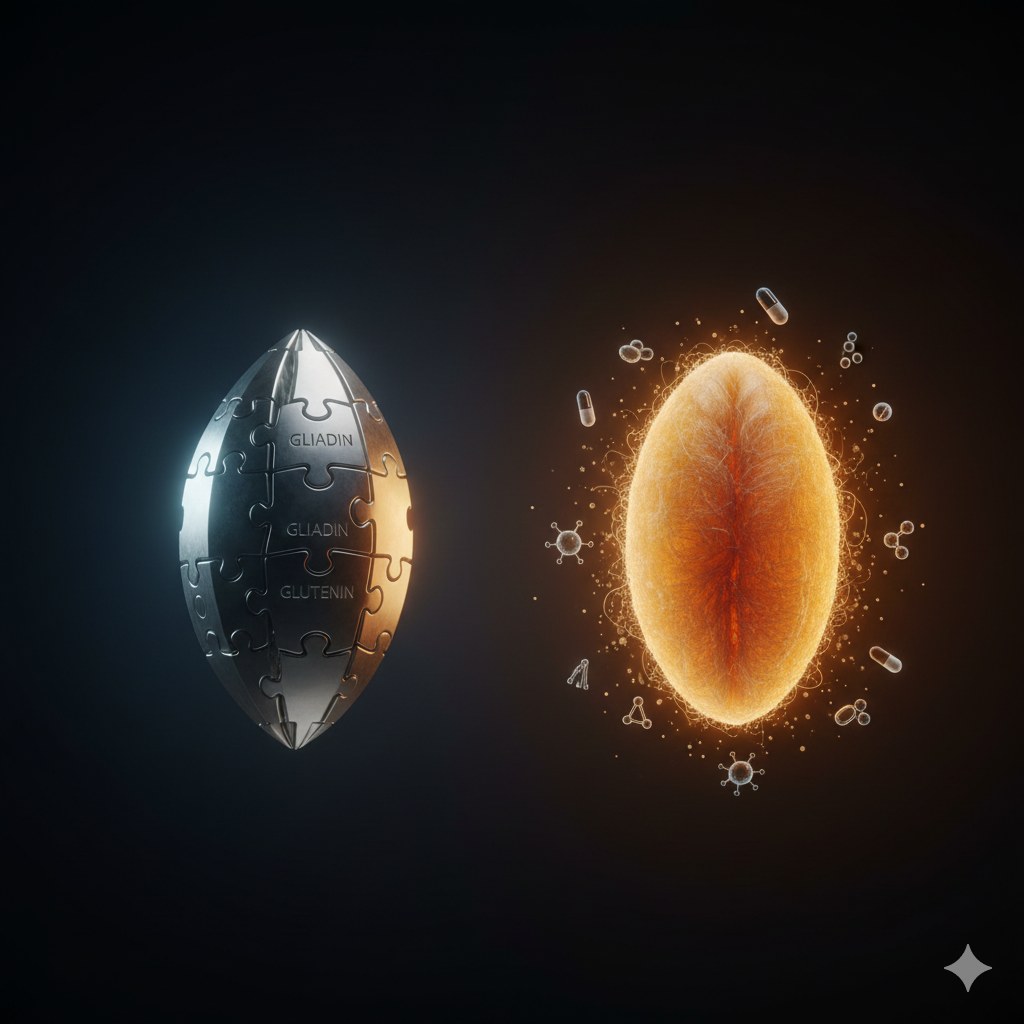
Gluten Composition and Immunogenic Potential: Modern breeding has selected for specific glutenin subunits. PQNK principles suggest that a plant grown in a stress-resilient, mineral-rich environment may exhibit different expression of storage proteins. While it cannot remove celiac epitopes, a robust soil microbiome and plant health could reduce the plant's production of certain stress-induced compounds (e.g., specific ATIs) and support a more balanced protein matrix that is potentially less provocative to the innate immune system.
4. Compositional Analysis: Nutritional Density and the PQNK Advantage
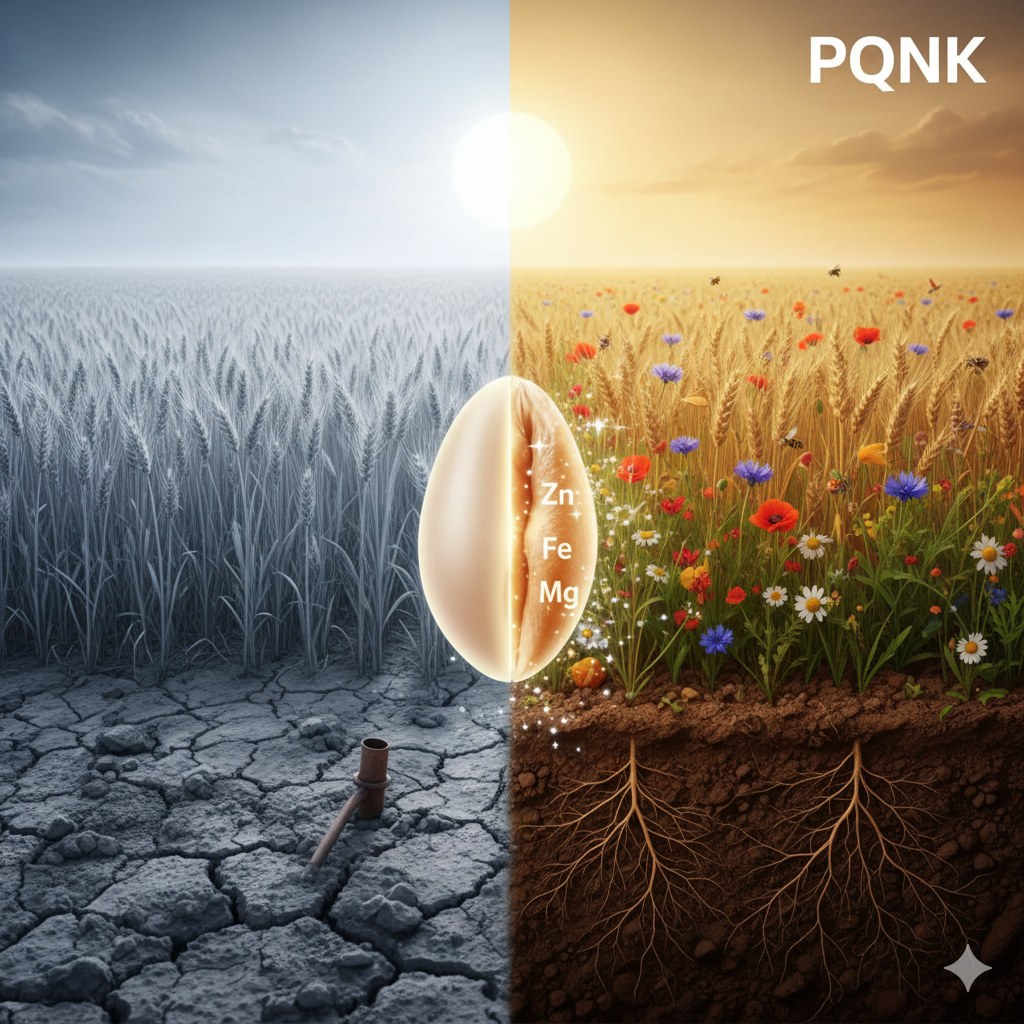
Micronutrients and Phytochemicals: Heirloom varieties often have genetic potential for higher micronutrients. Critically, the PQNK system is designed to actualize this potential by providing a bioavailable mineral buffet. The "dilution effect" is countered by focusing on nutrient density per calorie, not just yield. PQNK-grown wheat, whether modern or heirloom, is postulated to have significantly higher concentrations of zinc, iron, selenium, and magnesium in bioavailable forms, along with enhanced polyphenol profiles supported by plant secondary metabolism in healthy soils.
Bioactive Compounds & Digestibility: PQNK's focus on soil biology and whole-system health aims to produce grain with:
Improved mineral chelation (e.g., phytate:mineral ratios), enhancing nutrient bioavailability.
A diverse microbiome on the grain, potentially influencing fermentation and digestibility.
A balanced matrix of carbohydrates, proteins, and fats that "the body would love to digest," reducing metabolic stress.
5. Implications for Human Health: Beyond Genetics
Celiac Disease (CeD): Unchanged by farming system. No wheat from any farming system is safe for individuals with CeD.
Non-Celiac Wheat Sensitivity (NCWS): The PQNK perspective: NCWS symptoms may be exacerbated not only by wheat proteins but by consuming wheat grown in depleted, imbalanced soils lacking the full suite of co-factor minerals necessary for optimal human digestion and metabolism. A nutrition-dense PQNK wheat, with its balanced mineral profile, may be better tolerated by some individuals by supporting endogenous digestive enzymes and gut mucosal health.
Inflammatory and Metabolic Health: The higher antioxidant and mineral content of PQNK-grown grain could theoretically lower postprandial inflammation and improve glycemic management compared to the same variety grown in a conventional, high-input system. The grain is envisioned as a complete, balanced nutrient source.
6. Discussion: Integrating Genetics, Agronomy, and Health
The Triad of Determinants: Final wheat quality and health impact are governed by a triad: Genetics (G) x Environment (E) x Management (M). The PQNK system represents a deliberate "M" designed to optimize "E" for human health outcomes.
Reframing the Debate: The "modern vs. ancient" debate is incomplete without considering agricultural practice. A heirloom wheat grown with conventional high-input methods may lack the famed nutrient density, while a modern dwarf variety grown under PQNK principles may achieve superior nutritional status.
Systemic Myopia: The rise in health disorders parallels the rise of extractive agriculture. PQNK posits that this is not coincidental; we are consuming the metabolic output of sick soils.
7. The PQNK Position: The Same Seed Grows a Different Plant
Same Variety, Different Behaviour: The same wheat variety, modern or heirloom, behaves differently when it grows on PQNK permanent beds. With the hardpan broken and the soil kept alive under organic mulch, its roots go deep and the plants grow vigorous.
Deep Roots, Fuller Grain: Deep roots in a living soil reach a far wider range of minerals than shallow roots confined above a hardpan in compacted, chemically fed soil, and the grain carries that fuller nutrition.
The Variety Is Not the Whole Story: The health debate cannot be settled by comparing modern and heirloom genetics alone. The soil the crop grows in shapes the grain as much as its genes do.
8. Future Directions: A Synergistic Path Forward
Breeding for Agroecology: Develop wheat varieties optimized for performance in regenerative organic systems like PQNK, selecting for nutrient efficiency and symbiosis with soil microbes.
Laboratory Validation of PQNK Grain: For marketing, PQNK field validation is supported by laboratory tests that compare PQNK wheat with conventionally grown wheat for nutrition density and diversity.
Agricultural Transformation: Promote the adoption of PQNK and similar systems to fundamentally improve the base nutritional quality of the food supply, creating "nutrition-dense" staples as a public health imperative.
9. Conclusion The narrative attributing health concerns solely to Green Revolution wheat genetics is an oversimplification. This review, through the PQNK lens, argues that the degenerative agricultural system in which much modern wheat is produced is a critical, overlooked factor. The Paedar Qudratti Nizam Kashatqari (PQNK) system represents a paradigm shift, focusing on creating a pristine, mineral-rich, and biologically vibrant growth environment. Wheat grown under such a system—whether modern or heirloom—is nutritionally superior, more balanced, and potentially more digestible. The path to better wheat and better health lies not in rejecting modern genetics outright, but in transforming our agriculture from an extractive to a regenerative model. The ultimate goal is to produce grain that is not merely filling but is truly nourishing, offering a dense diversity of minerals and vitamins in a harmonious form that supports human well-being.
References (Consolidated Key Citations with Agro-Ecological Additions)
Baranski, M., et al. (2014). Higher antioxidant and lower cadmium concentrations and lower incidence of pesticide residues in organically grown crops. British Journal of Nutrition.
Brouns, F., et al. (2022). Do ancient wheats contain less gluten than modern bread wheat in favour of better health? Nutrition Bulletin.
De Santis, M.A., et al. (2017). Differences in gluten protein composition between old and modern durum wheat genotypes. Journal of the Science of Food and Agriculture.
Geisslitz, S., et al. (2019). Comparative Study on Gluten Protein Composition of Ancient and Modern Wheat Species. Foods.
Montgomery, D.R., & Biklé, A. (2021). Soil: The Story of a Black Mother's Garden. (For the soil health-human health connection).
Norwig, M.C., et al. (2024). Comparative proteomics of digestion-derived peptides from old and modern wheat varieties. Journal of Agricultural and Food Chemistry.
Sapone, A., et al. (2012). Spectrum of gluten-related disorders: consensus on new nomenclature and classification. BMC Medicine.
Shewry, P.R., & Hey, S.J. (2015). The contribution of wheat to human diet and health. Food and Energy Security.
Sofi, F., et al. (2023). Ancient wheat and health: A systematic review of human intervention studies. Nutrition Reviews.
van den Broeck, H.C., et al. (2010). Presence of celiac disease epitopes in modern and old hexaploid wheat varieties. Theoretical and Applied Genetics.
Disclaimer: This is a scientific review through the PQNK lens. Individuals with celiac disease must maintain a strict gluten-free diet regardless of farming system. Those experiencing symptoms should seek professional medical diagnosis.
—————————
Footnote: Any Production Process That Inundates Soil With Water, Disturbs Soil Through Tillage, Or Leaves Soil Bare Without Organic Mulch Cover Does Not Qualify As Natural Ecosystem Science For Production Agriculture.
PQNK, to be pronounced as 'picnic', which stands for Paedar Qudratti Nizam Kashatqari, and means: the regenerative & sustainable Pristine Organic Farming System.
www.Facebook.Com/Pedaver
https://www.youtube.com/@pedaverpqnk3167/videos
pedaver@gmail.com
WhatsApp +92 320 677 6666
About This Paper
- Crop
- Wheat
- Problem
- Declining Nutrient Density in Food · Diet-Related Health / Food Security Concern · General Soil Fertility / Land Degradation
- Science
- Nutrition · Food Quality · Soil
- Evidence
- Philosophical/Framework Argument
- Authority
- External Knowledge / Evidence
Related PQNK Science
Key Takeaways
- The paper challenges the popular claim that Green Revolution wheat genetics alone explain rising gluten-related health concerns.
- It introduces farming system (specifically PQNK) as a third variable alongside genotype and environment in determining a grain's nutritional and health profile.
- PQNK cannot alter celiac-triggering gluten epitopes; celiac patients must avoid all wheat regardless of how it was grown.
- PQNK-grown wheat, modern or heirloom, carries higher bioavailable zinc, iron, selenium, magnesium, and polyphenols due to soil mineral balance.
- Non-celiac wheat sensitivity may be partly a function of depleted, imbalanced soils rather than wheat genetics alone.
- The same wheat variety grows a different plant on PQNK: deep roots and vigorous plants give fuller, more nutritious grain.
Related Crops
Related Knowledge
same problem
The Nutritional Roots of Healthcare Expansion and the PQNK Solution
Argues that the healthcare sector's growth has outpaced population growth primarily because industrial agriculture has degraded nutrient density and dietary diversity, fueling preventable chronic disease, and proposes regenerative PQNK agriculture as the upstream intervention that reduces demand on the healthcare system itself.
same problem
The Broken Chain: Restoring the Symbiosis Between Food, Body, and Ecosystem Through PQNK
Argues that widespread food availability coexisting with epidemic chronic disease reflects a twin failure, agriculture severing the link between body, food, and ecosystem, and medicine designed to manage symptoms rather than the root cause, and proposes PQNK as the mechanism for restoring that closed loop.
same problem
Chemical Fertiliser Dependency Through the PQNK Lens
An evidence-qualified review of the article “Chemical Fertilizer Industry”. It keeps the article's warning about soil degradation, nutrient pollution and biological decline, disciplines its headline numbers, and argues that fertiliser dependency is a symptom of a damaged production system (tillage, flooding, bare soil and simplified biology) that PQNK removes by restoring aerated, covered, living soil, reaching zero purchased fertiliser and pesticide at maturity.
same problem
The Global Cost of Agricultural Degradation & the PQNK Restoration Dividend
The visible price of food does not represent its full cost. Earlier versions of this Knowledge Paper attempted to combine several external estimates into a single $1.9 trillion annual cost and a $2.8 trillion restoration opportunity; source verification showed those figures combined studies with different scopes and could not be defended as one additive model, so Pedaver withdraws that composite calculation. The corrected analysis uses independently sourced estimates, FAO's ~$12 trillion/year hidden agrifood-system costs, UNCCD's ~$878 billion/year cost of inaction on land degradation, FAO's ~$400 billion/year soil-loss figure, within their own stated boundaries, and explicitly does not add them together.