

KP-006 · Crop-Specific Guides
PQNK - The Paradigm Shift for Sustainable, Profitable, and Climate-Resilient Rice Cultivation
Pakistan's Basmati export sector faces a triple threat of quality rejections, water scarcity, and methane emissions from flooded paddies. This paper presents PQNK's move 'beyond flooded fields' to direct-seeded rice on permanent mulched beds, arguing it solves all three problems simultaneously rather than trading one for another.
Read or listen to the full paper ↓Abstract
Pakistan's rice sector, and its Basmati export trade in particular, faces three compounding pressures. Importing countries are tightening limits on agrochemical residues and mycotoxins such as aflatoxins, and conventional flooded systems consistently fail to meet them, causing costly rejections and reputational damage. Conventional cultivation also uses roughly 5,000 liters of water per kilogram of rice produced, an unsustainable draw in a water-scarce country. And continuously flooded paddies are a major source of methane, a gas over 25 times more potent than CO2, estimated to account for around 12% of global methane emissions — with the common fix, Alternate Wetting and Drying, risking a swap into nitrous oxide, a gas roughly 300 times more potent than CO2.
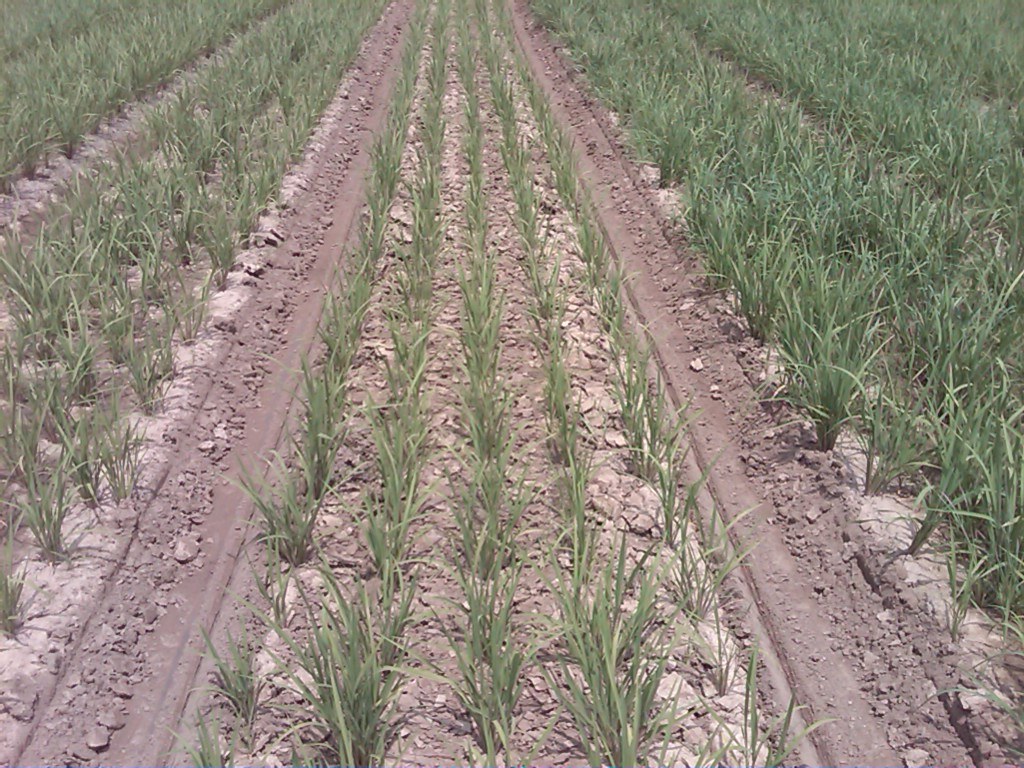
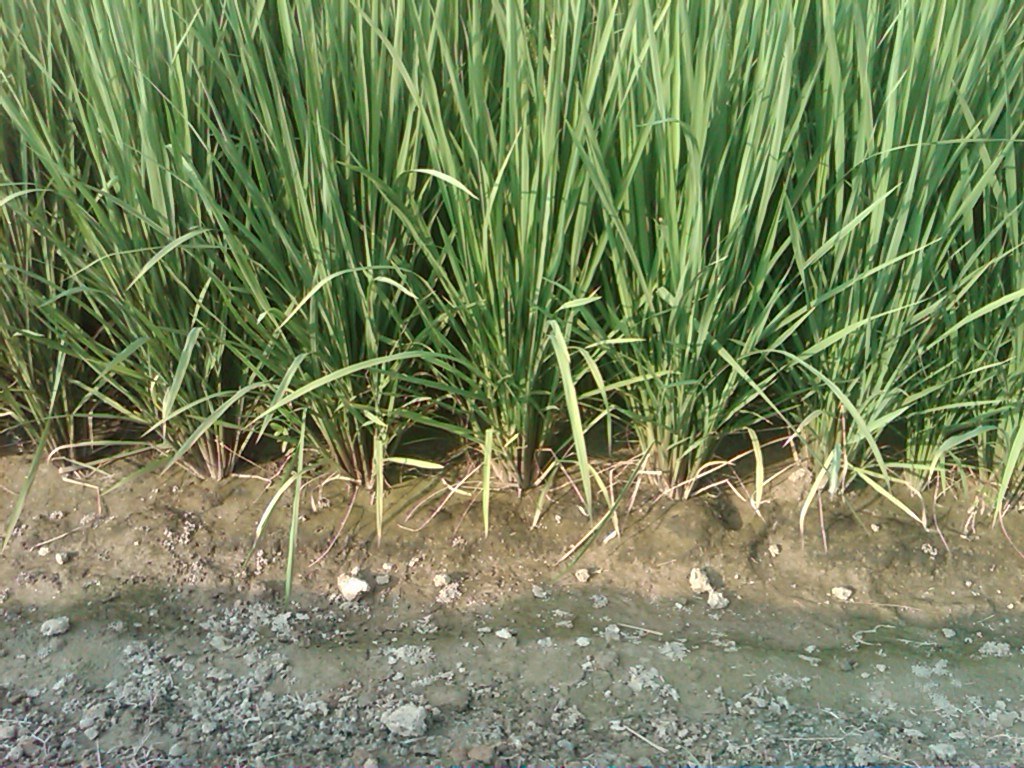
PQNK's response is framed as a return to how rice actually grows in nature: no floodplain provides continuous standing water, only monsoons, dew, and groundwater moving through porous, root-bound, hardpan-free soil. Practically, this took the form of an evolving system — starting with a dry-soil transplanter placing seedlings into water-filled pits, then evolving to the current method: Direct Seeded Rice (DSR) on permanent raised beds covered in organic mulch carried over from the prior crop's residue, with five precise rows spaced 8 inches apart on 42-inch beds achieving a plant density of about 65,000 per acre.
The system layers four principles: observing and emulating nature's non-flooded hydrology; treating water as a precious input rather than a default weed-suppression tool; managing soil as a living system through aeration and organic matter rather than mechanical weeding or intensive tillage; and precision plant geometry over blanket application, so each plant gets calibrated access to light, air, and nutrients.
Quantified against conventional flooded rice, PQNK is credited with cutting water use by over 90% (from roughly 5,000 L/kg to about 321 L/kg), eliminating herbicide, pesticide, and fertilizer residues that cause export rejections, eliminating methane production from anaerobic flooding without triggering a nitrous oxide trade-off, and reducing input costs enough to materially raise farmer margins. The paper also generalizes the underlying principle beyond rice, citing a reduction in sugarcane's water footprint from 2,284 L/kg of sugar to just 156 L/kg under the same logic.
The paper closes by pointing to PQNK-style water-saving rice adoption already underway in agriculturally advanced nations such as Israel, Korea, and China, and calls on the Government of Pakistan, research institutions, exporters, and farmers to pursue a national transition strategy built on shifting subsidies from water and chemical inputs toward bed-formation and precision-planting equipment, farmer training and demonstration farms, and a certified 'PQNK Basmati' export brand.
Full Paper
If you use “Listen”, the text of the page may be sent to your browser or operating system’s speech provider, such as Apple, Google or Microsoft, depending on the voice your device uses. Pedaver does not process, transmit or store any audio.
1. The Crisis: The Unsustainable Paradigm of Conventional Rice
Pakistan's rice sector is at a crossroads. The conventional method of continuous flooding, which has defined rice cultivation for centuries, is now the source of its most pressing challenges.
• Export Rejection and Economic Loss: Importing countries are increasingly enforcing stringent standards on agrochemical residues and mycotoxins like Aflatoxins. Conventional systems, reliant on agrochemical and creating conditions conducive to fungal growth, consistently fail to meet these standards, leading to costly rejections and a tarnished brand reputation for Pakistani Basmati.
• Profligate Water Waste: In an era of critical water scarcity, it is indefensible that nearly 5,000 liters of water are used to produce one kilogram of rice using conventional methods. This inefficiency depletes aquifers, increases energy costs for pumping, and severely erodes farmer profitability.
• Contributing to the Climate Crisis: Flooded rice paddies are a primary anthropogenic source of methane (CH₄), a greenhouse gas over 25 times more potent than CO₂. These fields create an anaerobic environment where microbes decompose organic matter, releasing an estimated 12% of global methane emissions. Alternative water-saving techniques like "Alternate Wetting and Drying" (AWD) risk replacing methane with nitrous oxide (N₂O), a gas 300 times more potent than CO₂ that persists in the atmosphere for a century.
2. The Solution: PQNK - A Return to Natural Wisdom, Powered by Innovation
PQNK, pronounced ‘picnic’, is not merely an incremental improvement but a fundamental re-imagining of rice agriculture. It is a regenerative & sustainable Pristine Organic Farming System that learns from nature's 4 million-year-old playbook and enhances it with precision technology.
Core Principles of PQNK:
1. Observe and Emulate Nature: Nature does not flood fields. It provides water through monsoons, dew, and groundwater, maintained by a porous, root-bound soil structure free of hardpan. PQNK recreates this by breaking the hardpan and maintaining moist, but not inundated, soil.
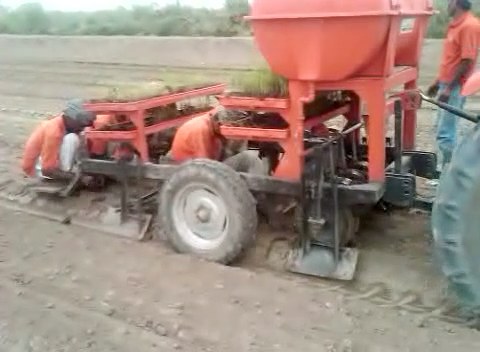
2. Water is Precious, Not a Weed Suppressant: The system abandons flooding as a default. The initial innovation involved a dry soil transplanter that placed seedlings into water-filled pits, achieving establishment with minimal water. This has now evolved to the most efficient method: Direct Seeded Rice (DSR) on permanent raised beds covered with organic mulch from the previous crop residue.
3. Soil as a Living System: PQNK prioritizes soil health through aeration and organic matter. The initial precision weeder and aerator have been superseded by the permanent application of organic mulch. This mulch suppresses weeds, retains soil moisture, regulates temperature, and feeds soil biology, creating a vibrant ecosystem.
4. Precision over Blanket Application: From the initial use of SRI spacing to the current system of five rows of seed planted on 42” raised beds, with plants 8” apart, PQNK ensures each plant has optimal access to light, air, and nutrients, eliminating competition and maximizing efficiency.
The Evolved PQNK Process:
The system has matured into a highly efficient model:
• Permanent Raised Beds: The field is leveled, and permanent 42-inch wide raised beds are formed to facilitate traffic of farm machinery and to irrigate.
• Organic Mulch Blanket: The beds are perpetually covered with organic mulch.
• Precision No-Till Planting: A no-till planter directly seeds rice in five precise rows, 8 inches apart, achieving a plant density of 65,000 per acre without the labor and shock of transplanting.
3. The PQNK Advantage: Quantifiable Benefits for Pakistan and the Planet
The adoption of PQNK delivers transformative outcomes across the three core challenges.
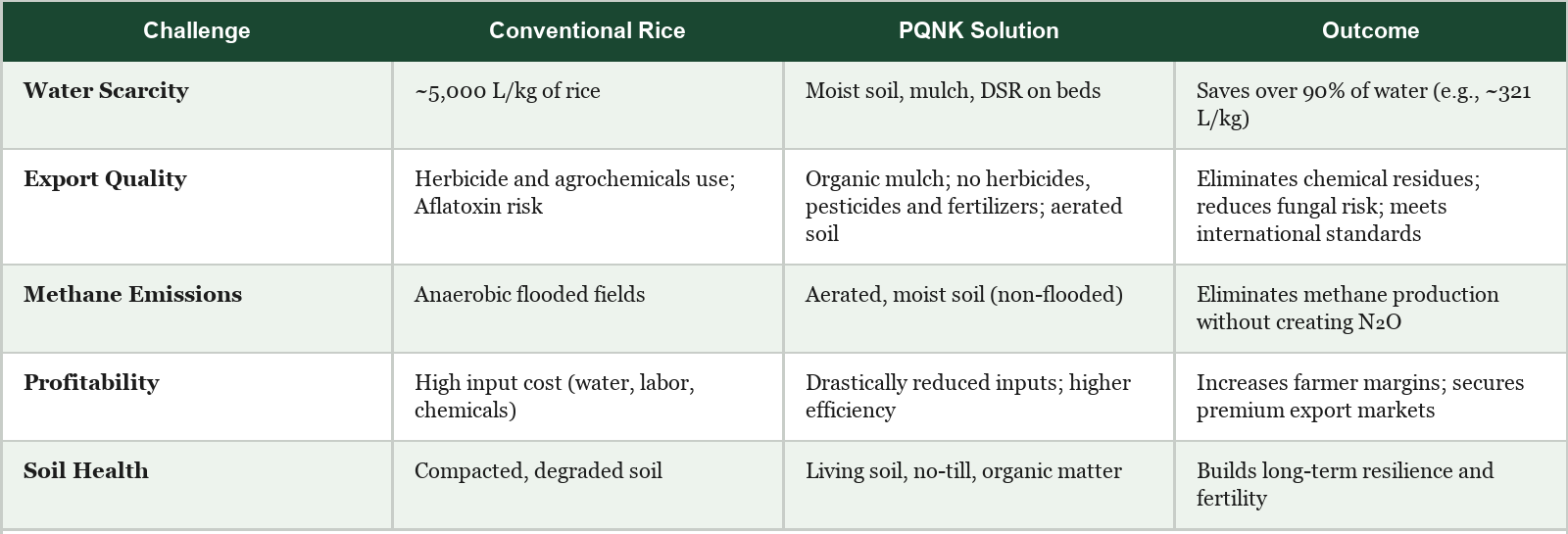
| Challenge | Conventional Rice | PQNK Solution | Outcome |
|---|---|---|---|
| Water Scarcity | ~5,000 L/kg of rice | Moist soil, mulch, DSR on beds | Saves over 90% of water (e.g., ~321 L/kg) |
| Export Quality | Herbicide and agrochemicals use; Aflatoxin risk | Organic mulch; no herbicides, pesticides and fertilizers; aerated soil | Eliminates chemical residues; reduces fungal risk; meets international standards |
| Methane Emissions | Anaerobic flooded fields | Aerated, moist soil (non-flooded) | Eliminates methane production without creating N₂O |
| Profitability | High input cost (water, labor, chemicals) | Drastically reduced inputs; higher efficiency | Increases farmer margins; secures premium export markets |
| Soil Health | Compacted, degraded soil | Living soil, no-till, organic matter | Builds long-term resilience and fertility |
Beyond Rice: A Universal Principle
The PQNK principle demonstrates that the high water usage in rice and sugarcane is not an inherent trait of the plants—which are naturally narrow-leaved and efficient—but a failure of the cultivation system. By restoring nature's hydration model, PQNK reduces sugarcane's water footprint from 2,284 L/kg of sugar to just 156 L/kg.
4. The Way Forward: A Call to Action
The evidence is clear. The continued reliance on conventional flooded rice cultivation is an act of economic and environmental self-sabotage. PQNK offers a proven, scalable pathway forward, already being adopted by agriculturally advanced nations like Israel, Korea, and China. We urge stakeholders—the Government of Pakistan, agricultural research institutions, rice exporters, and the farming community—to collaborate on a national transition strategy for PQNK. This should include:
1. Policy and Subsidies: Shift subsidies from water and chemical inputs towards supporting the initial investment in raised bed formation and precision planting equipment.
2. Farmer Education and Training: Establish demonstration farms and extension services to train farmers and machinery operators in the PQNK methodology.
3. Market Linkage and Branding: Develop a certified "PQNK Basmati" brand that commands a premium in international markets for its quality, sustainability, and low carbon footprint.
Conclusion
PQNK is more than an agricultural technique; it is a philosophy that realigns human activity with the natural world. It proves that the choice between productivity and sustainability is a false one. For Pakistan to protect its vital rice export industry, conserve its precious water resources, and become a leader in climate-smart agriculture, the adaptation of the regenerative and sustainable PQNK system is not just an option—it is the only way forward.
References:
• Internal project documentation on the development of PQNK (2010-2011).
• Presentation at the International Rice Congress, Hanoi, 2011.
• Data on global methane emissions from rice cultivation (IPCC).
• Water usage statistics from FAO and internal comparative studies.
Footnote: Any Production Process That Inundates Soil With Water, Disturbs Soil Through Tillage, Or Leaves Soil Bare Without Organic Mulch Cover Does Not Qualify As Natural Ecosystem Science For Production Agriculture.
PQNK, to be pronounced as 'picnic', which stands for Paedar Qudratti Nizam Kashatqari, and means: the regenerative & sustainable Pristine Organic Farming System.
About This Paper
- Crop
- Rice · Sugarcane
- Problem
- Contamination / Residue / Food Safety Risk · High Crop Water Demand · Macro / Policy-Level Externalities
- Science
- Water · Climate · Food Quality · Production Architecture
- Evidence
- Measured Field Result
- Authority
- Current / Approved PQNK Knowledge
Related PQNK Science
Key Takeaways
- Conventional flooded rice uses ~5,000 L of water per kg of rice; PQNK's direct-seeded, mulched bed system cuts that by over 90% to roughly 321 L/kg.
- Flooded paddies are estimated to produce around 12% of global methane emissions; PQNK's aerated, non-flooded soil eliminates this pathway without the N2O trade-off risked by Alternate Wetting and Drying.
- The current PQNK method is Direct Seeded Rice (DSR): five rows on 42-inch permanent raised beds, 8 inches apart, at roughly 65,000 plants per acre.
- Eliminating agrochemical residues and reducing fungal (aflatoxin) risk directly addresses the export rejections costing Pakistan's Basmati trade.
- The same 'beyond flooding' logic is credited with cutting sugarcane's water footprint from 2,284 L/kg of sugar to 156 L/kg.
- The paper calls for a national policy shift, redirecting subsidies from water and chemical inputs toward PQNK bed-formation and planting equipment.
Related Crops
Related Knowledge
same problem
Chemical Fertiliser Dependency Through the PQNK Lens
An evidence-qualified review of the article “Chemical Fertilizer Industry”. It keeps the article's warning about soil degradation, nutrient pollution and biological decline, disciplines its headline numbers, and argues that fertiliser dependency is a symptom of a damaged production system (tillage, flooding, bare soil and simplified biology) that PQNK removes by restoring aerated, covered, living soil, reaching zero purchased fertiliser and pesticide at maturity.
same problem
Why the World Needs PQNK
A case for large-scale PQNK adoption addressed to five constituencies: farmers, governments, environmentalists, health professionals and poverty-alleviation institutions. Because agriculture sits where soil, water, biodiversity, food, farm economics and human health meet, restoring the farm as a living ecosystem benefits all of them at once.
same problem
Five Decades of Agricultural Innovation: Interventions and Achievements in Chronological Order, 1973–2023
Asif Sharif's own year-by-year record of fifty years of hands-on agricultural intervention in Pakistan, from early machinery and seed distribution through the 2008 development of PQNK and its crop-by-crop expansion since, presented as the primary evidentiary record behind PQNK: a ground-up, farmer-verified track record rather than a journal citation.
same problem
The Farm You Only Have to Build Once: How PQNK Converts a Conventional Field into a Permanent, No-Till System
Most fields across Pakistan and northern India's irrigated plains are still laid out for nineteenth-century bullock-and-plough flood irrigation. This paper walks through the one-time engineering project, topography survey, field redesign, hardpan fracture, laser levelling, and permanent bed shaping, that converts such a field into a permanent PQNK system, citing published water-savings and yield data specific to Pakistani Punjab.