

KP-120 · Nutrition & Food Quality
How PQNK Delivers the Highest Nutrition at the Lowest Cost — and Why This Paradox Is Your Real Power
Answering a farmer's question about whether PQNK should adopt lab testing and certification, this advisory explains why nutrition and low cost rise together under PQNK rather than trading off, and proposes an outcome-based validation label and lab scorecard as the alternative to paperwork-heavy organic certification.
Read or listen to the full paper ↓Abstract
The advisory opens with the question that prompted it: should PQNK introduce lab testing and certification at scale, given that crops grown under it consistently show higher nutritional density than chemical or even certified organic produce? Its central answer is a paradox stated directly against conventional teaching that better quality costs more: under PQNK, quality increases and cost collapses simultaneously, because no money is spent forcing nutrients into plants, fighting weeds and pests, or compensating for soil damage, so nutrition density becomes a byproduct of a correctly functioning system rather than an added expense.
The paper draws a three-way distinction to explain why PQNK crops outperform even certified organic produce: chemical farming feeds the plant directly, producing weak biology and diluted nutrition; certified organic replaces chemicals with 'approved inputs' but remains input-dependent; PQNK restores the ecosystem itself, so minerals come from soil depth rather than bags, carbon comes from air rather than purchased compost, and balance comes from biology rather than a fertilizer recipe.
On certification specifically, the advisory is direct: 'yes to validation, no to conventional certification.' It rejects paper-heavy organic audits, input-based inspections, and annual fees focused on what a farmer didn't use, arguing these systems raise farmer costs and shift power to inspectors rather than rewarding biology. In their place it proposes outcome-based lab validation, nutritional density testing, zero-toxin confirmation, and soil and produce health indicators, framed as 'biological proof' rather than paperwork.
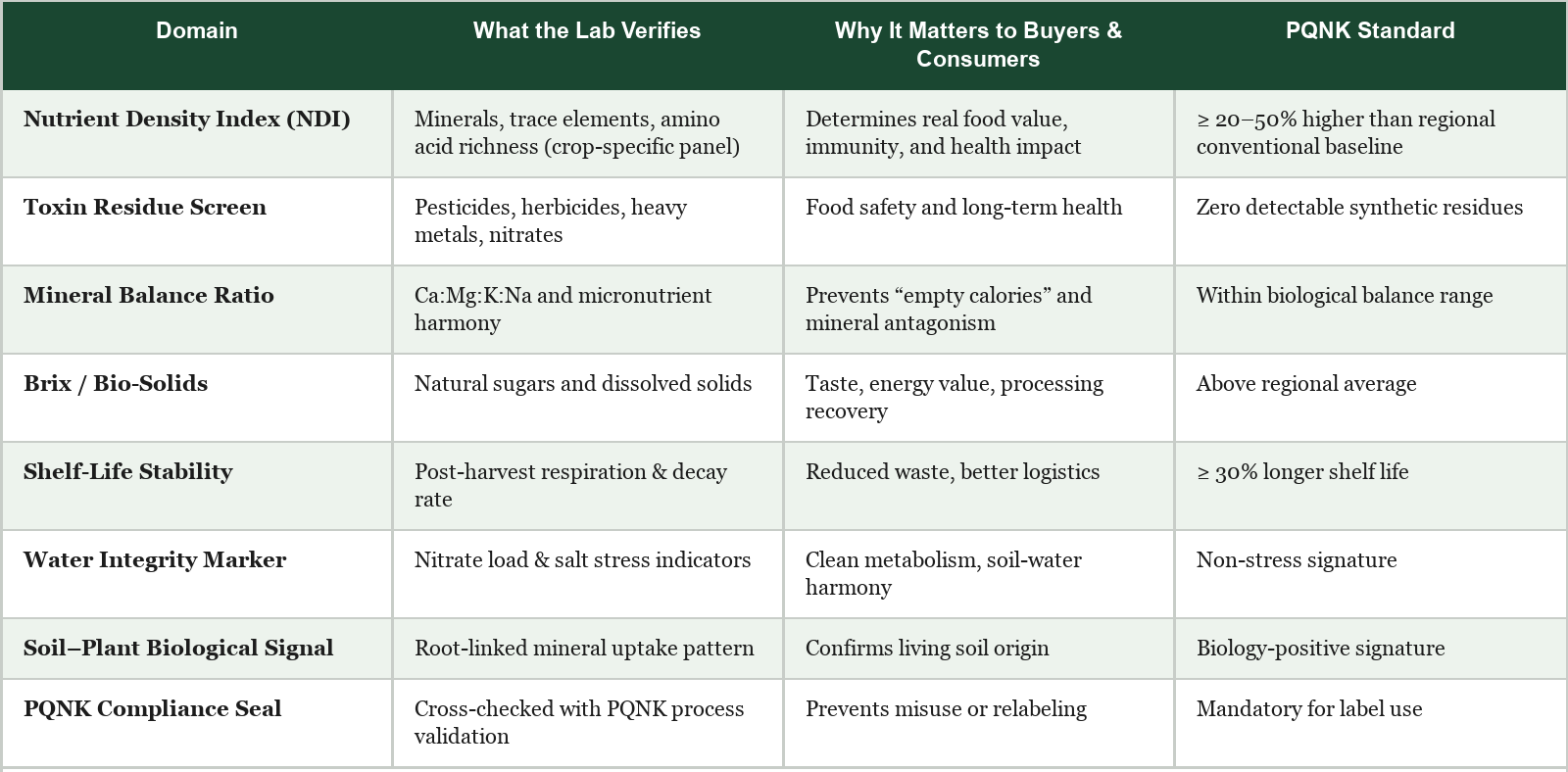
A concrete Global PQNK Validation Label and lab scorecard is set out, covering a Nutrient Density Index (targeting 20-50%+ higher minerals, trace elements, and amino acids than a regional conventional baseline), a toxin residue screen (targeting zero detectable synthetic residues), a mineral balance ratio, Brix/bio-solids, and shelf-life stability (targeting 30%+ longer), alongside crop-specific panels for leafy vegetables, fruit vegetables, and root vegetables and a mandatory safety panel for pesticide residues, heavy metals, and pathogens.
The advisory closes by protecting farmer sovereignty explicitly: testing is designed to be selective rather than constant, costs are shared across the value chain rather than dumped on the farmer, and once validated, produce is deemed accepted without post-harvest bargaining. It gives farmers three-part strategic advice, follow PQNK's biological laws strictly and let quality emerge automatically, ignore the 'costly quality' myth of buying inputs or labels to feel legitimate, and use validation as protection rather than a burden, closing with the line: 'you are not asked to prove what you didn't use. You are asked to show what nature produced.'
Full Paper
If you use “Listen”, the text of the page may be sent to your browser or operating system’s speech provider, such as Apple, Google or Microsoft, depending on the voice your device uses. Pedaver does not process, transmit or store any audio.
Context of the Question
A farmer has rightly asked whether PQNK should introduce lab testing and certification at a public scale, since crops grown under PQNK consistently show higher nutritional density than chemical or even certified organic produce.
This question is important—but it must be answered carefully, because PQNK operates on a different logic than conventional certification systems.
1. Understanding the Paradox:
Highest Nutritional Quality at the Lowest Cost
In conventional thinking, farmers are taught:
“Better quality costs more.”
PQNK proves the opposite:
When biology is correct, quality increases and costs collapse simultaneously.
This is not magic. It is a correction of biological violations.
Why this happens under PQNK:
No money is spent forcing nutrients into plants.
No energy is wasted fighting weeds, pests, or soil.
No inputs are purchased to compensate for soil damage.
Instead:
Soil biology manufactures nutrition internally
Roots access deeper minerals
Microbes convert locked elements into plant-available form
Water and nutrients move naturally, without loss
👉 Nutrition density is a by-product of a healthy system, not an added expense.
2. Why PQNK Crops Are More Nutritious (Even Than Organic)
Farmers should clearly understand this distinction:
Chemical farming: feeds the plant directly → weak biology → diluted nutrition
Certified organic: replaces chemicals with “approved inputs” → still input-dependent
PQNK: restores the ecosystem → nutrition is biologically assembled
Under PQNK:
Minerals come from soil depth, not bags
Carbon comes from air, not compost purchases
Balance comes from biology, not recipes
That is why PQNK produce consistently shows:
Higher mineral density
Better taste and aroma
Longer shelf life
Stronger post-harvest stability
3. Should PQNK Do Lab Testing and Certification?
**Yes to validation.
No to conventional certification.**
This distinction is critical for farmers.
What PQNK does not support:
Paper-heavy organic certification
Input-based audits
Annual fees focused on “what you didn’t use”
Dependency on inspectors and logos
These systems:
Increase farmer costs
Shift power away from farmers
Reward paperwork, not biology
What PQNK does support:
Outcome-based lab validation
Nutritional density testing
Zero-toxin confirmation
Soil and produce health indicators
This is not “certification” in the traditional sense. It is biological proof.
4. How Farmers Benefit Without Losing Sovereignty
Farmers often fear that testing and labels will:
Increase costs
Invite control
Create new dependencies
PQNK avoids this by design.
Under PQNK validation:
Testing is selective, not constant
Costs are shared by the value chain, not dumped on farmers
Validation is used to protect farmers from price exploitation
Once validated, produce is deemed accepted—no post-harvest bargaining
This flips the power structure:
Farmer is no longer begging for a premium
Quality is proven, not negotiated
Cost of production stays ultra-low
Margin increases naturally
5. The Strategic Advice to Farmers
Farmers are advised to focus on three things only:
1. Strict Biological Compliance
Follow PQNK laws exactly:
Hardpan correction
Raised beds
Jantar biology
No-till, no inputs
Quality emerges automatically.
2. Ignore the “Costly Quality” Myth
Do not fall back into:
Buying inputs to “improve” crops
Paying for labels to feel legitimate
Comparing yourself to organic benchmarks
PQNK is not competing with organic. It is operating on a higher biological plane.
3. Use Validation as Protection, Not Burden
When markets or exporters demand proof:
Use lab validation to demonstrate superiority
Do not accept price suppression after validation
Remember: low cost + high quality = sovereignty
6. Final Message to Farmers
The greatest strength of PQNK is not just better crops.
It is this rare and powerful reality:
You produce the best food at the lowest cost with the least dependence and the highest dignity.
Lab testing, when used correctly, does not change this. It simply reveals what nature has already produced.
Stay focused on biology. Let validation serve you—not control you.
That is how this paradox becomes national food power, not just a farming technique.
PQNK VALIDATION LABEL
(Outcome-Based, Lab-Verified, Biology-Anchored)**
“What matters to the body, not what was written on paper.”
Why a PQNK Label Is Necessary (and Different)
Consumers and buyers do not care about:
how many files a farmer maintained
which inputs were avoided
how many inspections occurred
They care about:
nutrition
safety
taste
shelf life
trust
The PQNK Validation Label communicates these outcomes in one glance, backed by lab data, not narratives.
This is validation, not certification.
GLOBAL PQNK VALIDATION LABEL – STANDARD TABLE
This table is non-negotiable, universal, and identical worldwide.
It can appear:
on packaging
in wholesale contracts
on export documents
on consumer-facing labels (QR linked)
PQNK LAB VALIDATION SCORECARD
| Domain | What the Lab Verifies | Why It Matters to Buyers & Consumers | PQNK Standard |
|---|---|---|---|
| Nutrient Density Index (NDI) | Minerals, trace elements, amino acid richness (crop-specific panel) | Determines real food value, immunity, and health impact | ≥ 20–50% higher than regional conventional baseline |
| Toxin Residue Screen | Pesticides, herbicides, heavy metals, nitrates | Food safety and long-term health | Zero detectable synthetic residues |
| Mineral Balance Ratio | Ca:Mg:K:Na and micronutrient harmony | Prevents “empty calories” and mineral antagonism | Within biological balance range |
| Brix / Bio-Solids | Natural sugars and dissolved solids | Taste, energy value, processing recovery | Above regional average |
| Shelf-Life Stability | Post-harvest respiration & decay rate | Reduced waste, better logistics | ≥ 30% longer shelf life |
| Water Integrity Marker | Nitrate load & salt stress indicators | Clean metabolism, soil-water harmony | Non-stress signature |
| Soil–Plant Biological Signal | Root-linked mineral uptake pattern | Confirms living soil origin | Biology-positive signature |
| PQNK Compliance Seal | Cross-checked with PQNK process validation | Prevents misuse or relabeling | Mandatory for label use |
How This Label Protects Farmers
No input receipts required
No annual certification trap
No inspector discretion
No price renegotiation after validation
Once the PQNK Label is attached:
Produce is legally and commercially validated
Buyers cannot downgrade on appearance
Price is linked to measured quality, not bargaining power
How This Label Helps Buyers & Exporters
Instant trust without storytelling
Objective comparison across origins
Reduced rejection and claims
Strong alignment with premium health markets
This label speaks the language of:
nutrition companies
hospitals
infant food buyers
high-integrity export markets
How This Helps Consumers (Without Confusing Them)
Consumers don’t need to understand PQNK theory.
They only need to see:
“Tested. Nutrient-Dense. Toxin-Free. Biologically Grown.”
A simple front label can say:
PQNK™ Validated Produce ✔ Higher Nutrition ✔ Zero Chemical Residues ✔ Naturally Longer Shelf Life
With a QR code linking to the lab scorecard.
Critical Rule (Must Be Stated in the Advisory)
PQNK Label follows biology — not the market. The market does not redefine PQNK.
No private logos allowed
No buyer-designed standards
No regional dilution
No “PQNK-organic”, “PQNK-regen” hybrids
One system. One label. One biological truth.
Final Advisory Statement to Farmers (Add This Section)
Do not chase labels. Build biology.
When biology is correct, validation becomes effortless, costs stay minimal, and quality speaks for itself.
The PQNK Label exists not to control you, but to protect your work from being undervalued.
If you want, next we can:
refine exact nutrient panels crop-wise (wheat, potato, vegetables)
design the visual layout of the PQNK label
integrate this label formally into Annex B (Validation & Buyer Covenant)
Just tell me the next step.
PQNK STANDARD NUTRIENT PANELS (CROP-WISE)
Outcome-Based | Lab-Validated | Globally Standardized
1. PQNK Nutrient Panel – WHEAT (Grain)
Purpose
To verify true human nutrition, mineral density, and metabolic balance in staple grains.
Mandatory Lab Parameters
A. Macro & Energy Integrity

| Parameter | Why It Matters |
|---|---|
| Protein (%) | Indicates nitrogen metabolism efficiency |
| Starch Quality (Amylose : Amylopectin) | Digestibility & glycemic behavior |
| Total Dietary Fiber | Gut health & nutrient absorption |
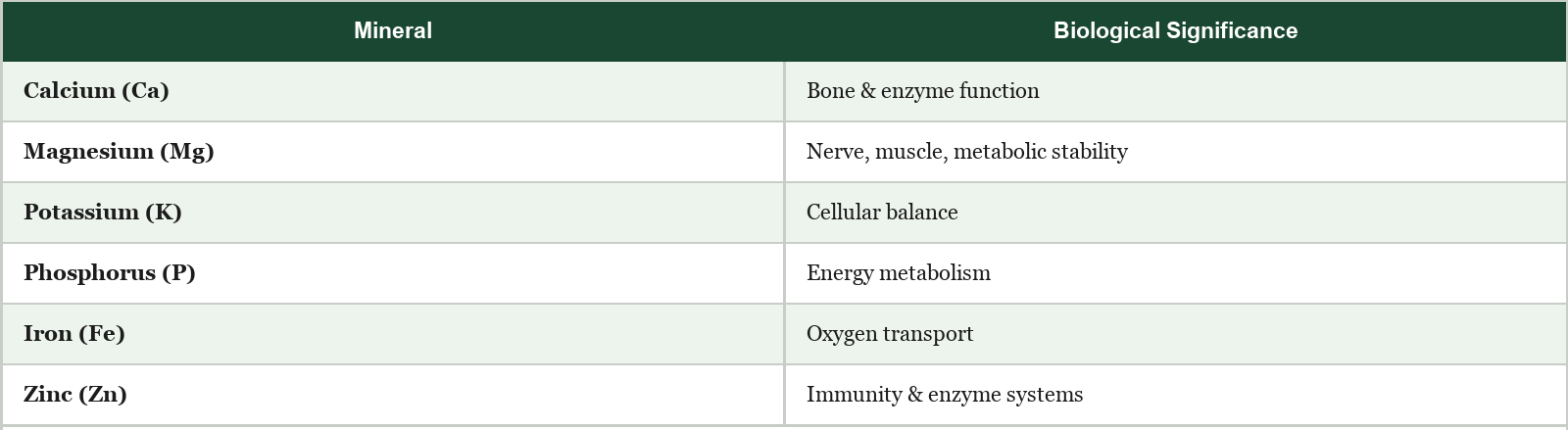
B. Essential Mineral Density
| Mineral | Biological Significance |
|---|---|
| Calcium (Ca) | Bone & enzyme function |
| Magnesium (Mg) | Nerve, muscle, metabolic stability |
| Potassium (K) | Cellular balance |
| Phosphorus (P) | Energy metabolism |
| Iron (Fe) | Oxygen transport |
| Zinc (Zn) | Immunity & enzyme systems |
C. Trace & Functional Micronutrients

| Micronutrient | Role |
|---|---|
| Manganese (Mn) | Antioxidant enzyme activation |
| Copper (Cu) | Iron metabolism |
| Selenium (Se) | Immune & thyroid health |
D. Safety & Biological Cleanliness

| Test | PQNK Threshold |
|---|---|
| Pesticide Residues | Not detectable |
| Heavy Metals (Pb, Cd, As) | Below detection limits |
| Nitrate Load | Biologically normal range |
PQNK Wheat Validation Mark
≥ 20–40% higher mineral density than regional conventional wheat Balanced Ca:Mg ratio (≈ 2:1) No chemical stress signature
2. PQNK Nutrient Panel – POTATO (Tuber Crop)
Purpose
To validate energy-dense, mineral-rich tubers with low chemical and water stress.
A. Energy & Carbohydrate Quality

| Parameter | Significance |
|---|---|
| Dry Matter (%) | Cooking quality & processing recovery |
| Total Carbohydrates | Energy density |
| Resistant Starch | Gut health & glycemic moderation |
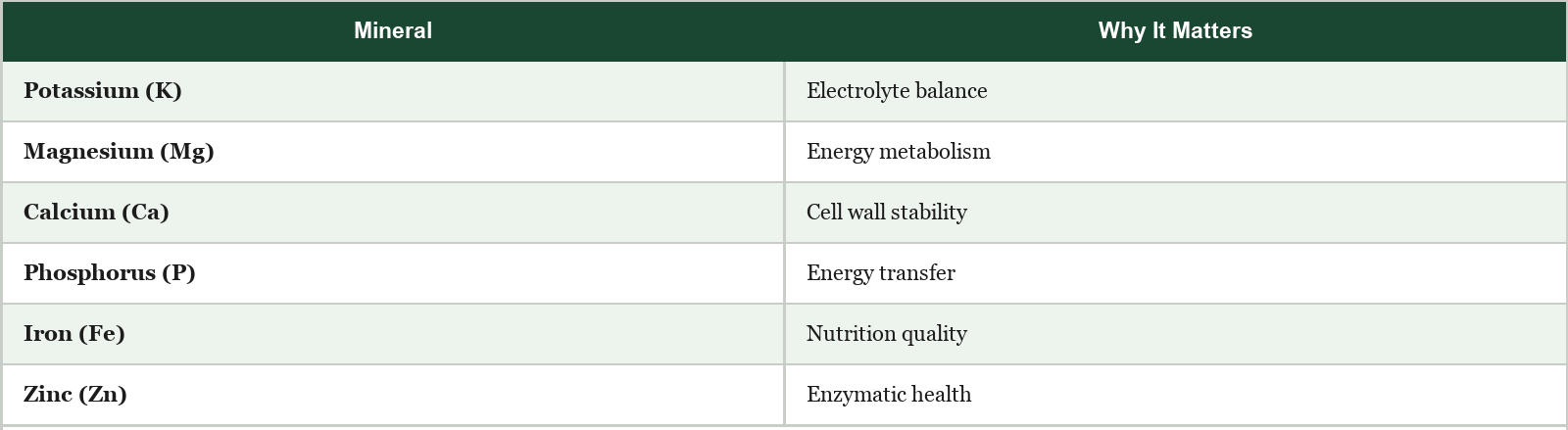
B. Mineral & Electrolyte Balance
| Mineral | Why It Matters |
|---|---|
| Potassium (K) | Electrolyte balance |
| Magnesium (Mg) | Energy metabolism |
| Calcium (Ca) | Cell wall stability |
| Phosphorus (P) | Energy transfer |
| Iron (Fe) | Nutrition quality |
| Zinc (Zn) | Enzymatic health |
C. Vitamin Integrity

| Vitamin | Function |
|---|---|
| Vitamin C | Antioxidant & immunity |
| Vitamin B6 | Protein metabolism |
D. Safety & Stress Indicators

| Test | PQNK Standard |
|---|---|
| Glycoalkaloids (Solanine) | Within natural biological range |
| Nitrates | Low / non-stress signature |
| Chemical Residues | Zero detectable |
PQNK Potato Validation Mark
≥ 30–50% higher potassium & magnesium High dry matter with low nitrate load Longer storage stability without sprouting pressure
3. PQNK Nutrient Panel – VEGETABLES (Leafy, Fruit & Root – Modular)
Vegetables are grouped but tested by category, keeping labs efficient.
A. Universal Vegetable Panel (All Vegetables)

| Parameter | Importance |
|---|---|
| Total Mineral Ash | Overall mineral richness |
| Brix (°) | Taste, energy, shelf life |
| Vitamin C | Oxidative resilience |
| Nitrate Level | Water & nitrogen stress marker |
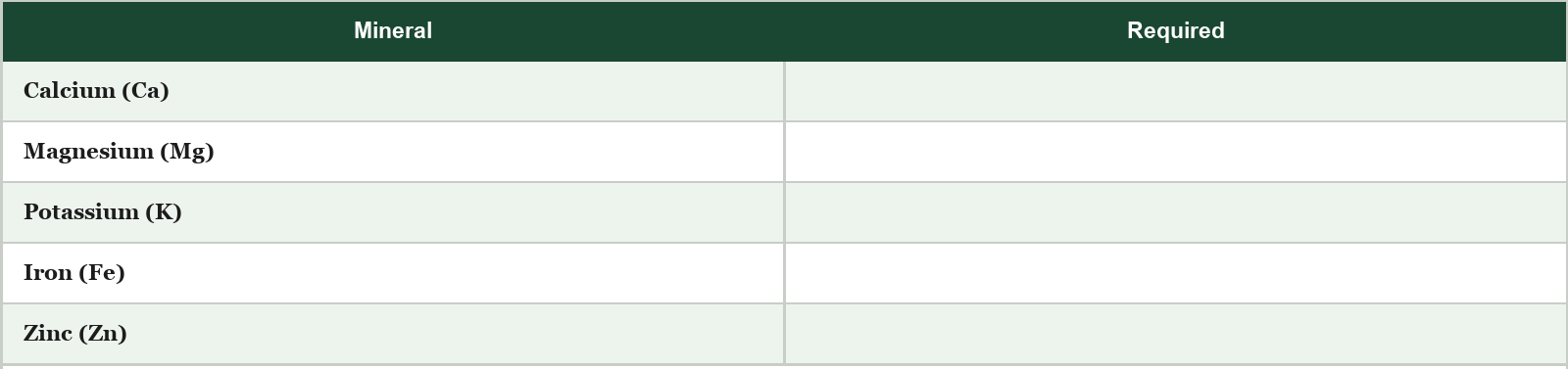
B. Mineral Spectrum (All Types)
| Mineral | Required |
|---|---|
| Calcium (Ca) | |
| Magnesium (Mg) | |
| Potassium (K) | |
| Iron (Fe) | |
| Zinc (Zn) |
C. Category-Specific Add-Ons
Leafy Vegetables (Spinach, Lettuce, Brassicas)

| Additional Tests | Why |
|---|---|
| Chlorophyll Index | Photosynthetic efficiency |
| Folate | Cellular health |
| Oxalate | Mineral bioavailability |
Fruit Vegetables (Tomato, Pepper, Cucumber)

| Additional Tests | Why |
|---|---|
| Lycopene / Carotenoids | Antioxidant quality |
| Sugar–Acid Ratio | Flavor & digestion |
Root Vegetables (Carrot, Beet, Radish)

| Additional Tests | Why |
|---|---|
| Beta-carotene | Vitamin A precursor |
| Sugar Profile | Energy balance |
D. Safety (Mandatory for All Vegetables)

| Test | PQNK Standard |
|---|---|
| Pesticide Residues | Zero detectable |
| Heavy Metals | Below detection |
| Pathogen Screen (E. coli, Salmonella) | Negative |
PQNK Vegetable Validation Mark
≥ 25–60% higher mineral & antioxidant density Low nitrate stress Superior taste and shelf life
Why These Panels Are Non-Negotiable
They measure nutrition, not yield
They reflect soil biology, not input recipes
They are globally comparable
They protect farmers from unnecessary tests
They speak directly to human health
Final Instruction to Farmers (To Be Included in Advisory)
You are not asked to prove what you didn’t use. You are asked to show what nature produced.
When your soil is alive, the lab only confirms the truth.
If you want next:
Convert these into ISO-style lab test sheets
Design QR-linked consumer-friendly summaries
Integrate panels into export contracts & Annex B
Say the word.
——————————
Footnote:
Applying PQNK without understanding nature’s operating system will not deliver abundance, stability, or nutrient density.
PQNK (pronounced “picnic”)—the regenerative & sustainable Pristine Organic Farming System—is grounded in Natural Ecosystem Science. This science employs perennial biodiversity, protects soil with organic mulch, and avoids practices such as water inundation, tillage disturbance, and leaving soil bare.
It is the process that matters most. PQNK is a pristine production system designed not merely for yield, but for optimal, balanced output—where quality, sustainability, and ecological harmony emerge from a self‑regulated, zero‑external‑input methodology.
Connect & Resources Facebook: www.Facebook.Com/Pedaver YouTube (PQNK): https://www.youtube.com/@pedaverpqnk3167/videos YouTube: http://www.youtube.com/@aasifsharif PDF Knowledge Papers: https://drive.google.com/drive/folders/1iadwV6mdUPyrUIpB3oRfNv6DLiackaUL?usp=sharing Email: pedaver@gmail.com WhatsApp: +92 320 677 6666
About This Paper
- Crop
- Leafy Vegetables (crop group) · Fruit Vegetables (crop group) · Root Vegetables (crop group)
- Problem
- Organic Certification Cost / Trust Gap · Price Volatility / Market Glut
- Science
- Nutrition · Food Quality · Economics
- Evidence
- Economic Model/Projection
- Authority
- Current / Approved PQNK Knowledge
Related PQNK Science
Key Takeaways
- States the central paradox plainly: under PQNK, quality increases and cost collapses simultaneously because nutrition density becomes a byproduct of correct biology rather than a purchased input.
- Draws a three-way distinction: chemical farming feeds the plant directly (diluted nutrition), certified organic swaps in 'approved inputs' (still input-dependent), and PQNK restores the ecosystem so nutrition is biologically assembled from soil depth and air, not bags and purchases.
- Answers the farmer's certification question directly, 'yes to validation, no to conventional certification,' rejecting paper-heavy audits and inspector dependency in favor of outcome-based lab testing.
- Proposes a Global PQNK Validation Label with a lab scorecard covering a Nutrient Density Index (targeting 20-50%+ above regional conventional baseline), zero detectable synthetic residues, mineral balance ratio, Brix, and shelf-life stability (targeting 30%+ longer).
- Designs the validation system to protect farmer sovereignty: testing is selective rather than constant, costs are shared across the value chain rather than dumped on the farmer, and once validated, produce is accepted without post-harvest price bargaining.
- Gives farmers three-part strategic advice: follow PQNK's biological laws strictly, ignore the 'costly quality' myth of buying inputs to improve crops, and use validation as protection rather than a compliance burden.
Related Knowledge
same problem
Commercial Advantages of PQNK Production: Why Biological Correctness Outperforms Industrial Efficiency
A supplementary business case arguing PQNK's commercial edge comes not from yield or scale but from structurally low cost of production, quality-driven demand, and continuous harvest cash flow, walking through eleven distinct commercial mechanisms from certification-free trust to appreciating soil as a farm asset.
same problem
PQNK Foundational Document, Topic 2: The Bio-Energetic Valuation Framework — Replacing Commodity Mass with Metabolic Currency
This paper proposes replacing weight-based food pricing with a two-part scoring system, a P.A.Y. score measuring a food's net usable cellular energy and an FSCS score certifying the health of the field that grew it, arguing this is the first economically honest price mechanism in agricultural history.
same problem
The PQNK Validation System
PQNK deliberately uses the word 'validation' instead of 'certification' because certification verifies that procedural rules were followed while telling buyers almost nothing about the biological quality of the food itself. This paper lays out PQNK's alternative: measuring nutritional density, mineral complexity, aroma, shelf stability, and other laboratory- and field-testable signatures the ecosystem leaves inside the harvested crop.
same problem
The PQNK Imperative: Restoring Food, Health, and Sovereignty
Responds directly to a farmer's questions about why certified organic food has failed to earn consumer trust despite its price premium, arguing organic remains an input-substitution model that merely swaps synthetic inputs for approved natural ones, while PQNK eliminates purchased inputs entirely and lets taste serve as the market's proof.